



10 days
|£6,280

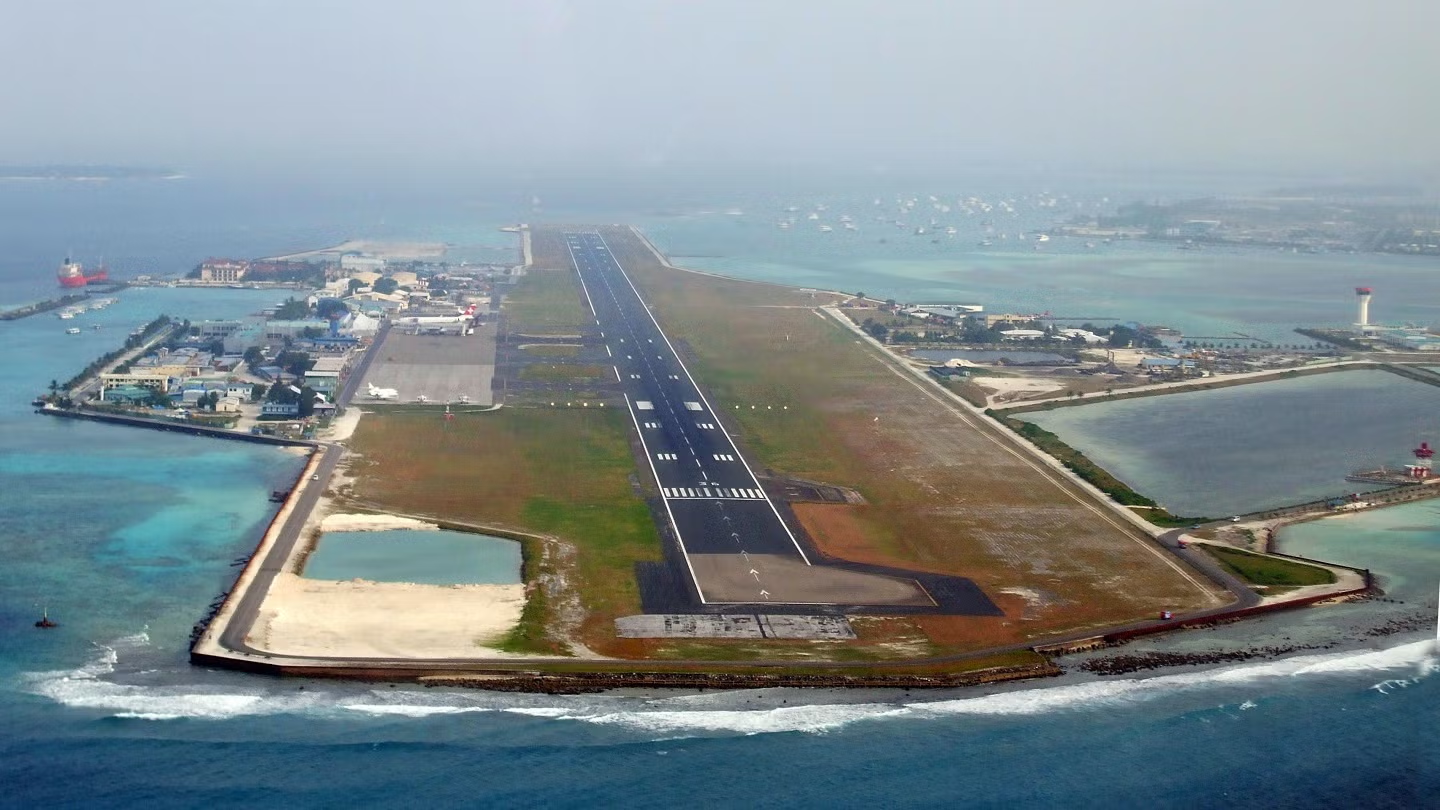
The Maldives has quietly solved its biggest travel flaw. With the new Velana International Airport, the long, chaotic arrival is replaced by speed, space and a seaplane transfer that finally feels worthy of the destination.
If you’ve travelled to the Maldives in the past five years, you’ve experienced the friction. You land after a long international flight—often fourteen to twenty hours depending on your routing from the US—and walk into a terminal designed for a country that stopped growing in the 1970s. The arrival hall is overcrowded. The immigration line moves slowly. The baggage system is insufficient. By the time you reach the seaplane terminal to actually get to your resort, you’ve already lost several hours to airport inefficiency, and the luxury of the destination feels compromised by the journey to reach it. The new Velana International Airport terminal, opened in July 2025, fundamentally changes that experience.
Do Not Disturb is a luxury travel company specializing in carefully designed journeys and considered experiences. Each itinerary we build for our clients is informed by real destination knowledge, offering insight into places, cultures, and moments that shape how a trip comes together.
If this destination has sparked ideas, the itinerary can be developed into a private journey tailored to your interests and travel style, with hand-picked stays, thoughtful routing, and experiences curated around what matters most to you.
What matters first is speed. The old terminal processed four million passengers annually through a facility built for one million. That sounds like a statistic, but it means every arrival was congested. The new terminal is built to handle 7.5 million passengers, which actually provides breathing room.
Twenty immigration counters instead of the previous bottleneck means your passport check moves in actual minutes rather than becoming a standoff. Forty-seven check-in counters mean you’re not hunting for an available desk. The baggage system is modern and efficient. What previously could consume two hours of your arrival now takes forty-five minutes.
The experience of the space itself matters. The old terminal felt like infrastructure, cramped and utilitarian. The new one is built around light and air. High ceilings, natural ventilation, climate control that actually works against the tropical heat. It’s not dramatic or trying to impress you with grandeur. It’s just competent. Which, after what travellers have been arriving to, feels like luxury.
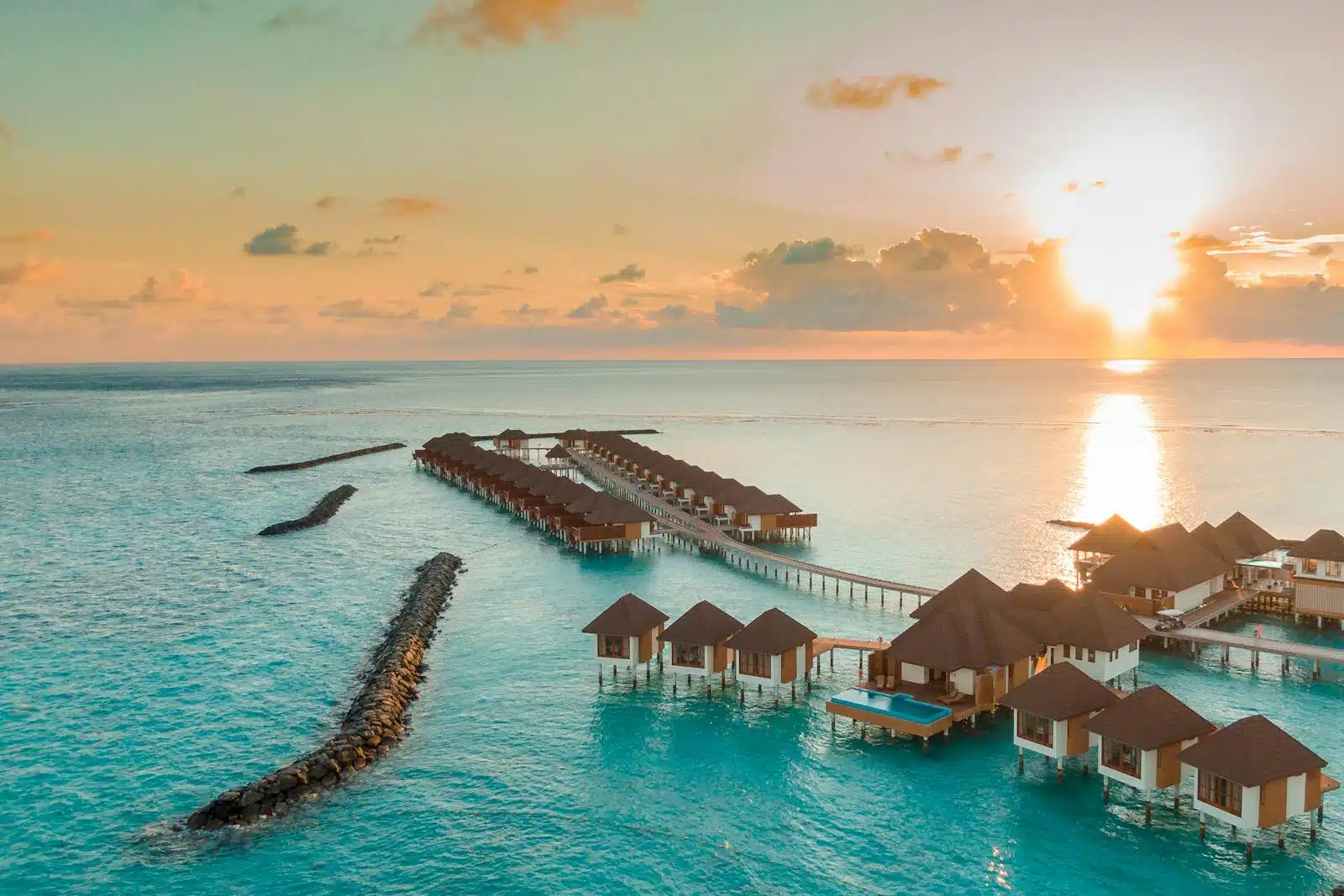
10 days
|£6,280

10 days
|£5,245

10 days
|£5,910
The real game-changer is the seaplane terminal experience. If you’re headed to any of the major resort clusters beyond the immediate Male area, which is almost everyone paying luxury prices, you depart the main airport and move into what’s now the world’s largest seaplane terminal. Eighteen thousand square meters specifically designed for your transfer. Private lounges where you actually sit while waiting for your seaplane rather than standing in a holding area. Cool towels. Drinks. Your luggage handled. The seaplanes coordinate through a terminal that can accommodate one hundred aircraft simultaneously, which means departures happen on schedule rather than cascading delays affecting your connection.
From the time you walk off your international flight to when you’re boarding your seaplane to the resort, the entire experience is now orchestrated rather than chaotic. That typically takes ninety minutes total instead of three hours.

For US travellers specifically, this matters more than you might think. Most US bookings to the Maldives require connections through Middle Eastern hubs (typically Dubai, Doha or Abu Dhabi) because direct flights from major US cities don’t exist. Your journey involves a long-haul flight to a hub, then a seven to nine-hour flight to Male. If you miss your connection, or if your flight is delayed, you previously faced a nightmare scenario at Velana: an overcrowded, inefficient terminal making you wait for hours before you could connect onward to your seaplane and resort.

The expanded capacity and efficiency mean your connecting window is actually viable now. You can comfortably make tight connections without the stress of a dysfunctional airport system working against you. For a traveller who’s already invested significantly in a luxury resort stay, this matters. The airport becomes neutral infrastructure rather than a stress point that eats into your holiday.
Airlines have also expanded service as a direct result of the terminal capacity. More flights means more routing options from the US, better departure times from major hubs, and increasingly, the possibility of better connection timing through Middle Eastern carriers. United, Emirates, Qatar, and others have expanded schedules to Male precisely because the airport can now support the volume. If you’re travelling from the US East Coast or West Coast, your routing is more likely to work in your favor than it did two years ago.
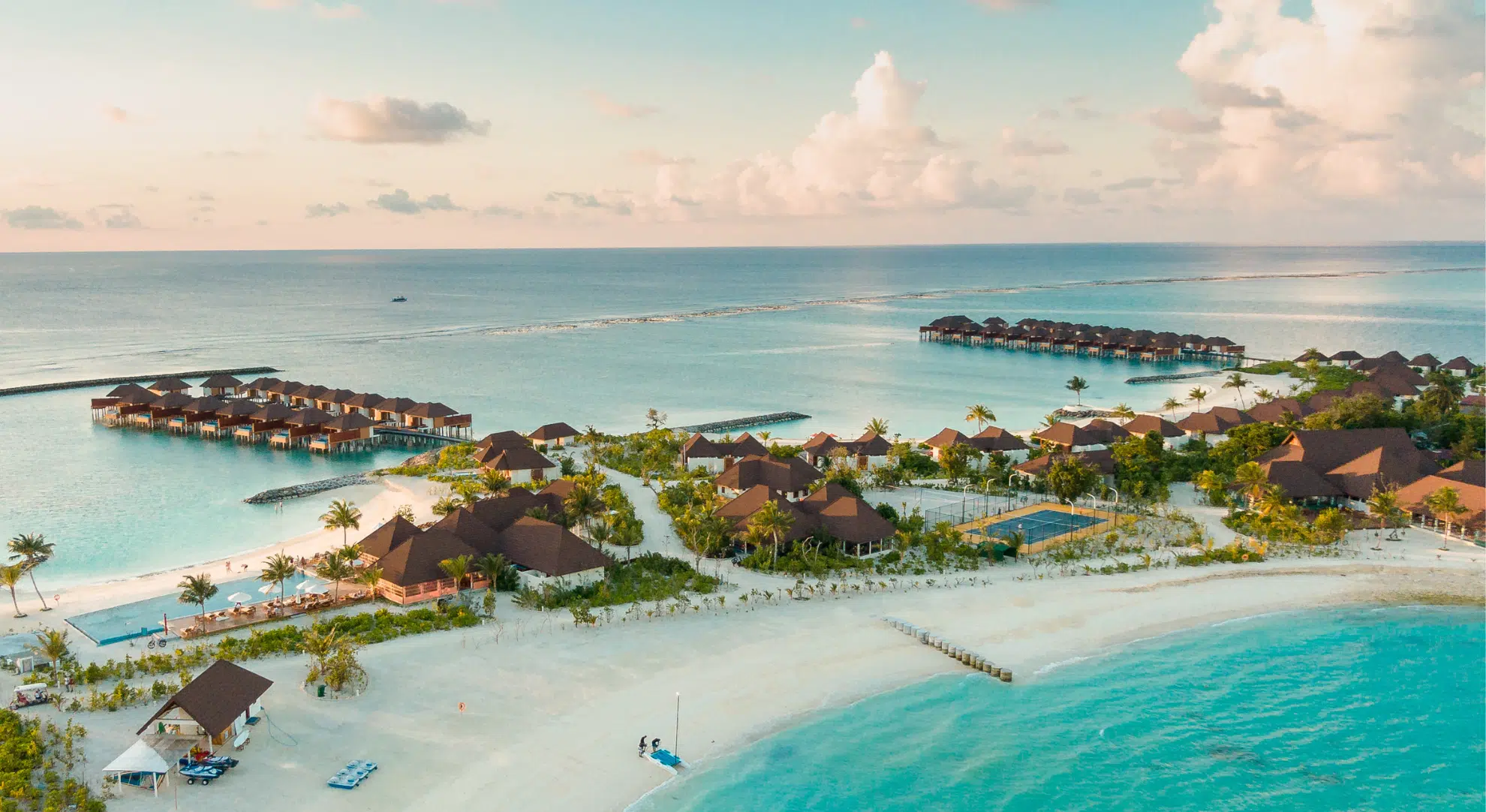
The new terminal also means seaplane transfers are coordinated smoothly with your resort’s arrival protocols. Previously, delays in the main airport created cascading problems for resort water transfers. Now, timing is predictable. You know when you’ll actually reach the island, which means your resort can time transfers, room check-ins and your first dinner service accordingly. It sounds small, but this orchestration is what separates a luxury arrival from a travel ordeal.
What you won’t notice from the arrival experience is that the Maldives finally solved an infrastructure problem that was actively limiting how many travellers the destination could handle. For years, the resorts outpaced the airport’s capacity. Now the systems match. That affects pricing, availability, and how competitive the Maldives remains against other luxury beach destinations. It means the destination actually delivers on the premium experience you’ve paid for starting from the moment your plane lands.
To experience the Maldives with the ease the new terminal now allows, reach out to Do Not Disturb and begin designing your journey.
Speak to Do Not Disturb’s luxury travel experts and turn this moment into something personal.
Related destinations
Suggested articles










Tell us how you want to feel, we’ll take it from there.
“Our trip was truly magical and full of core memories that will last us a lifetime.”
Michael • Bora Bora Honeymoon

“We just returned from an incredible journey through Ireland, and we couldn’t have had a better experience”
Brad • Ireland Adventure
“This was a flawless experience right from the beginning, we had so many thoughts and ideas flowing around and they took all of them and perfectly curated the most beautiful honeymoon for us.”
Kris • Sicily Honeymoon
 5 min read
A Maldives honeymoon usually comes down to one early decision. Stay on a single island for the full trip, or divide the time between two resorts with different characters.
 6 min read
Most honeymoon planning defaults to summer, or to whichever destination is warmest on the day of the wedding. Autumn deserves its own shortlist. It is grape harvest in Italy, dry season settling in across the African plains, the last stretch of Caribbean heat before winter rates arrive, and a handful of weeks in Japan that […]
 5 min read
Italy or Greece for your honeymoon? Compare city hopping, beaches, culture, food, weather, and cost to find the right fit for the two of you.
 2 min read
A decade ago, Lima was a single overnight before the flight to Cusco. Now, a two-day trip can be filled with clifftop parks, spectacular culture, and some of the best cooking in the Americas.
Planning your trip should feel effortless.
You share what matters, whether it’s a destination, a feeling, or a moment worth celebrating.
Your dedicated expert shapes a thoughtful, private itinerary tailored entirely around you.
Every detail handled. Every moment considered. Support before, during, and after your journey.

Answer a few quick questions and we’ll craft a journey as unique as your state of mind.
Ask us anything.
It looks like you're visiting from outside the United Kingdom.
Switch to our US site to view prices in dollars and browse the US version of this page.
