On this page
East Africa’s two defining safari destinations share a border and a migration yet offer fundamentally different experiences. This guide helps determine which belongs on your itinerary.
Two Ecosystems, One Migration
The Serengeti and the Maasai Mara form a single, continuous ecosystem divided by the Tanzania-Kenya border. The Serengeti covers approximately 14,750 square kilometres and the Maasai Mara, its northern extension, covers roughly 1,500. That difference in scale is not incidental. It shapes land use, wildlife density, camp placement, and the degree of solitude available to visitors.
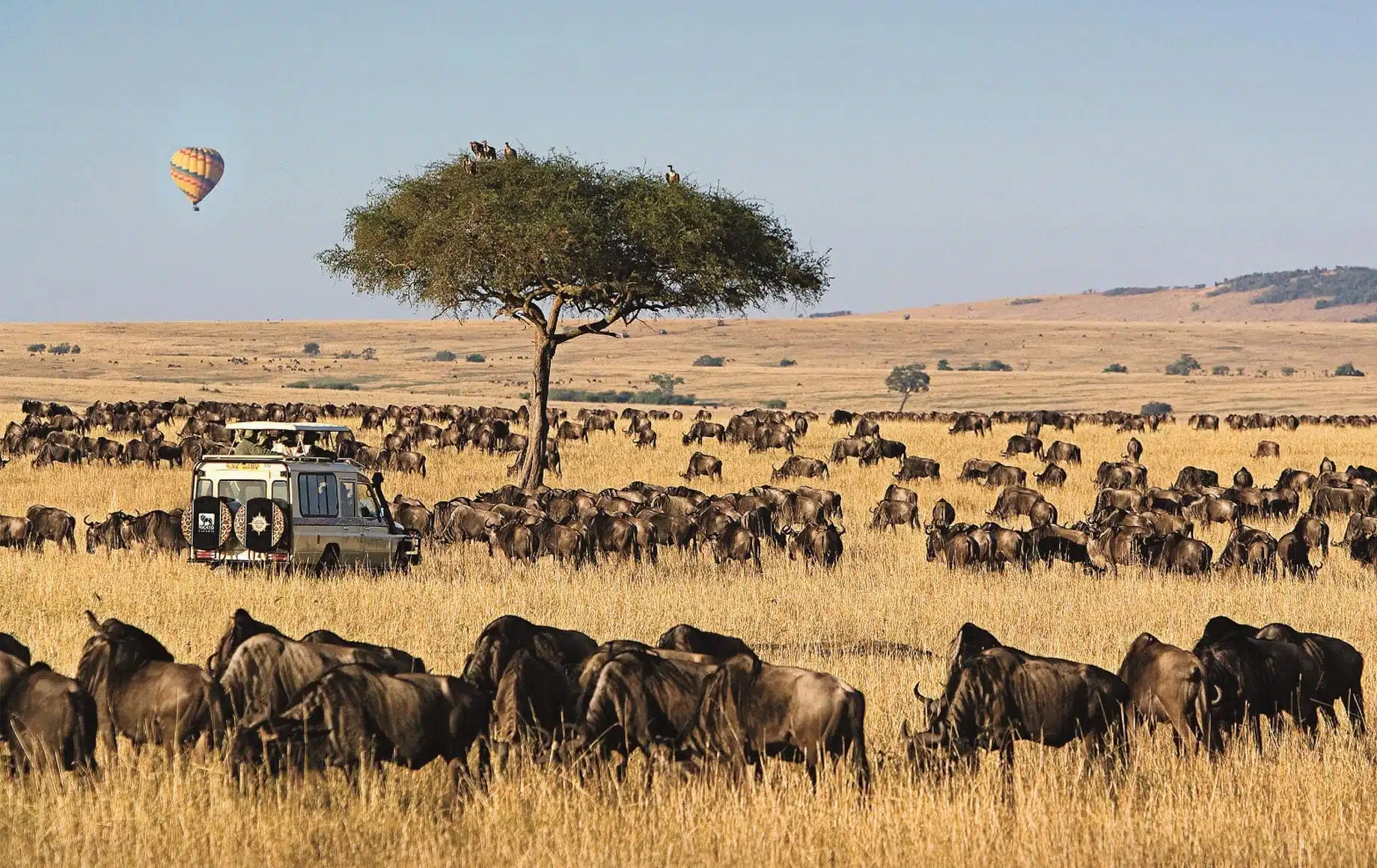
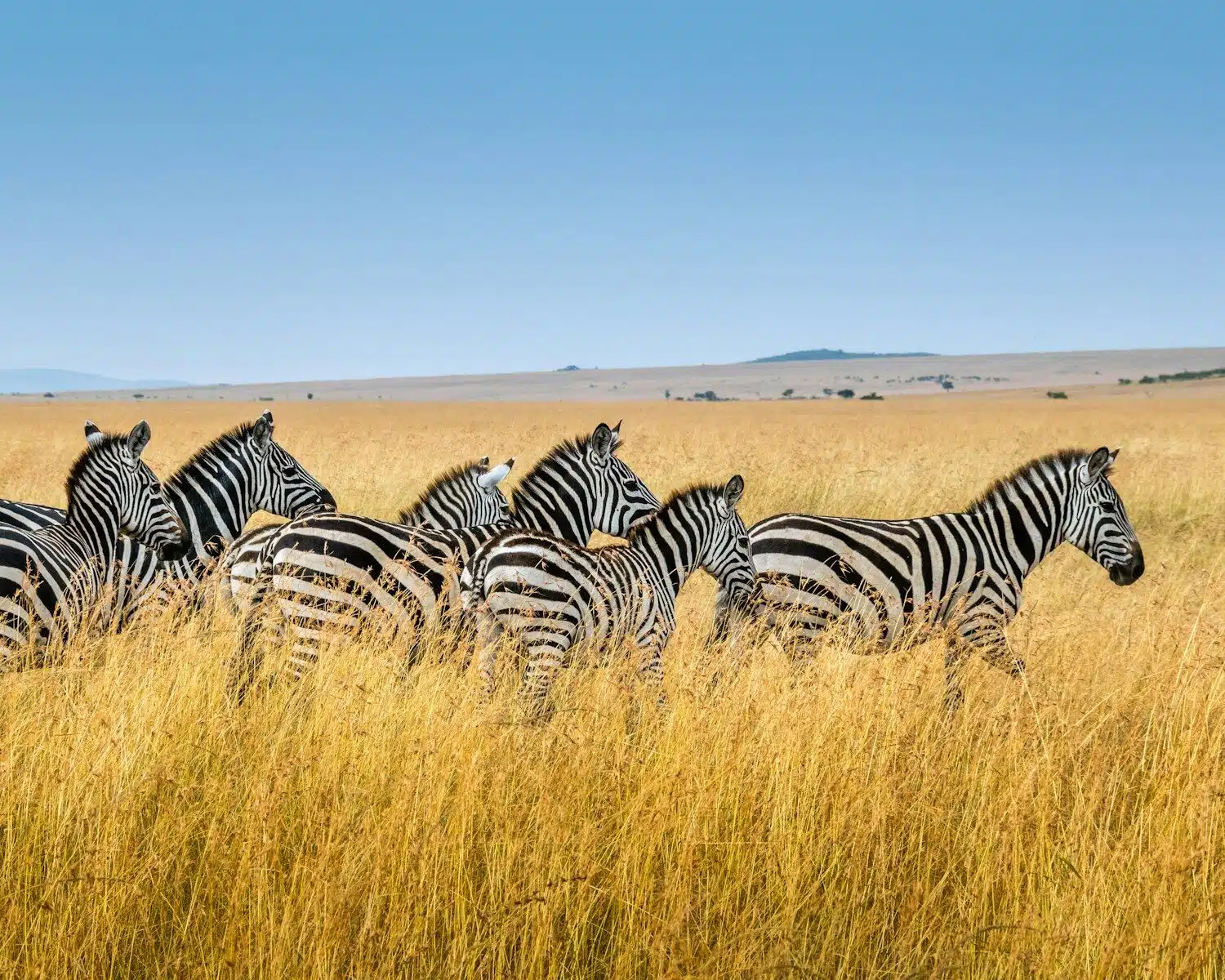
The Great Migration connects both landscapes across a calendar year. Wildebeest and zebra move in a broad circuit determined by rainfall and grass availability, crossing the Mara River between July and October before returning south through the Serengeti’s central and southern plains from December through March. Neither destination owns the migration. Each captures a different phase of it.
Beyond the migration, the two ecosystems diverge. The Serengeti sustains a wider range of habitats, from open savannah to woodland and kopjes, supporting year-round resident wildlife across a larger territory. The Maasai Mara is more concentrated, with a shorter but intense seasonal peak that draws significant visitor numbers to a comparatively compact area.
Wildlife Density and Game Viewing Conditions
The Serengeti covers approximately 14,750 square kilometres, and wildlife is distributed across distinct ecological zones, from the short-grass plains of the south to the woodlands of the north. This scale means game viewing is highly dependent on season and location within the park. The migration moves in a broad, predictable circuit, but encounters with predators, large herds, or river crossings require positioning in the right zone at the right time. Guiding quality and camp placement are consequential here in ways they are not in more concentrated reserves.
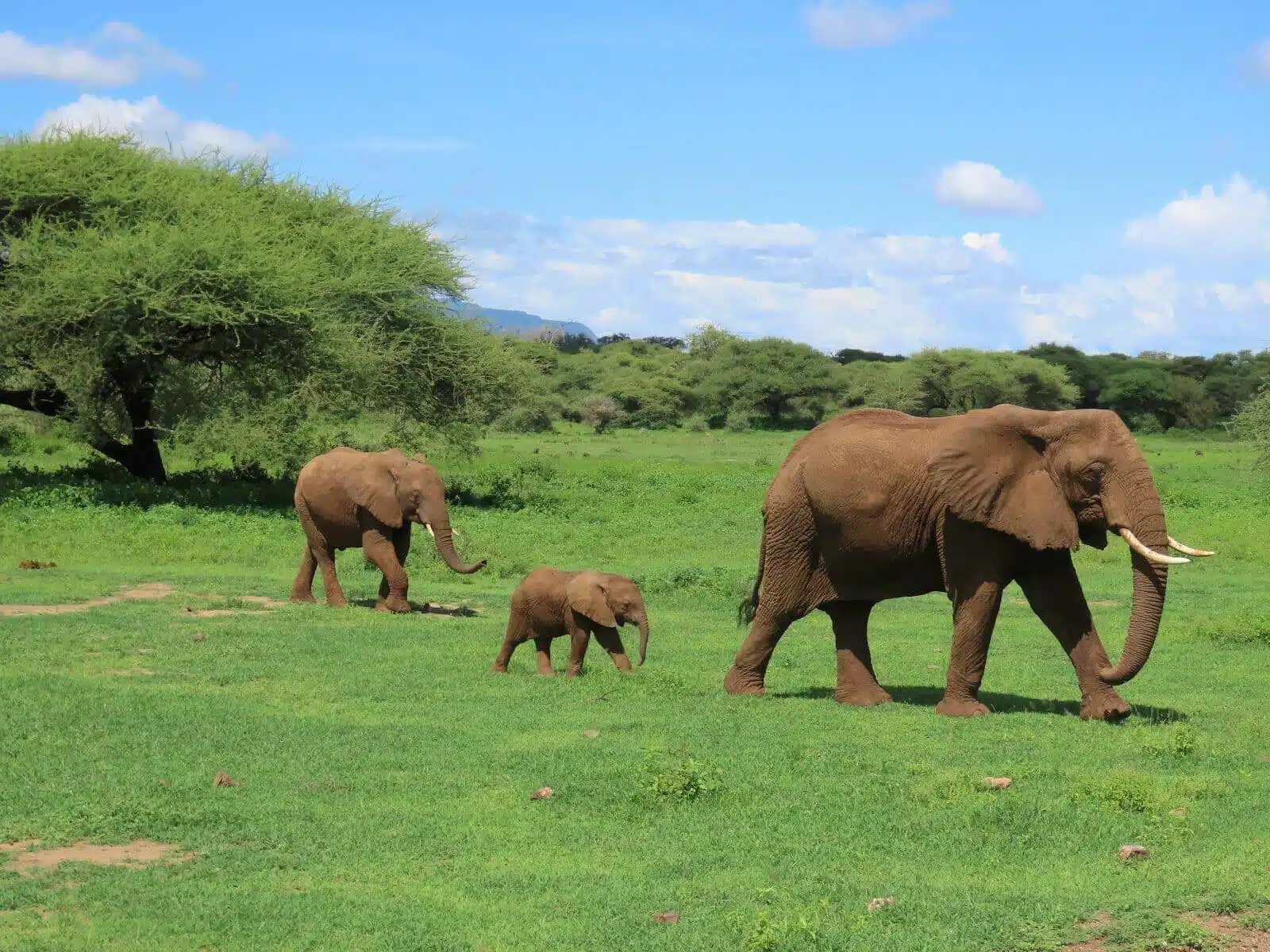
The Maasai Mara, at roughly 1,500 square kilometres, offers consistently high wildlife density throughout the year. The Mara and Talek rivers anchor permanent populations of hippo and crocodile, while lion, leopard, cheetah, and elephant are reliably present across the open plains. During the peak migration months of July through October, the northern Mara sees some of the highest concentrations of wildlife on the continent. The trade-off is that this density attracts significant visitor numbers, and vehicle congestion at key sightings is a genuine consideration.
The Migration Experience: Timing, Access, and Spectacle
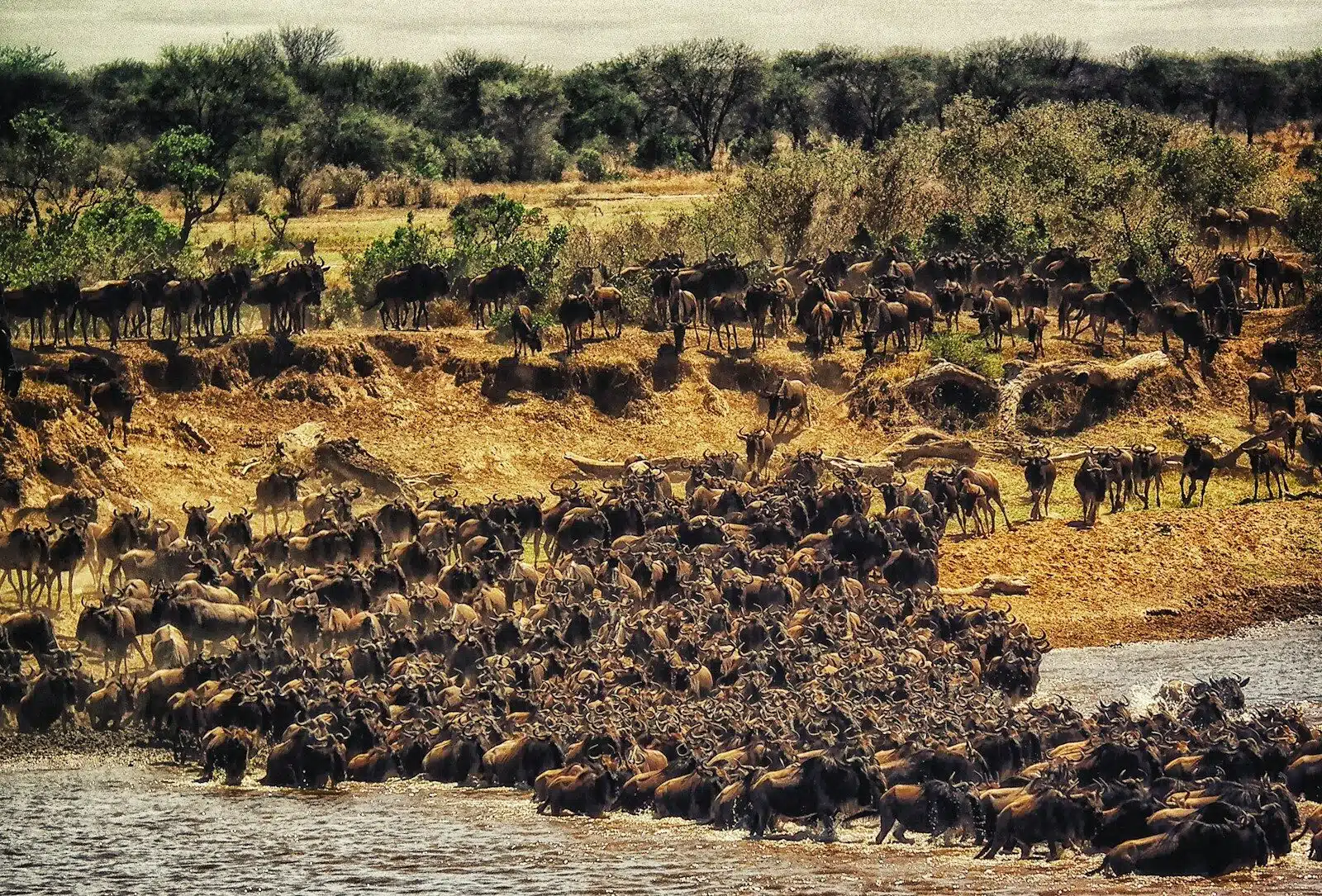
The wildebeest migration is a single continuous movement, but it presents differently depending on where and when you intercept it. In the Serengeti, the herds calve on the southern plains between January and March, then move northwest towards the Grumeti River crossings between May and July. The Maasai Mara receives the migration from late July through October, when the herds cross the Mara River in concentrated, high-frequency movements that are more reliably observed from a fixed camp position.
River crossings in the Mara tend to be more compressed in geography, which makes sustained viewing more practical. The Serengeti crossings at Grumeti are less visited and less predictable, which suits travellers prioritising exclusivity over spectacle. The southern calving season, largely overlooked by first-time visitors, offers a distinct and less crowded alternative.
Timing determines which version of the migration you witness, and the two destinations do not overlap in what they offer across the calendar year.
Luxury Accommodations: Permanence vs. Exclusivity
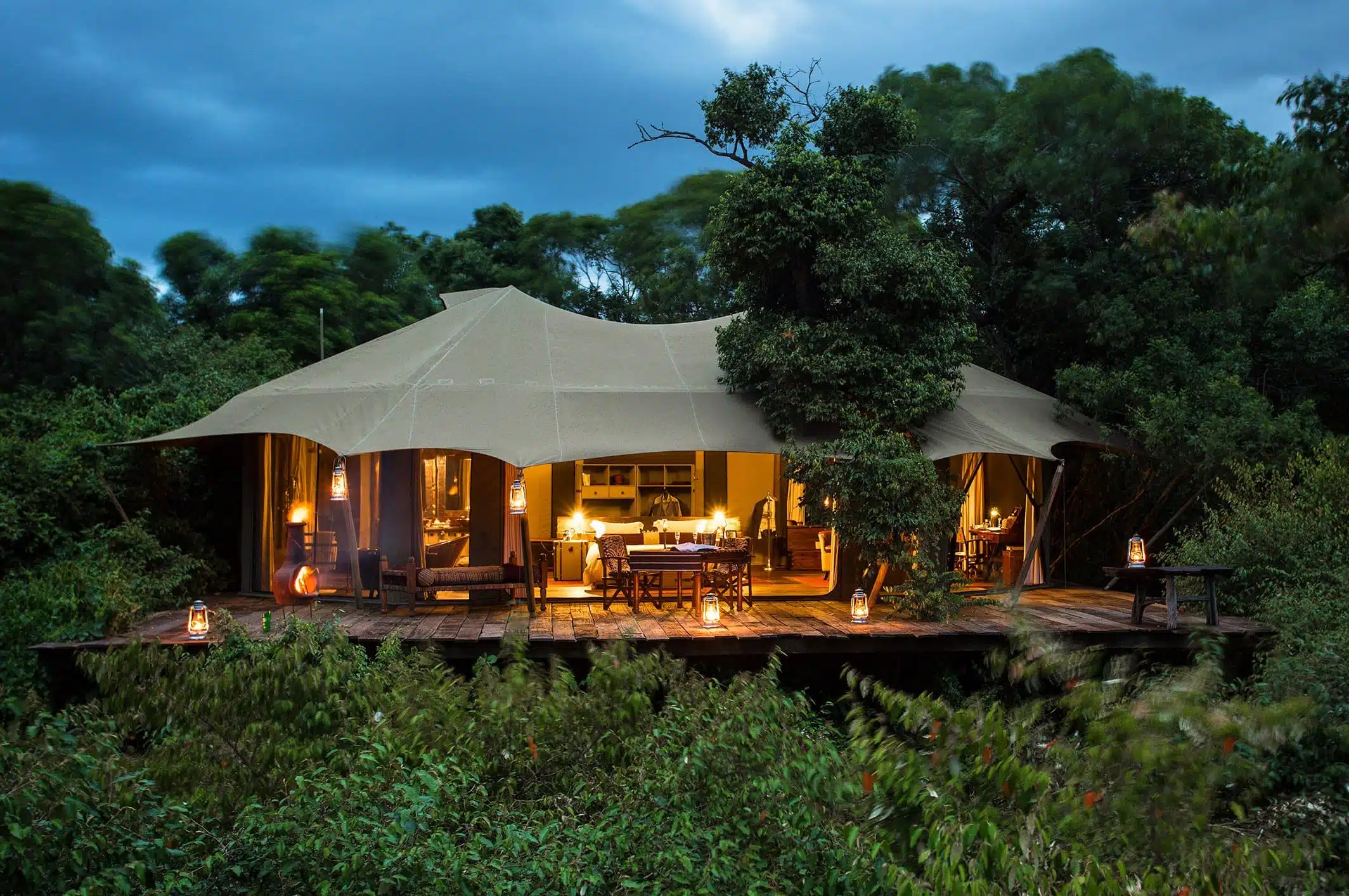
The Serengeti supports a tiered accommodation structure, from large-footprint permanent lodges in the north to smaller, owner-operated camps positioned along key migration corridors in the central and southern zones. Some properties offer fixed infrastructure and consistent service while others reposition seasonally to follow wildlife movement.
The Mara operates differently. Private conservancies bordering the reserve restrict guest numbers by agreement with Maasai landowners, which limits camp density and controls vehicle access. This model produces a more contained experience, with fewer camps per area and tighter exclusivity, though the standard of individual properties varies considerably.
Choosing between the two depends on what the accommodation is expected to deliver. The Serengeti rewards those who prioritise established infrastructure and predictable positioning. The Mara’s conservancy model suits travellers for whom restricted access and low guest density are the primary criteria.
Crowd Levels, Exclusivity, and Conservation Access
The Maasai Mara’s main reserve operates under Kenya Wildlife Service jurisdiction and receives significant visitor pressure, particularly during the migration season between July and October. The private conservancies bordering the reserve, including Ol Kinyei, Naboisho, and Mara North, operate under separate land agreements with Maasai landowners and impose strict limits on vehicle numbers and camp capacity. Access to these conservancies is tied to specific properties, meaning the experience is structurally controlled rather than dependent on timing alone.
The Serengeti’s private concession system functions differently. Concessions are leased directly from the Tanzanian government and grant exclusive use of defined land areas to individual operators. This limits both the number of camps and the activities permitted within each zone, including walking safaris and night drives that are restricted in the national park proper.
Both models offer genuine exclusivity, but they require different approaches to access. The conservancy and concession systems are relationship-dependent, and the properties within them are not uniformly available through standard booking channels.
Which Destination Suits Your Travel Style
The Maasai Mara suits first-time safari travellers and those prioritising the migration in concentrated, accessible form. The Mara River crossings, typically most active between July and October, occur within a relatively compact geography, making sightings more consistent and logistics more straightforward. Camps in the private conservancies adjacent to the reserve offer genuine exclusivity and low vehicle density, which also makes the Mara a strong choice for photographic travel.
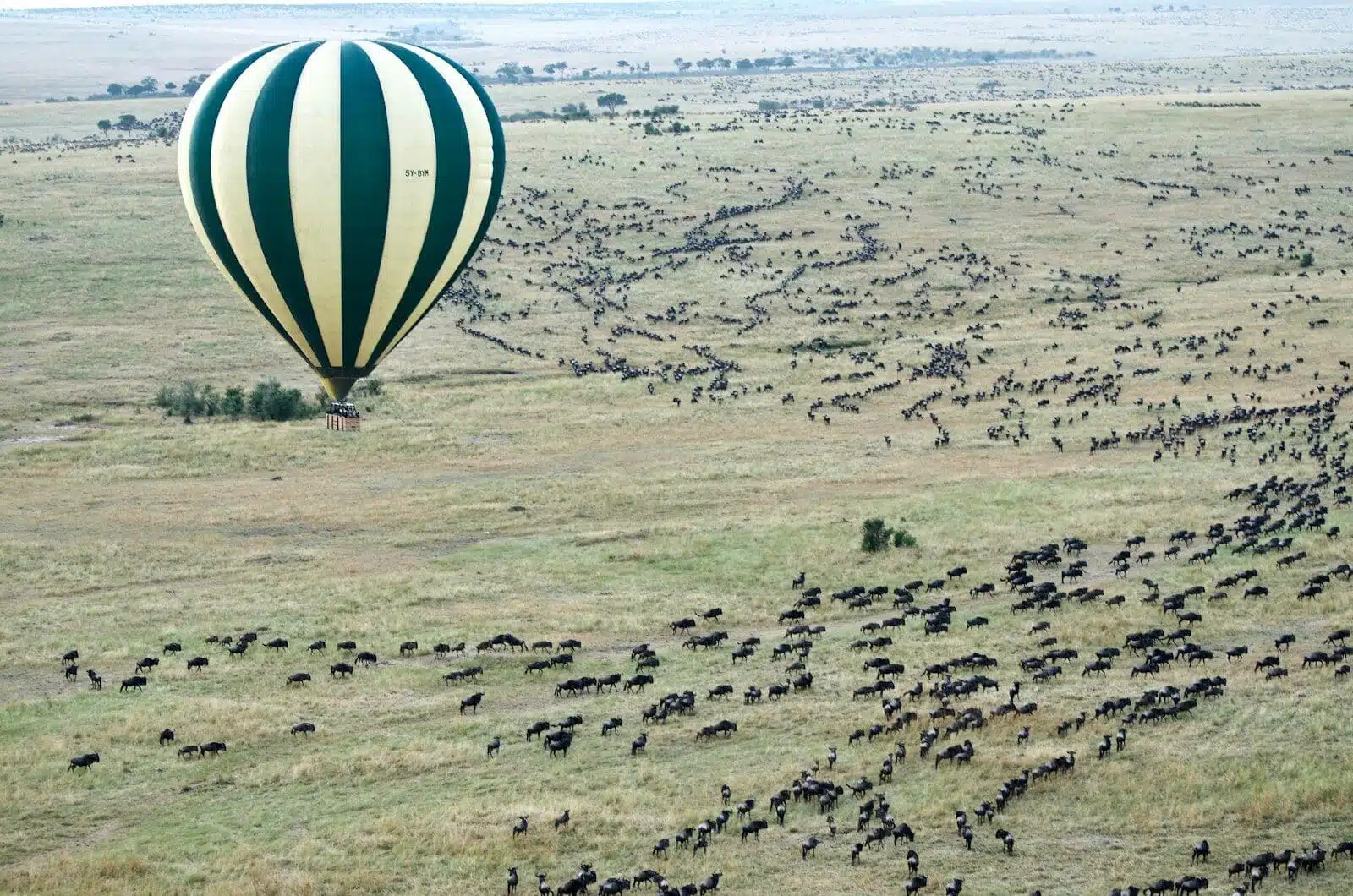
The Serengeti rewards repeat visitors and those seeking a more complete ecological picture. The migration moves through a much larger circuit across the year, from the southern calving grounds in January and February through to the northern river crossings in late summer. This scale requires more precise timing and more considered planning to align an itinerary with the right phase.
For wilderness immersion with minimal infrastructure, the Serengeti’s remote northern and western zones have no equivalent in the Mara. Access to these areas depends entirely on how the trip is structured.
Ready to plan your safari and determine which destination suits your priorities? Speak with Do Not Disturb to begin your journey.