On this page
The peaceful, crowd-free version of Machu Picchu still exists; it just requires knowing exactly when to show up.
Machu Picchu now receives more than a million visitors a year, a figure the site was never built to hold and one that Peru’s government has spent the last decade trying to manage through timed entry, capped daily numbers, and a growing list of restricted circuits.
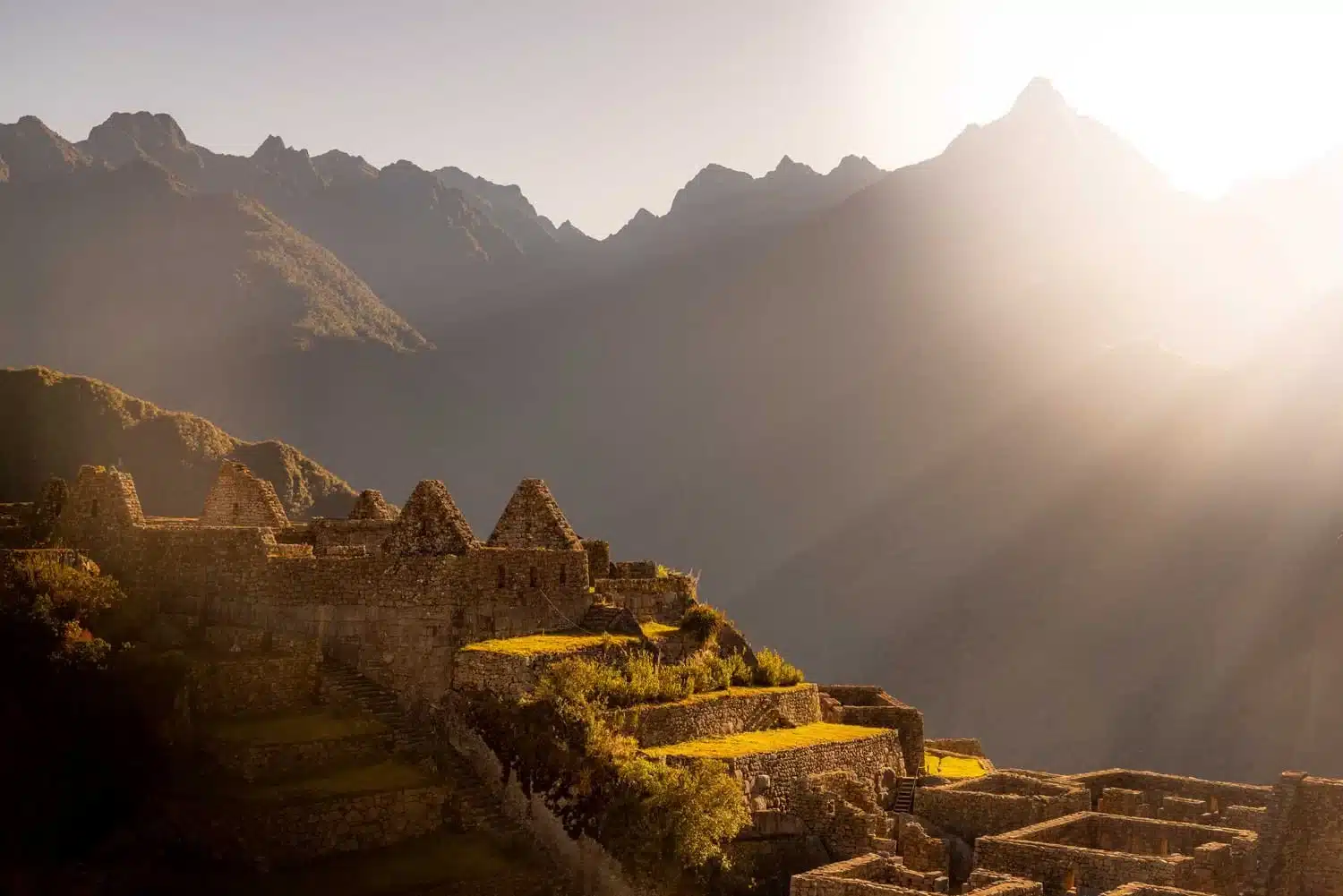
None of that changes what most people still picture when they imagine the citadel: an empty terrace, mist lifting off the mountains, no one else in the frame.
The first entry
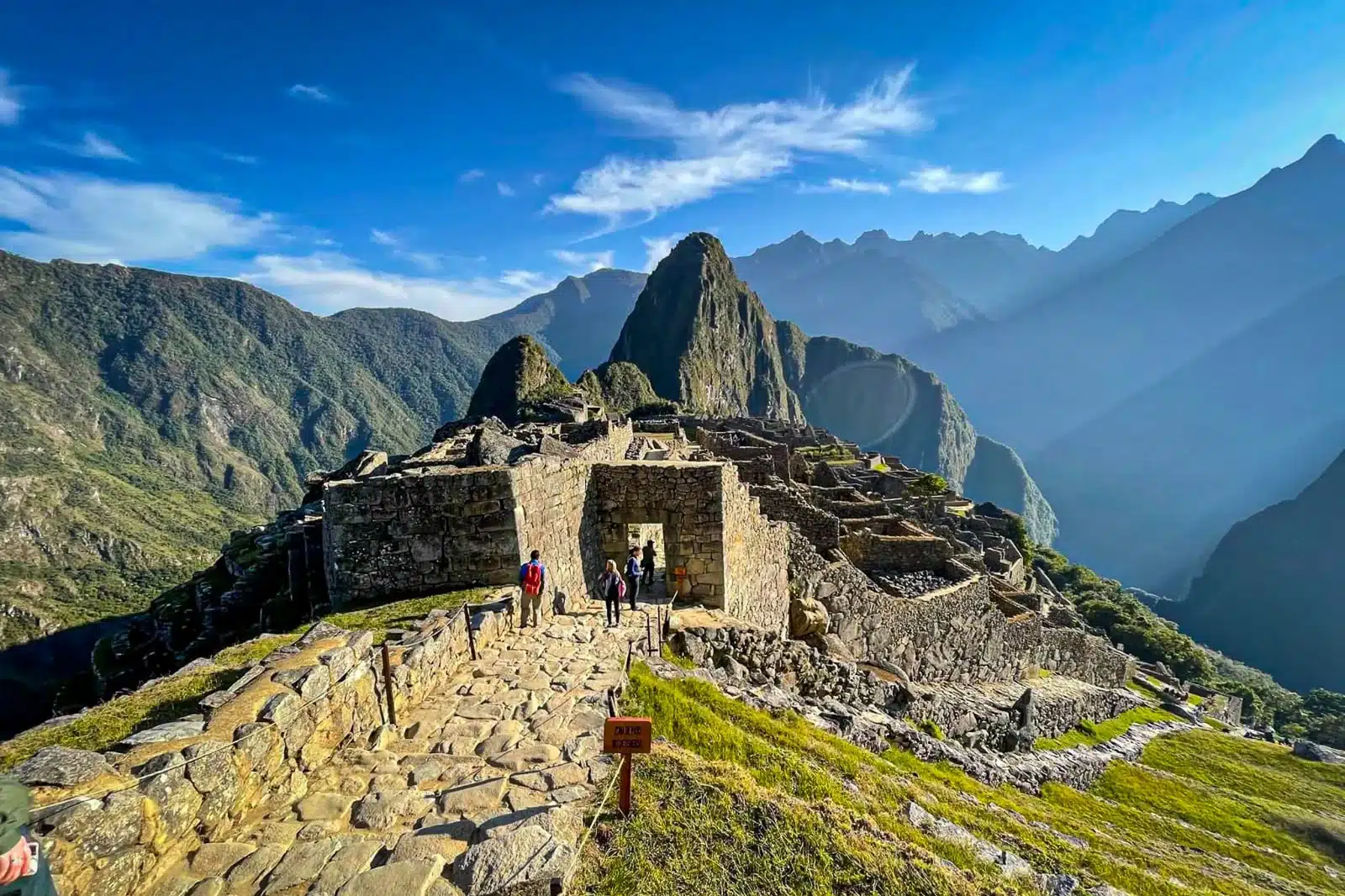
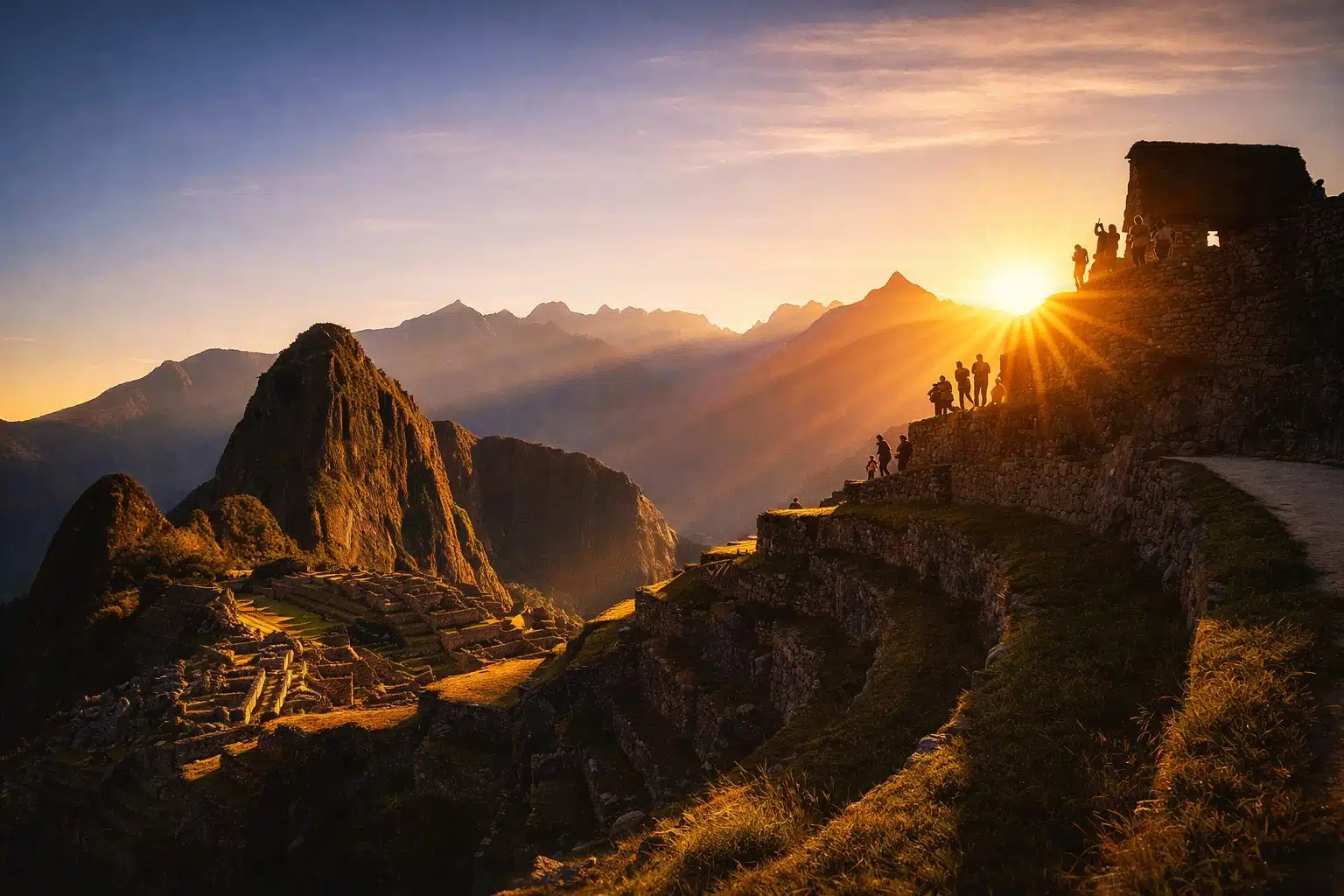
The earliest entry slot opens at 6 a.m., and the difference between arriving then and arriving at 9 a.m. is the difference between a citadel and a queue.
Guests staying in Aguas Calientes the night before can be on the first bus up the mountain, reaching the Sun Gate viewpoint as the light comes over the peaks and well ahead of the trains that begin arriving from Cusco mid-morning.
By 10 a.m., tour groups that started their day in Cusco have caught up, and the terraces fill in accordingly.
Where to stay
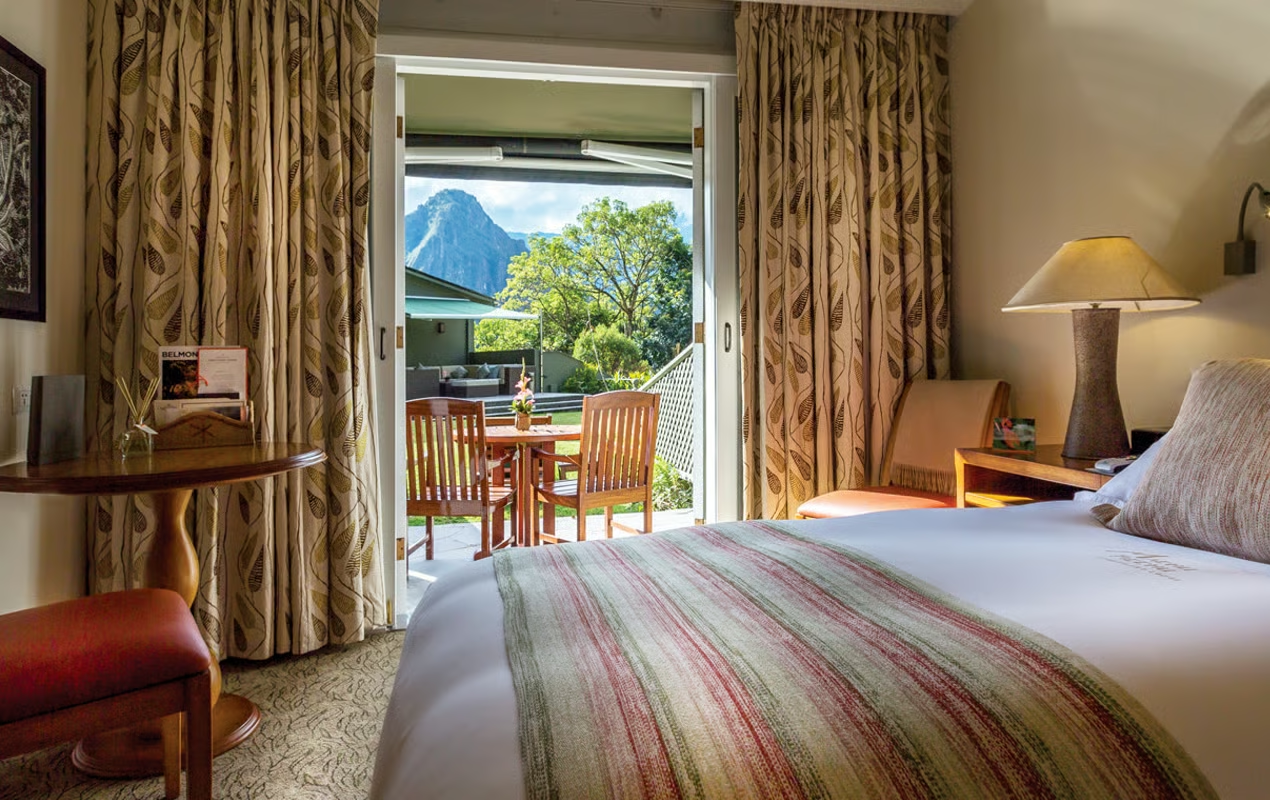
Aguas Calientes has one hotel that sits directly against the site itself: Belmond Sanctuary Lodge, the only property inside the Machu Picchu Sanctuary boundary. Staying there removes the bus ride entirely and allows for an entry before the site technically opens to day visitors.
For those not staying at the lodge, the first bus from town still gets ahead of the rail arrivals, provided it is booked the night before rather than the morning of.
The Sun Gate versus the Sacred Valley approach
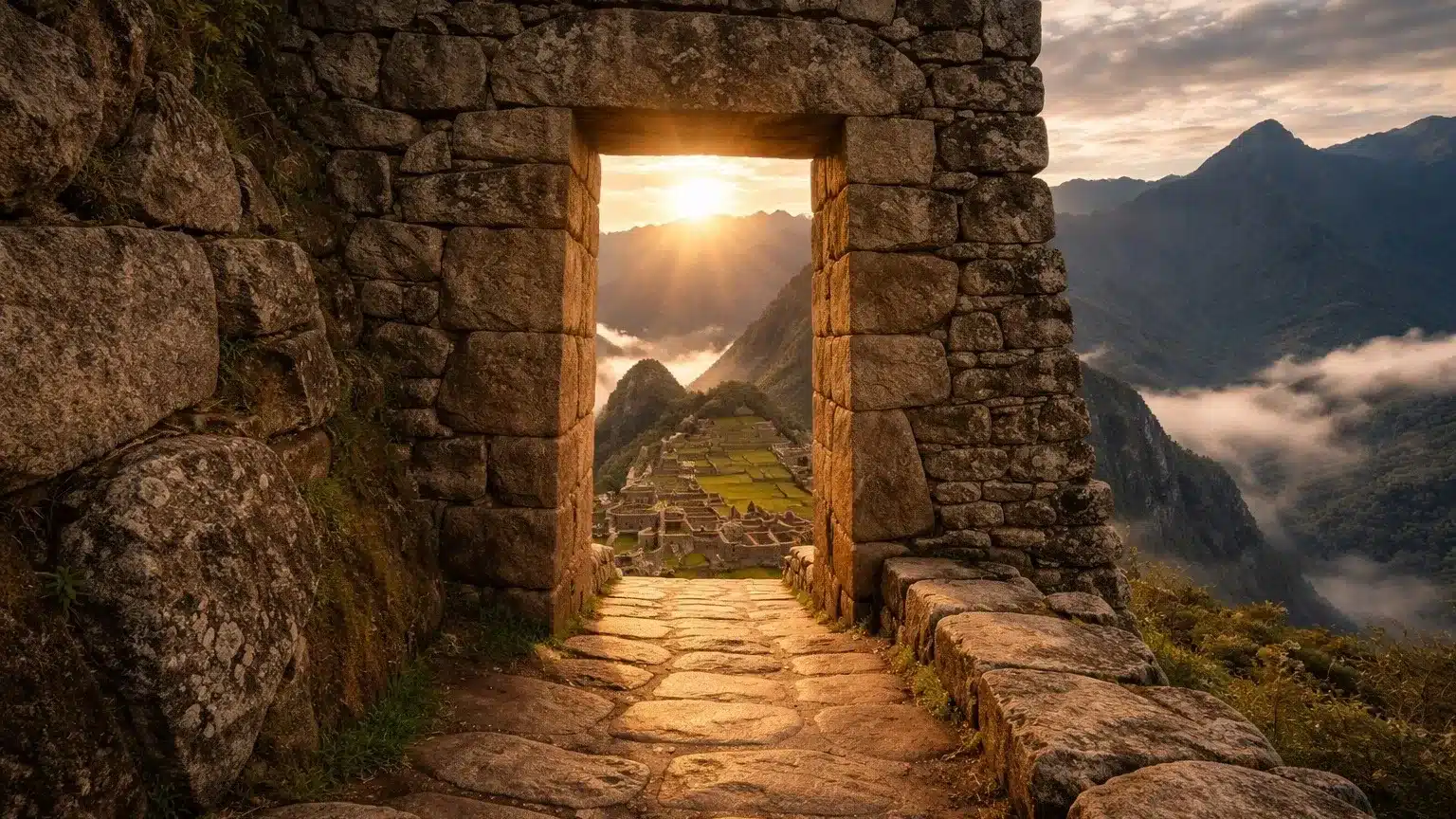
Two routes lead into the citadel. The Inca Trail, four days on foot, arrives through the Sun Gate at dawn and gives trekkers the classic elevated view before descending into the site itself. It requires permits booked months in advance and a reasonable level of fitness at altitude.
The rail approach from Ollantaytambo, roughly ninety minutes to Aguas Calientes, is the route most private itineraries take, and it loses none of the impact when timed for the first bus up.
A guide who knows the light
Machu Picchu photographs differently depending on the hour, and a private guide who has worked the site for years will know precisely where the sun clears the surrounding peaks on a given morning and how long the cloud typically holds before burning off.
Their knowledge is the difference between photographs that look like everyone else’s and a morning that felt like it belonged only to you.
See our Machu Picchu itinerary here.