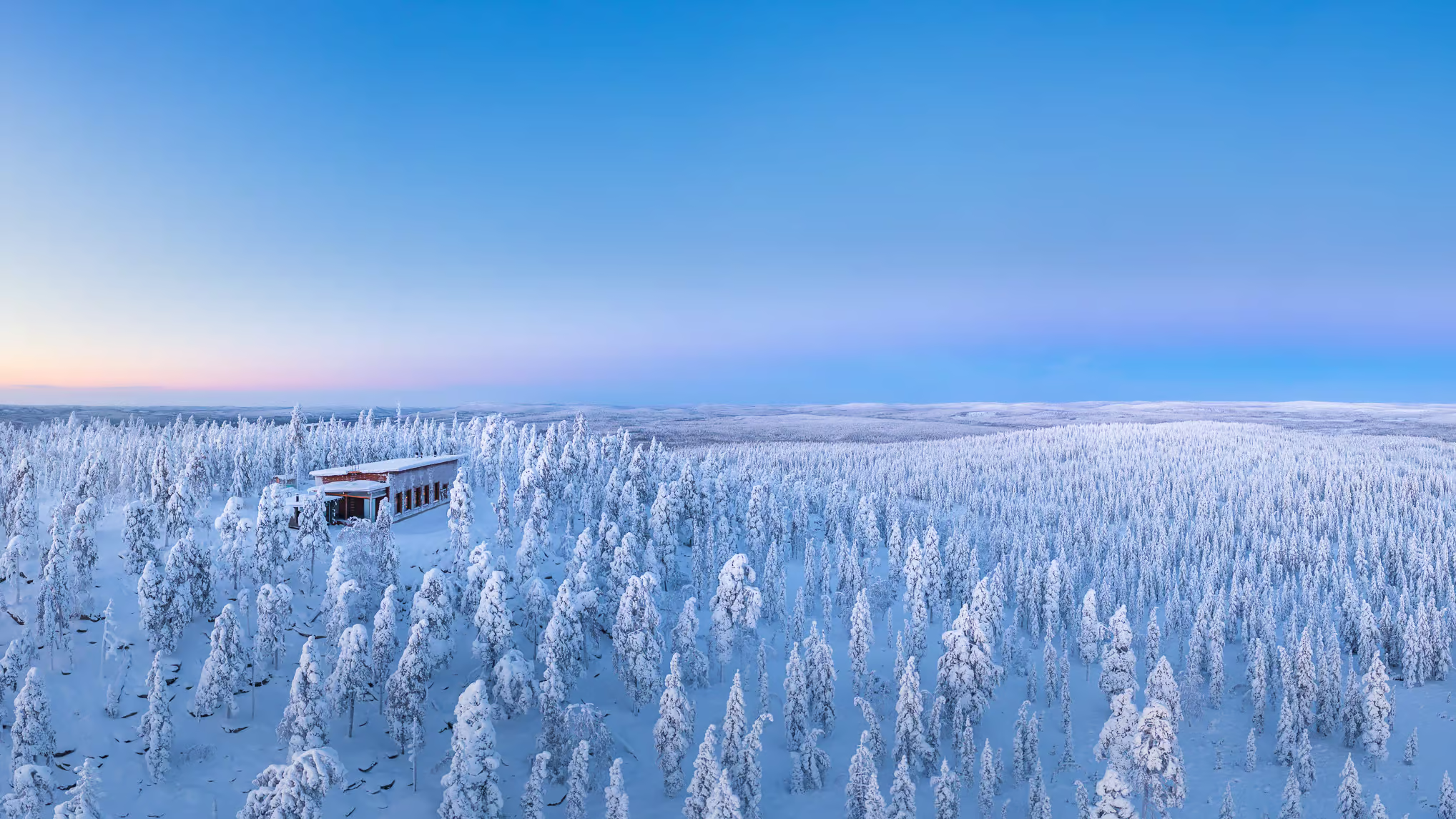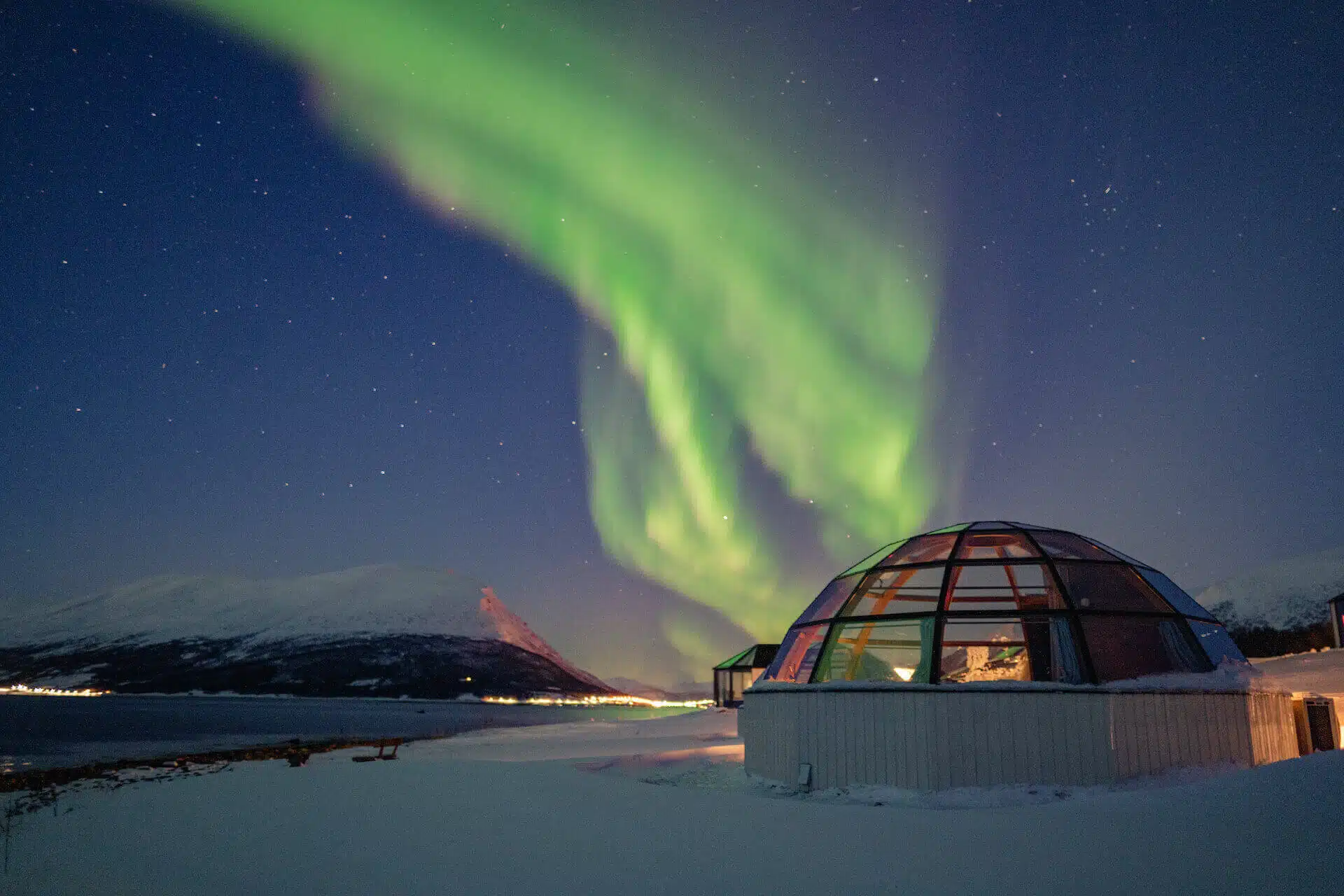

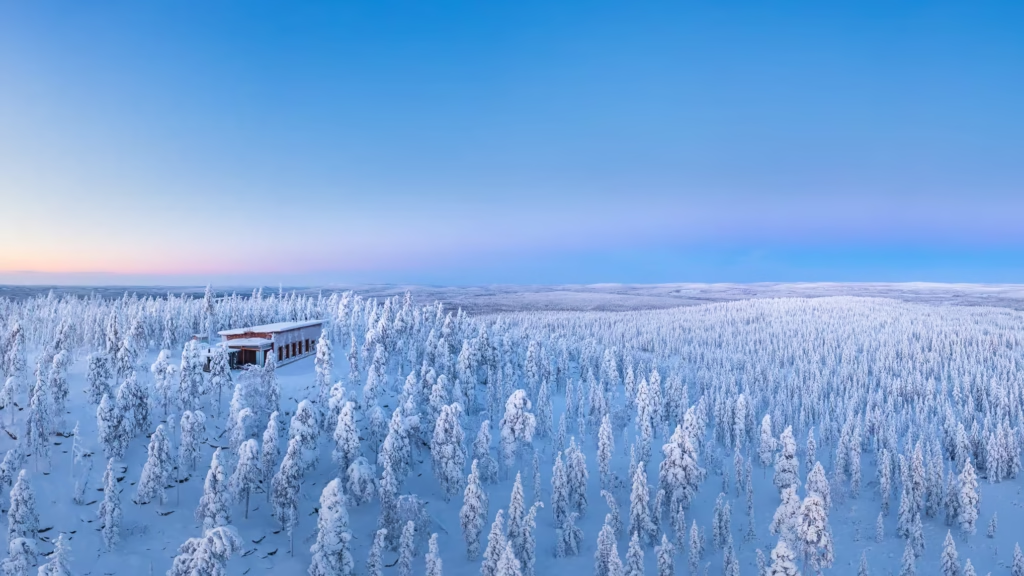
Finland’s glass igloo hotels have redefined Arctic luxury, offering a rare opportunity to experience wilderness immersion and high-end design simultaneously across Lapland’s most remote landscapes. This guide compares the country’s most compelling options across the criteria that matter most: privacy, Northern Lights exposure, architectural quality, location, and the overall caliber of the guest experience.
What Sets Finland's Glass Igloos Apart
Finland’s glass igloo category emerged from a specific set of conditions: long, dark winters, low light pollution across Lapland, and a hospitality infrastructure that developed around aurora viewing rather than general winter tourism. The result is a distinct accommodation format, purpose-built for Northern Lights exposure, that has since attracted serious architectural investment and established its own tier within Arctic luxury travel.
Not all glass igloos are equal. The range spans everything from high-density resort clusters to single-cabin wilderness sites, and the gap between them in terms of privacy, design quality, and location is considerable. Proximity to artificial light, the thermal performance of glazed structures, and the degree of surrounding development all shape whether the experience delivers what it promises.
The properties assessed in this guide are evaluated across five criteria: privacy, Northern Lights exposure, architectural quality, location, and overall luxury standard. These are the factors that determine whether the experience stays with you.
About Do Not Disturb
Do Not Disturb is a luxury travel company specializing in carefully designed journeys and considered experiences. Each itinerary we build for our clients is informed by real destination knowledge, offering insight into places, cultures, and moments that shape how a trip comes together.
If this destination has sparked ideas, the itinerary can be developed into a private journey tailored to your interests and travel style, with hand-picked stays, thoughtful routing, and experiences curated around what matters most to you.
Kakslauttanen Arctic Resort, Saariselkä
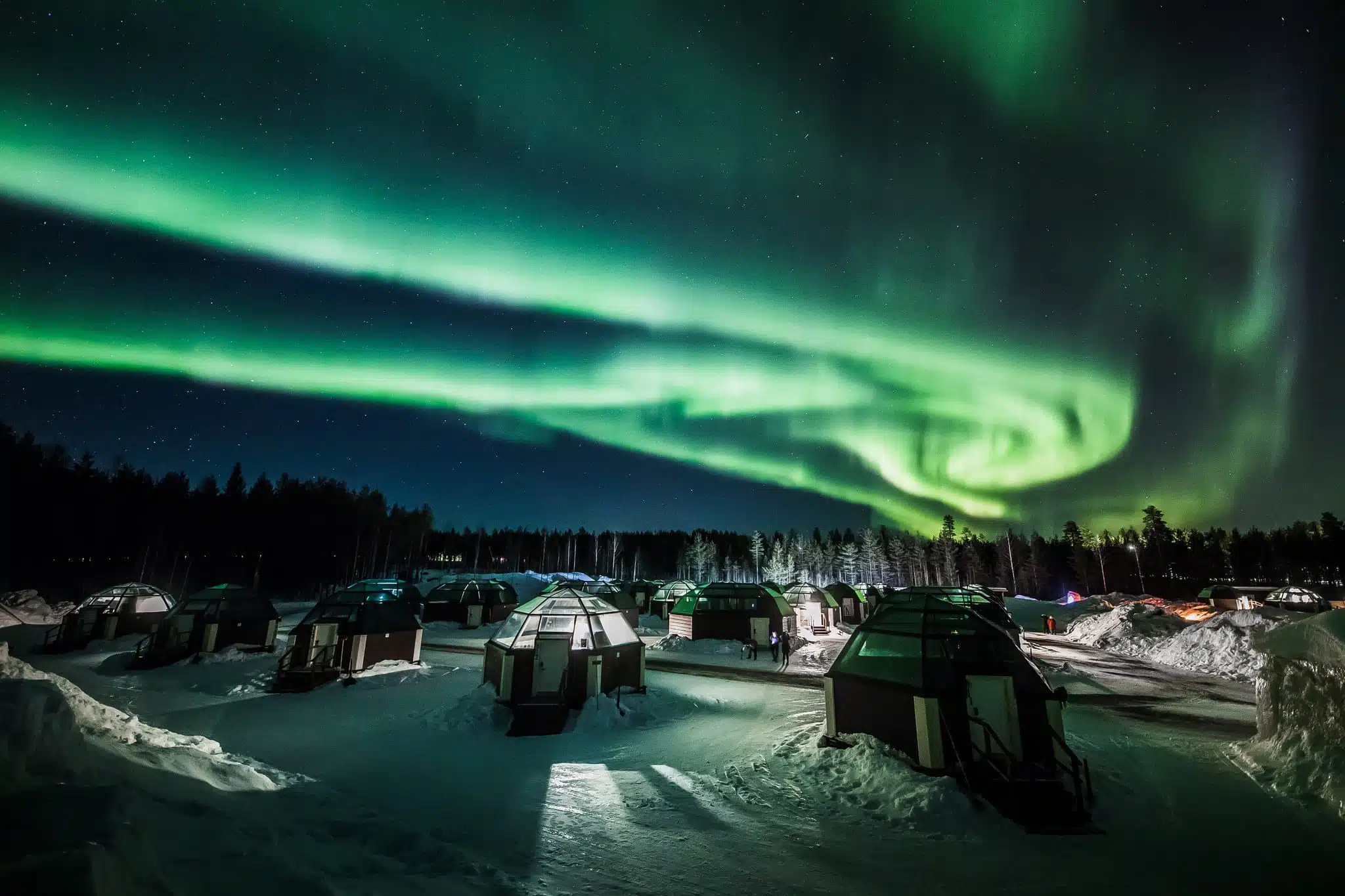
Kakslauttanen is the property most responsible for establishing the glass igloo as a distinct accommodation category. Located near Saariselkä in northern Finnish Lapland, it sits within one of the region’s darkest and clearest Aurora zones, with the resort recording visible Northern Lights on a significant proportion of nights between September and March. The thermal glass igloos maintain interior warmth without condensation, a technical requirement that many later properties have struggled to replicate at the same standard.
The resort operates at a scale that sets it apart from newer, more exclusive competitors. With dozens of igloos across the site, the units are closer together than properties built around privacy as a primary design principle. This does not undermine the Aurora viewing conditions, but it does affect the sense of seclusion that defines the upper tier of this category.
For travelers prioritizing Northern Lights reliability and the resort’s established infrastructure, Kakslauttanen remains the most established point of reference in this space, the property against which most others are implicitly measured. For those prioritizing privacy and exclusivity, it requires careful comparison against smaller properties.
Arctic TreeHouse Hotel, Rovaniemi
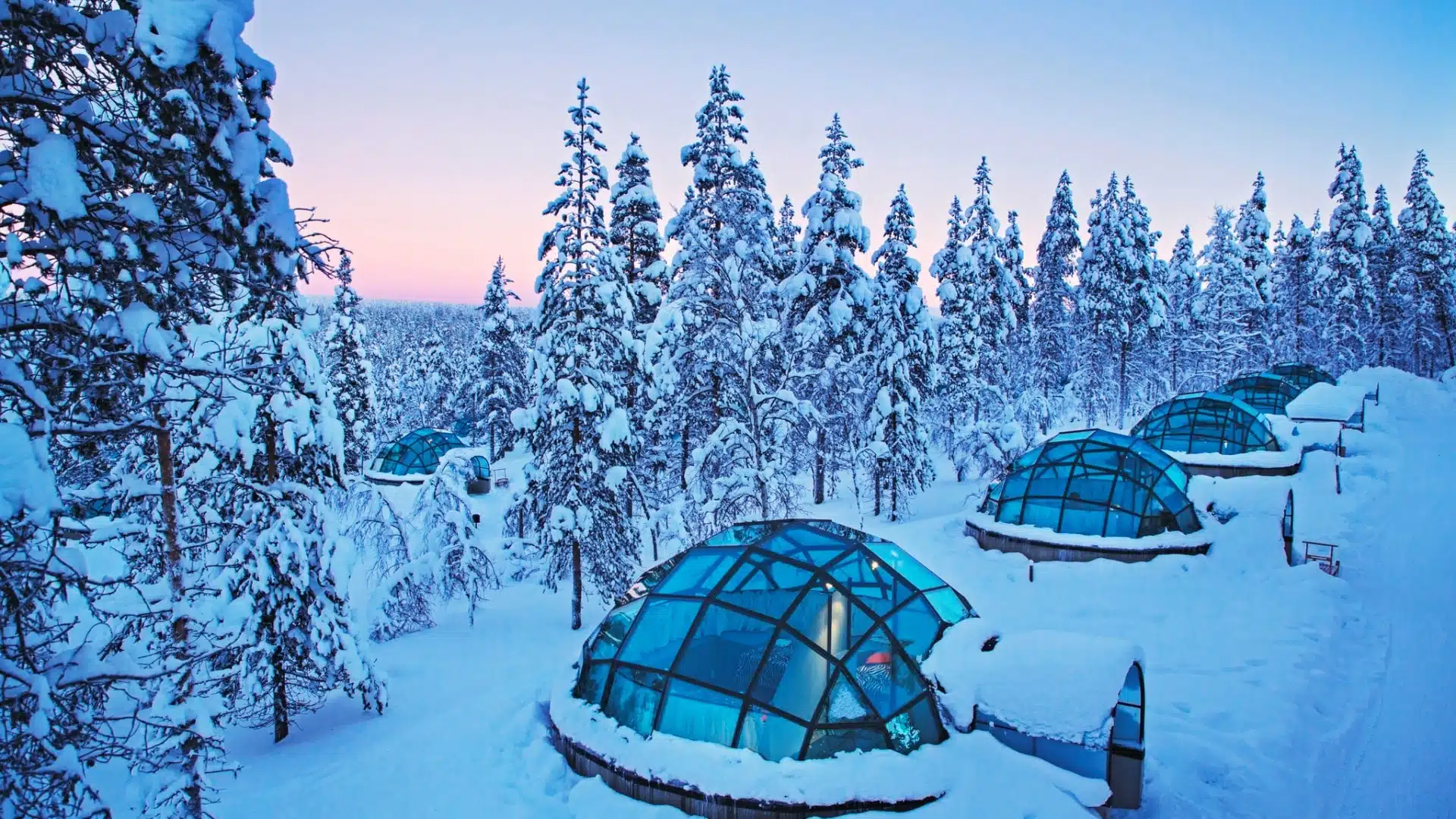
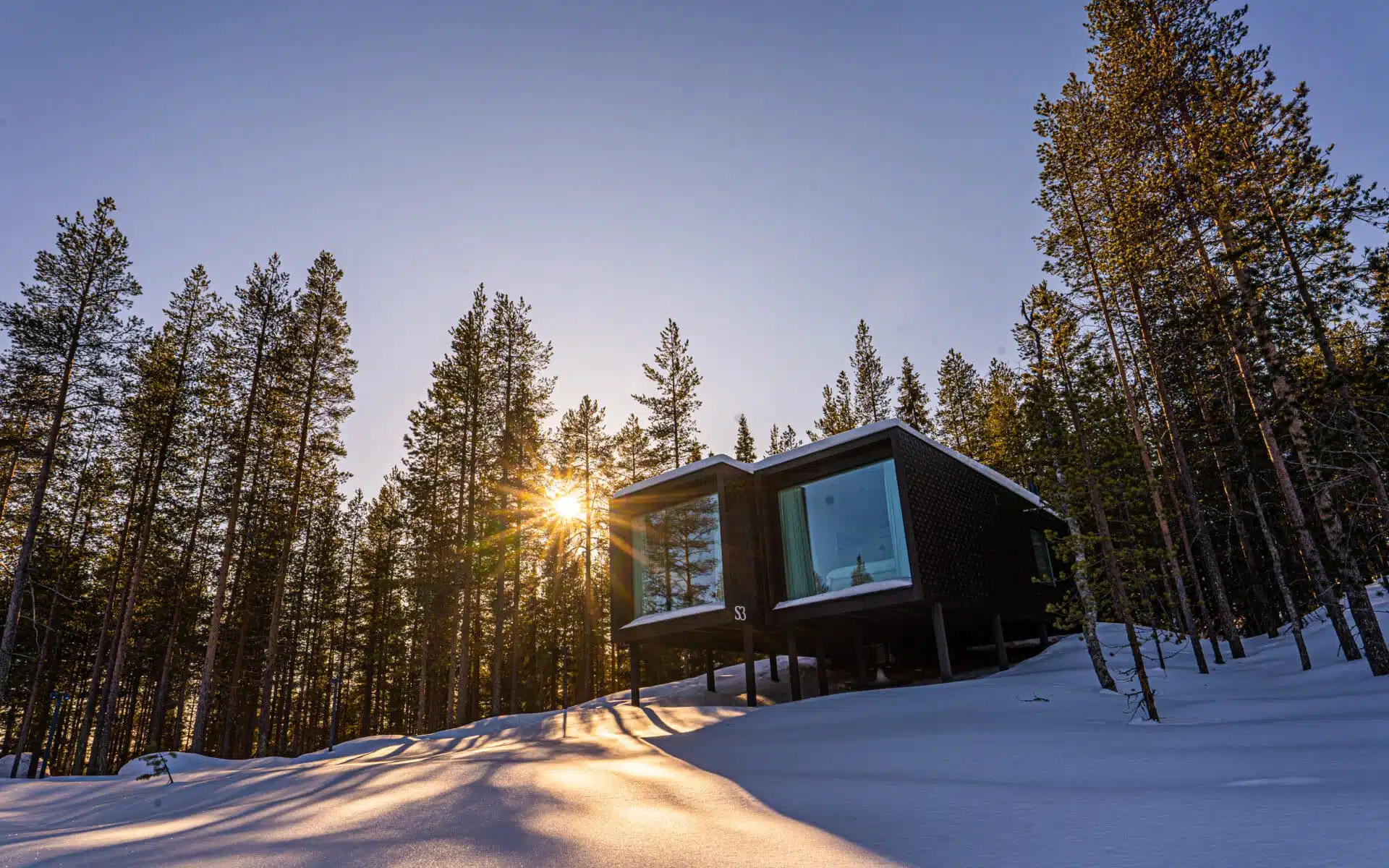
Arctic TreeHouse Hotel sits on a forested hillside two kilometers from Rovaniemi’s town center, making it the most accessible of Finland’s glass igloo properties. Its suites are elevated on stilts among the pines, with floor-to-ceiling glass frontages oriented to maximize sky exposure. The architecture draws on a consistent design language across the property, with natural materials and clean lines that distinguish it from more utilitarian igloo formats.
The proximity to Rovaniemi is a structural trade-off. Guests gain convenient access to Santa Claus Village, the Arctic Circle crossing, and the town’s transport links, including direct flights from Helsinki. The surrounding light pollution is marginally higher than at more remote properties, though the elevated position and northward orientation of the suites preserve reasonable northern lights visibility during periods of strong activity.
This property suits travelers who want design quality and logistical ease in combination. It is a considered choice for shorter stays or itineraries that pair Rovaniemi’s attractions with a high-specification place to sleep.
Levin Iglut and the Levi Fell Properties
Levi is Finland’s largest ski resort, and the glass igloo properties in its orbit reflect that context. Structures such as Levin Iglut sit within reach of groomed slopes and resort infrastructure, which makes them a practical choice for travelers combining Aurora viewing with winter sports. The trade-off is visibility: Levi’s resort lighting and surrounding development reduce the darkness required for optimal Northern Lights observation, particularly during peak ski season when activity levels are highest.
Privacy is where these properties fall furthest behind more remote competitors. Proximity to resort facilities means foot traffic, shared access routes, and a guest demographic that skews toward activity-led travel rather than seclusion. The igloos themselves are well-appointed, but the setting does not offer the isolation found at properties deeper in Lapland.
For travellers whose priority is Aurora exposure or genuine remoteness, Levi-area igloos represent a compromise. For those integrating igloo accommodation into a broader ski itinerary, the location logic is sound.
Arctic SnowHotel & Glass Igloos, Lehtojärvi
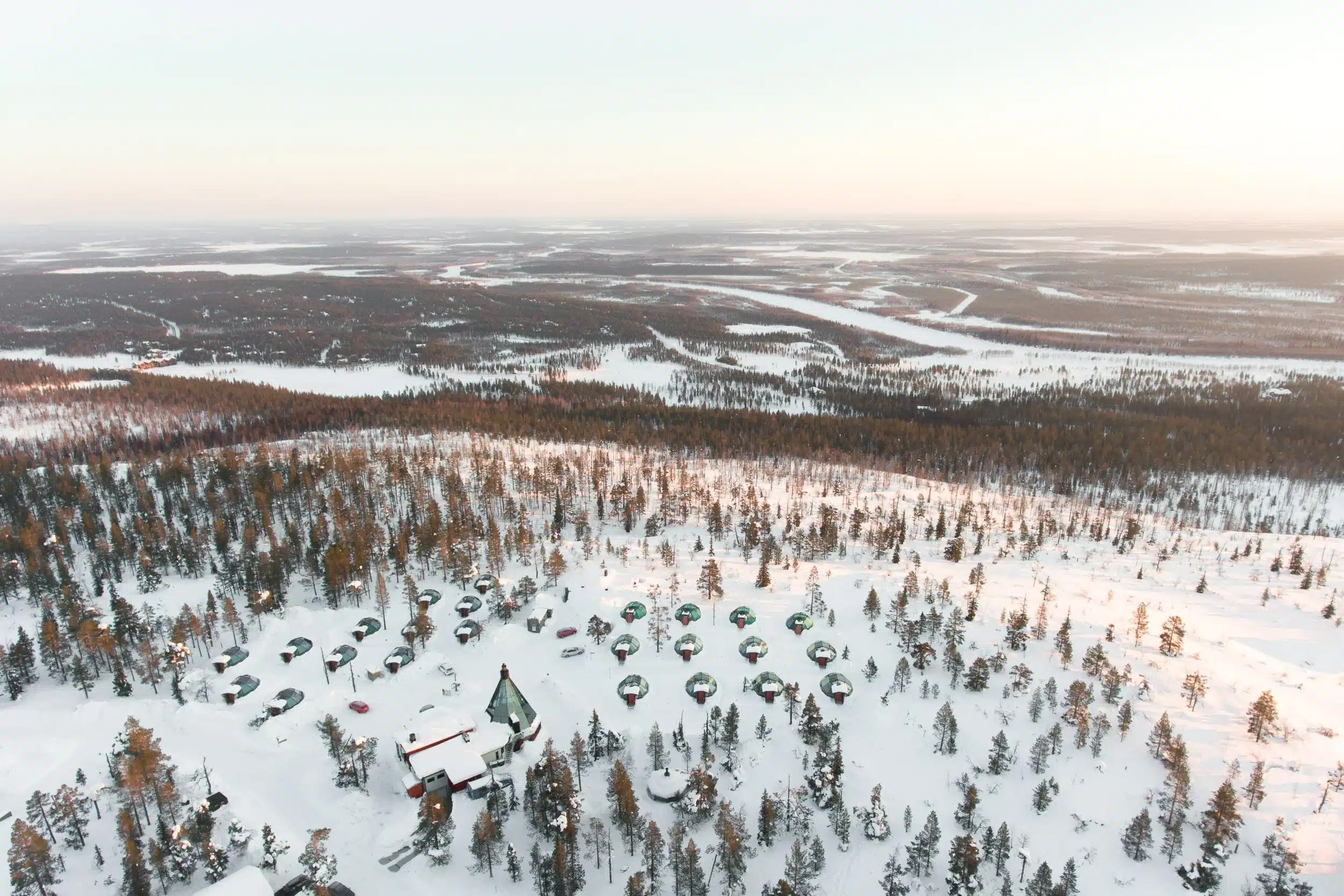
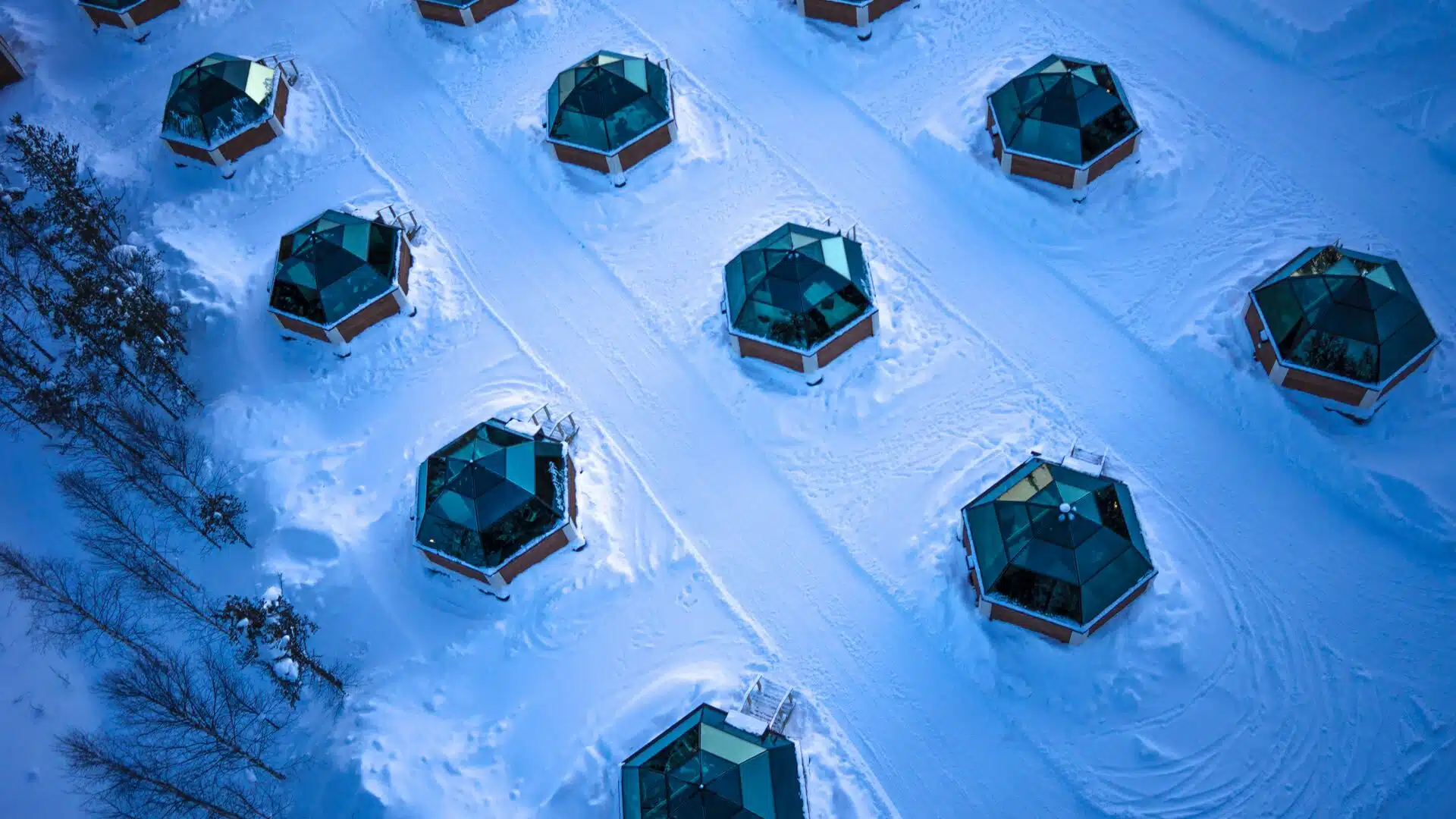
Arctic SnowHotel sits on the shore of Lake Lehtojärvi, approximately 26 kilometers from Rovaniemi, close enough for convenient access to the town’s transport links and attractions and far enough to reduce light pollution to a workable level. The 39 glass igloos feature 360-degree heated glazing that prevents condensation and clears snowfall automatically, providing unobstructed sky exposure across the full arc of the structure rather than a single oriented panel. A Northern Lights alarm system operates across all units.
The property runs two accommodation formats on the same site. The igloos cover the full Aurora season from September through March. The SnowHotel, rebuilt each winter to a new design, opens in mid-December and is complimentary for igloo guests, including access to the ice bar and ice restaurant.
For travelers whose itinerary already includes Rovaniemi, the location logic is sound. For those prioritizing darkness and isolation above all else, properties positioned further north in Lapland offer a structural advantage.
How to Choose: Matching Property to Traveler
The right property depends on which variable the traveler is least willing to compromise. For maximum Northern Lights probability, the physics are straightforward: distance from artificial light, elevation, and latitude all work in the traveler’s favor the further north and deeper into Lapland a property sits. For seclusion, the relevant factor is not remoteness alone but the ratio of igloos to shared infrastructure. Waking at two in the morning to a sky full of aurora is a different experience entirely when there is no one else visible in any direction.
Design quality varies more than marketing suggests. Some properties have invested seriously in thermal glass technology and architectural coherence; others offer little more than a transparent roof panel bolted to a standard cabin. The distinction matters, not just aesthetically but practically. A well-engineered glazing system maintains clarity through snowfall and temperature fluctuation in a way that a lesser one does not, and the quality of the sky above you is only as good as the glass between you and it.
Ease of access is a practical constraint but not a purely logistical one. The transfer from Rovaniemi to a property deeper in Lapland, by road through birch forest and frozen lake country, in darkness, in winter, is part of the experience rather than a prelude to it. Properties closer to the airport suit tighter schedules. Those that demand more of the journey tend to deliver more at the end of it.
Planning Your Stay: Timing, Booking, and Expectations
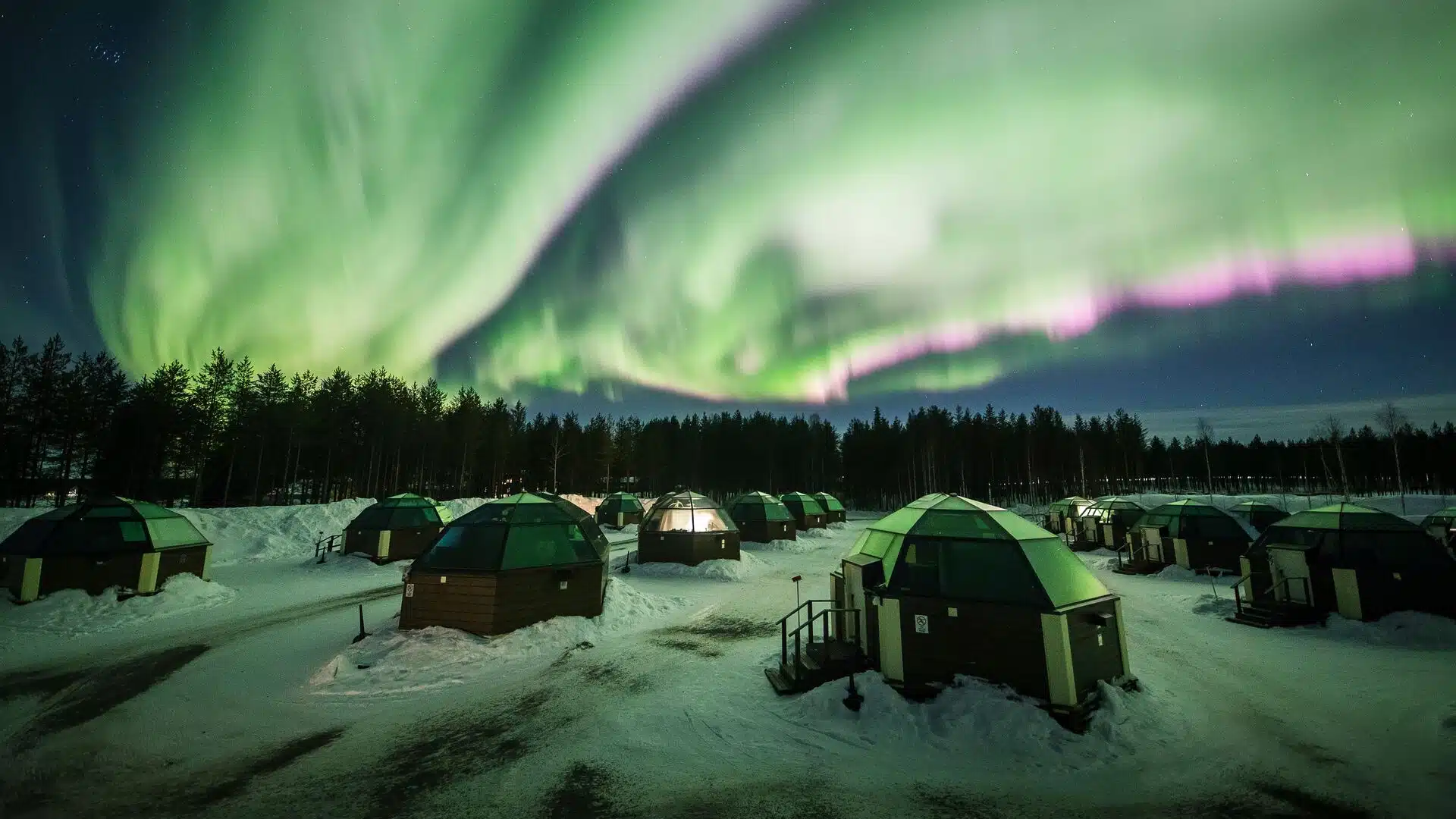
The Northern Lights season in Finnish Lapland runs from late August to mid-April, with the highest statistical probability of Aurora activity between late September and late March. The clearest skies tend to occur in February and March, when temperatures are also at their most extreme, regularly falling below minus 20 degrees Celsius. November through January offers longer darkness but more frequent cloud cover.
Demand for glass igloos significantly exceeds supply across all reputable properties. The most sought-after units at established resorts are typically reserved months in advance, particularly for peak winter weekends and the Christmas and New Year period. Availability is rarely straightforward, and the best configurations are seldom accessible with direct booking alone.
The luxury tier delivers in terms of design, heating systems, and service infrastructure, but the format has inherent limitations. Aurora sightings are never guaranteed, and thermal glazing, while effective, does not fully insulate against sub-zero ambient conditions. Traveling with realistic expectations is as important as traveling with the right kit.
What the best of these properties consistently deliver, regardless of what the sky does, is an experience of the Arctic winter that is difficult to replicate by any other means.
Plan your own version of this journey
Speak to Do Not Disturb’s luxury travel experts and turn this moment into something personal.
Related destinations
Suggested articles
Plan Your Honeymoon in Finland

What Finland Gets Right About Wellness

48 Hours in Helsinki
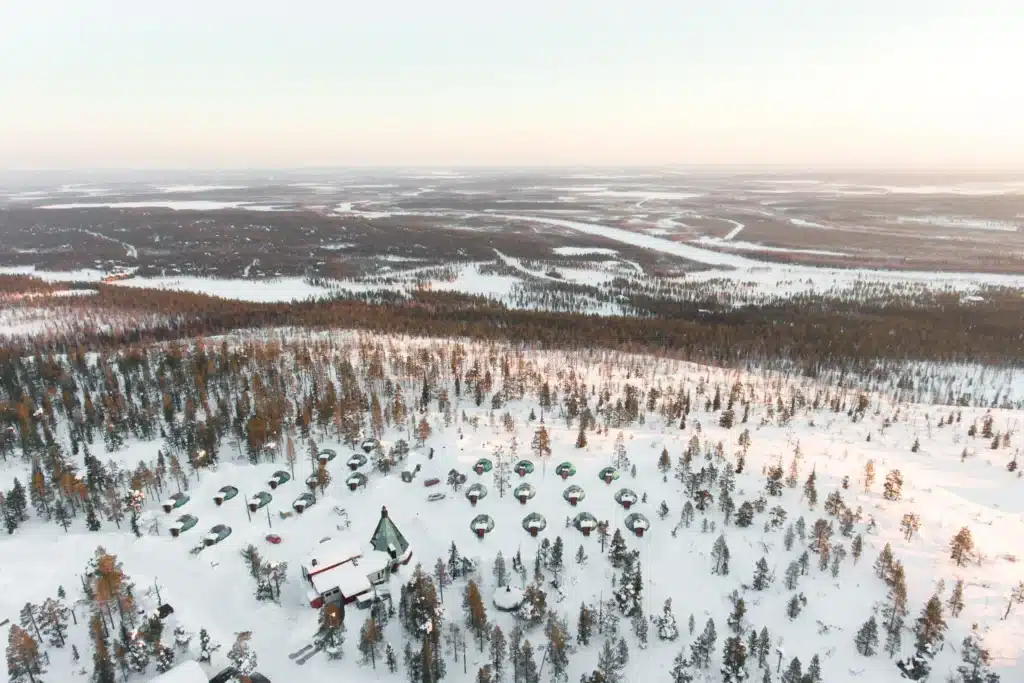
The Truth About Glass Igloos in Finland

The Best Honeymoon Destinations for LGBTQ+ Couples
The Most Romantic Train Journeys for a Slow Honeymoon
Chianti’s Luxury Villas: Stay Like a Renaissance Noble

Luxury Safaris: Why Laikipia Is Kenya’s Best-Kept Secret
Tromsø: The Gateway to Arctic Norway
Where to Go On Honeymoon? A Guide to Help You Choose

Why Kenya Is Perfect for a Luxury Honeymoon

Lake Como vs Lake Garda: Which Italian Lake Is Right for You?
The Norwegian Fjords: A Luxury Traveler’s Guide