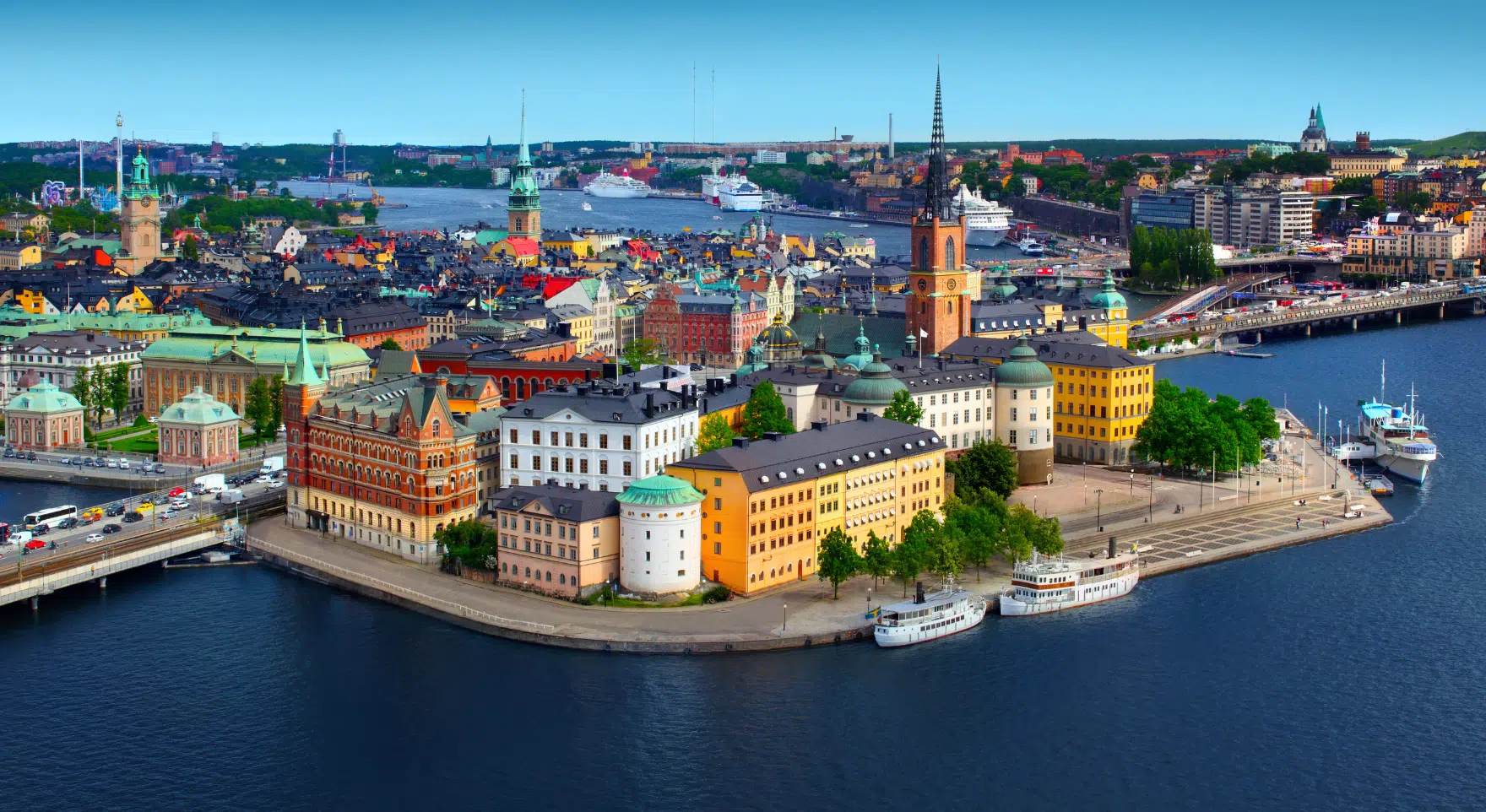


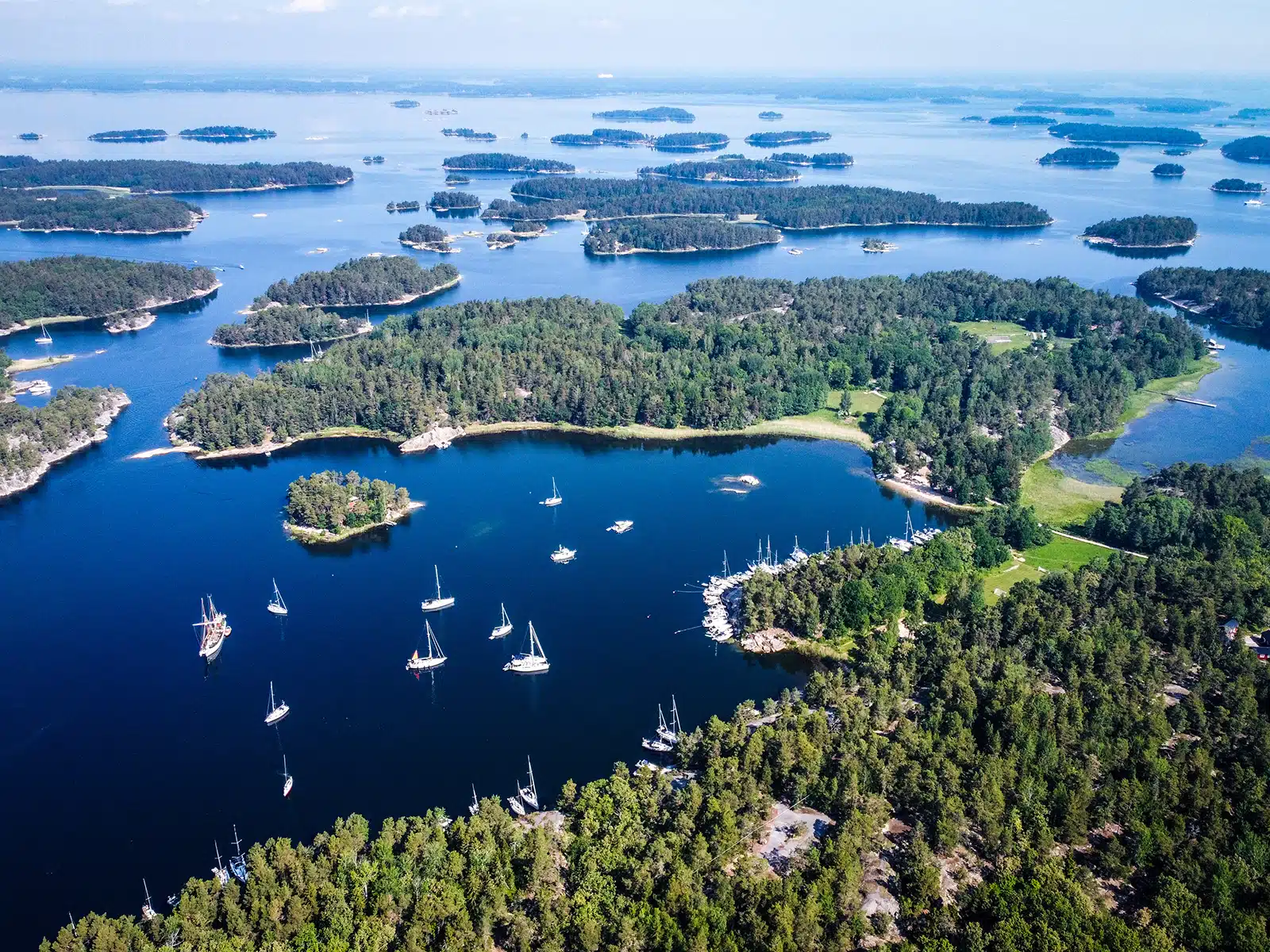
Stockholm’s archipelago stretches across 30,000 islands, islets, and skerries into the Baltic Sea. Most visitors see it from the ferry terminal or the waterfront. This guide covers what lies further out and how to reach it properly.
Understanding the Archipelago
The archipelago divides broadly into three zones: inner, middle, and outer. The inner archipelago, closest to Stockholm, is characterised by larger islands with established infrastructure, year-round residents, and regular ferry connections. The middle zone becomes progressively less developed, with smaller islands, fewer services, and a stronger dependence on seasonal access. The outer archipelago, approaching open Baltic water, is largely uninhabited, with exposed terrain and limited or no public transport links.
This zonal structure is not incidental. It determines what is accessible independently, what requires local knowledge, and what demands advance coordination. The outer islands in particular operate on a different logic entirely, where access, accommodation, and timing are shaped by factors that are not visible from the outside.
Understanding which zone an experience sits within is the first practical step in planning. The archipelago rewards specificity. A general intention to explore it will produce a very different journey than a considered approach to a particular zone or island.
About Do Not Disturb
Do Not Disturb is a luxury travel company specializing in carefully designed journeys and considered experiences. Each itinerary we build for our clients is informed by real destination knowledge, offering insight into places, cultures, and moments that shape how a trip comes together.
If this destination has sparked ideas, the itinerary can be developed into a private journey tailored to your interests and travel style, with hand-picked stays, thoughtful routing, and experiences curated around what matters most to you.
How to Move Through It
Waxholmsbolaget operates the public ferry network connecting the archipelago’s main islands, running scheduled routes year-round with increased frequency in summer. The service is reliable and well-structured, but it prioritises the most populated islands and follows fixed timetables, which limits access to quieter or more remote areas.
Private charter sailing and bareboat hire extend the range considerably. Bareboat hire requires demonstrated sailing competence and is suited to those with prior experience navigating coastal waters. Crewed charter removes that requirement and allows for more flexible routing, including overnight anchorage in sheltered bays that scheduled services do not reach.
The choice of vessel determines which version of the archipelago is accessible. The ferry network covers the outer islands efficiently but imposes a fixed itinerary. A chartered vessel allows movement to be shaped around the landscape rather than around a timetable, which is the more meaningful distinction between the two approaches.

Where to Stay
The inner archipelago offers the most developed infrastructure for longer stays. Grinda, roughly two hours by ferry from Stockholm, has an established manor property with year-round capacity and direct boat access. Sandhamn, further out in the outer archipelago, supports a small number of hotels suited to those using the island as a base for sailing or extended exploration of the surrounding waters.
Beyond these, the options become more dispersed and access more dependent on coordination. Several private islands and waterfront properties operate on a limited-season basis, with availability that does not follow conventional booking patterns. These are not properties that reward last-minute planning.
The choice of base has a direct effect on what is reachable. The inner islands allow for day movement across multiple destinations; the outer islands suit those with a fixed itinerary and fewer variables. Matching the property to the intended pace of travel is the more useful starting point than the accommodation itself.

Where and What to Eat
The archipelago’s food culture is organised around what the surrounding water and land produce. Herring, perch, pike-perch, and crayfish appear across menus in forms that reflect both tradition and season. Smoked and pickled preparations are common, rooted in preservation methods that predate refrigeration and remain culinarily relevant.
Sandhamn and Grinda both have established restaurants with direct access to local suppliers. Sandhamn’s position as a sailing hub means its food offer is more developed and consistent across the season. Grinda, smaller and less trafficked, tends toward a more focused menu tied closely to what is available from nearby farms and water.
The more instructive eating experiences sit further out, on islands with limited or seasonal operations where the menu is determined by supply rather than demand. These spots are not prominently listed and their availability shifts with the season. Knowing which are worth the journey, and when, is a function of current local knowledge rather than published information.

The Outer Islands
The outermost islands sit at the point where the archipelago gives way to open Baltic water. Landsort, on the southwestern edge, is one of Sweden’s oldest lighthouse stations and remains sparsely inhabited year-round. Huvudskär is a former pilot station with no permanent population. Utö, the most accessible of the three, has been continuously settled since the twelfth century and contains Sweden’s oldest iron mine, still visible in the landscape today.
What distinguishes these islands is not remoteness for its own sake, but the degree to which the built environment has remained subordinate to the terrain. Infrastructure is limited, connections are infrequent, and the logistics of reaching them require planning that goes beyond a standard day trip.
That complexity is also what preserves their character. The outer archipelago rewards visitors who arrive with a clear understanding of what they are travelling into, which is why the quality of preparation matters as much as the destination itself.

When to Go and How to Plan
The archipelago operates on a compressed seasonal calendar. From late June through August, ferry connections are at their most frequent, island businesses are open, and the majority of accommodation is available. This is also the period of highest demand, particularly across the inner and middle archipelago. Midsummer weekend in late June marks the effective start of the season and is the single most congested period across the islands.
May and September offer a more functional alternative. Ferry schedules remain largely intact, most permanent residents are present, and the outer archipelago in particular is significantly quieter. September brings clearer light and cooler temperatures, conditions that suit hiking and coastal walking without the logistical pressure of peak season.
Winter travel is possible but requires careful planning. Many island services close entirely between October and April, and ice conditions can affect ferry routes. In this period the archipelago belongs almost entirely to permanent residents and those with established connections to the islands.
The archipelago has no single right answer — the best island, the best property, and the best time of year all depend on what you’re actually looking for. Talk to us and start planning your trip.
Plan your own version of this journey
Speak to Do Not Disturb’s luxury travel experts and turn this moment into something personal.
Related destinations
Suggested articles
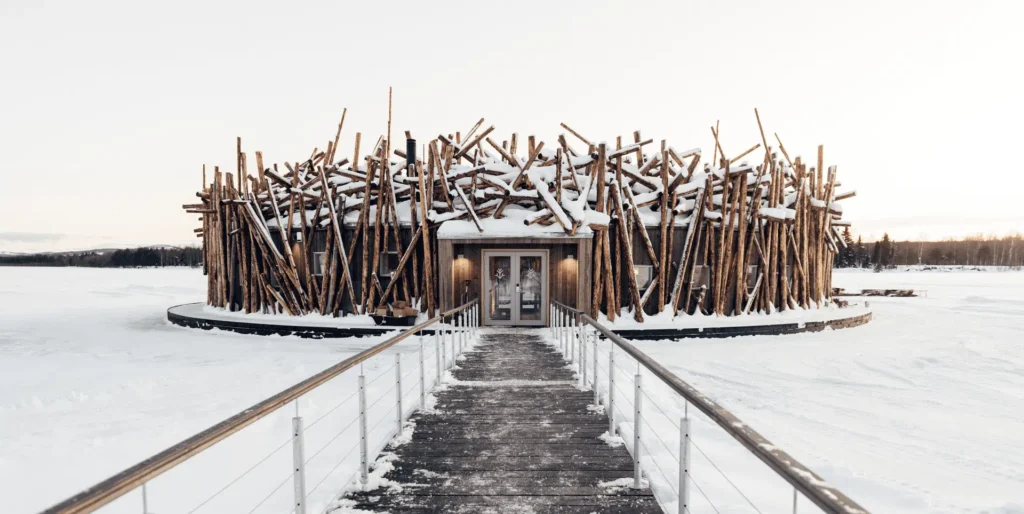
Arctic Bath: Sweden’s Most Unique Luxury Hotel
What It’s Really Like to Stay at Icehotel Sweden
One Island or Two? Splitting Your Maldives Honeymoon Between Resorts

Best Honeymoon Destinations for Autumn

Italy vs Greece for Your Honeymoon – Which is Better?
48 Hours in Lima: Where to Eat, Stay and Explore

A Cultural Honeymoon in Peru: Machu Picchu, Cusco, the Sacred Valley and the Amazon

Peru or Mexico: Which Ancient Civilization Should You Visit First?
The Best Time to Visit Machu Picchu for Fewer Crowds
Why So Many Travelers Fall for Kanazawa
Kyoto or Kanazawa – Which Is Better for Traditional Japan?
What Is a Kissaten? Inside Japan’s Historic Coffee Shop Culture

Kruger or a Private Reserve? Where to Safari in Greater Kruger