
On this page
Switzerland’s most celebrated landscapes—the Matterhorn, Lake Geneva, and the Bernese Oberland—have long drawn the world’s attention, but the country’s most rewarding travel exists in the spaces between those landmarks. Appenzell’s embroidered meadows, the wind-scoured Engadine valley, and the Jura’s watchmaking towns each offer a different version of Switzerland for those curious enough to seek them out.
Why Switzerland's Quieter Regions Demand a Different Kind of Traveler
Traveling Switzerland well has always required a degree of resistance. The country’s infrastructure is so efficient, its famous viewpoints so accessible, that it’s possible to move through an entire itinerary without ever departing from the well-worn circuit of Lucerne, Zermatt, and Interlaken. That circuit exists for good reason, but it also obscures so much of the country, places where the culture is less performed and the landscape less managed.
The regions that follow, Appenzell in the northeast, the Engadine valley in Graubünden, and the Jura along the French border, share little in common geographically or culturally. What connects them is the attention they require. Each rewards travelers who are willing to slow down, to engage with local traditions on their own terms, and to accept that the most significant moments may not be the most photographed. Switzerland at this register is less a collection of landmarks than a study in how a small country can contain such distinct worlds.
Appenzell: Where Rural Tradition Is Lived, Not Performed
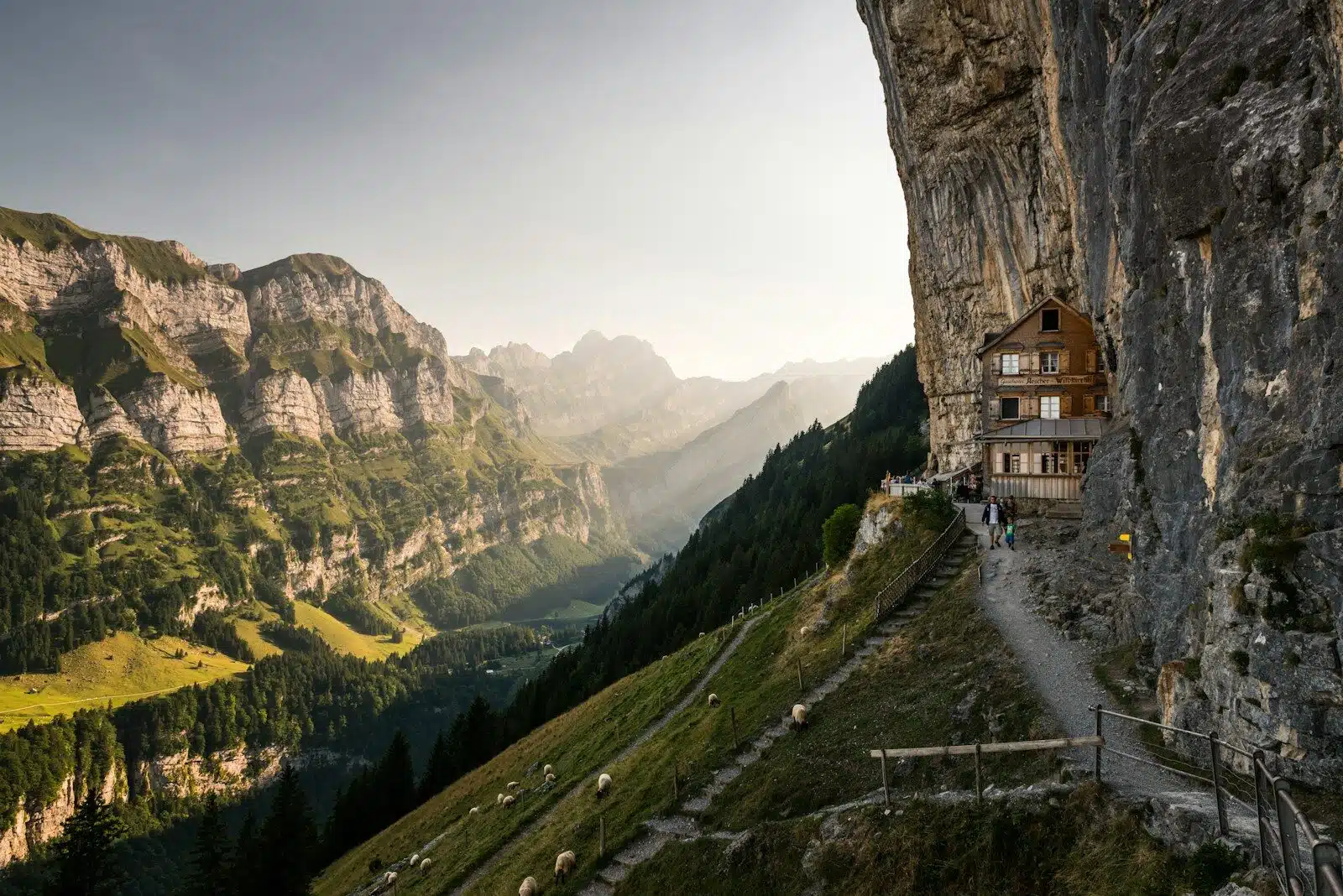
Few places in Switzerland resist modernization as genuinely as Appenzell Innerrhoden, and that resistance is neither nostalgic nor deliberate. It is simply how life here has continued. The canton still governs itself through the Landsgemeinde, an open-air assembly held each April in the town square where citizens vote by show of hand, a practice that has persisted for centuries not as spectacle but as functional democracy. That same continuity runs through the region’s herding culture, where the Alpaufzug, the seasonal movement of cattle to high pastures, follows rhythms that predate modern tourism entirely.
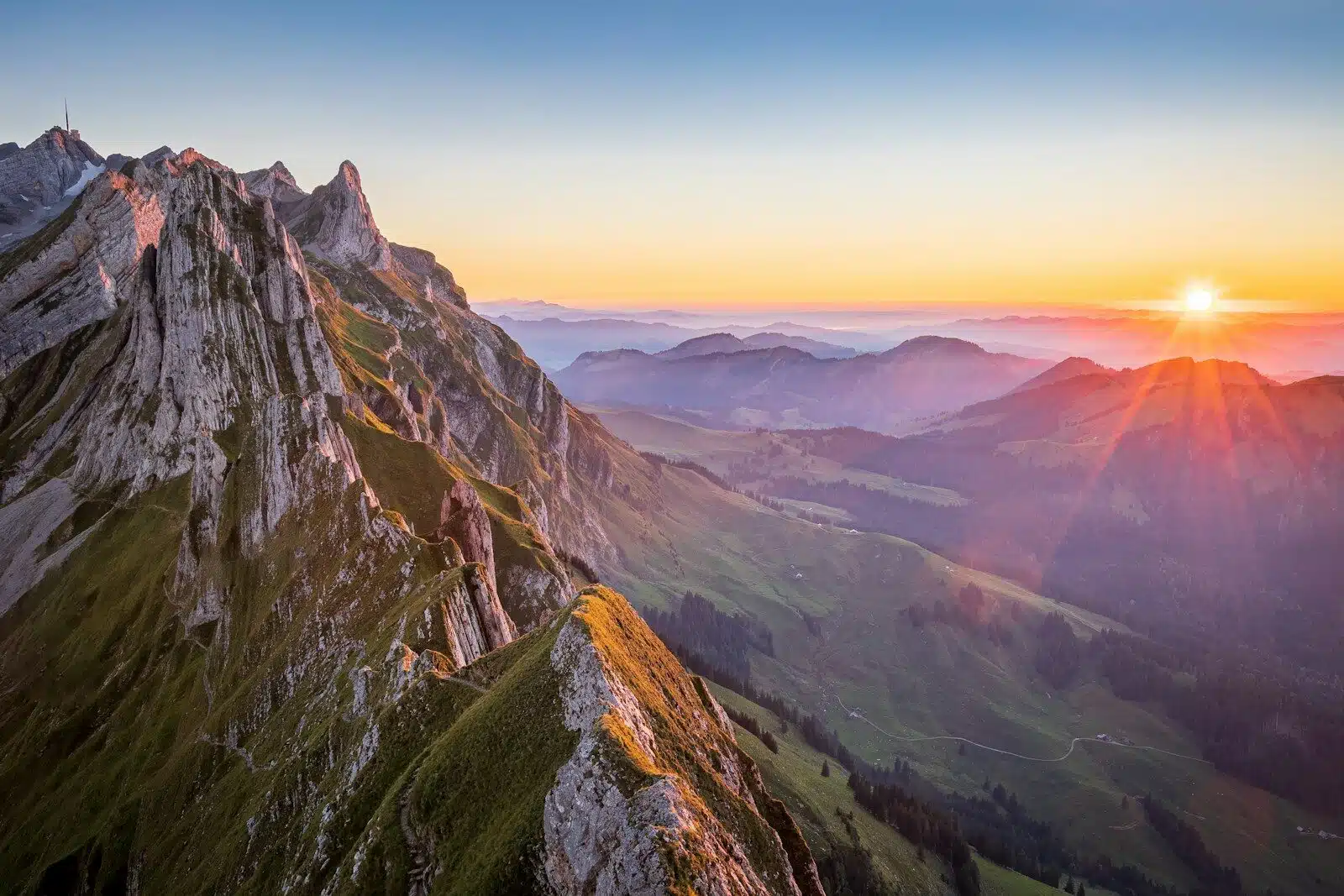
The Alpstein range above the canton provides the physical framework for understanding the region. Ridge walks connect grazing land to rocky summits, passing farmhouses where cheese is still produced using traditional methods tied to specific altitudes and grasses. Stays in working farms offer proximity to that process rather than a recreation of it. The embroidery tradition, historically centered on fine whitework produced in village homes, adds another layer to a canton where craft and agriculture have always been inseparable from identity.
The Engadine Valley: A Landscape That Changes the Way You Think About Scale
Few valleys in the Alps carry the particular quality of light that defines the Upper Engadine. Sitting at around 1,800 meters above sea level, the valley floor runs between the Swiss National Park and the Italian border, and the altitude strips the atmosphere of the haze that softens lower landscapes. In winter, frozen lakes like Sils and Silvaplana reflect a clarity that makes the surrounding peaks feel closer than they are. In summer, the season is brief and almost urgent, with wildflowers covering the valley floor for only a matter of weeks before the cold returns.
What distinguishes the Engadine from other Alpine regions is the tension between wilderness and refinement. Romansh, Switzerland’s fourth national language, is still spoken in villages like Zuoz and Scuol, and the architecture of those towns, with its sgraffito-decorated facades and heavy stone construction, reflects centuries of cultural independence.
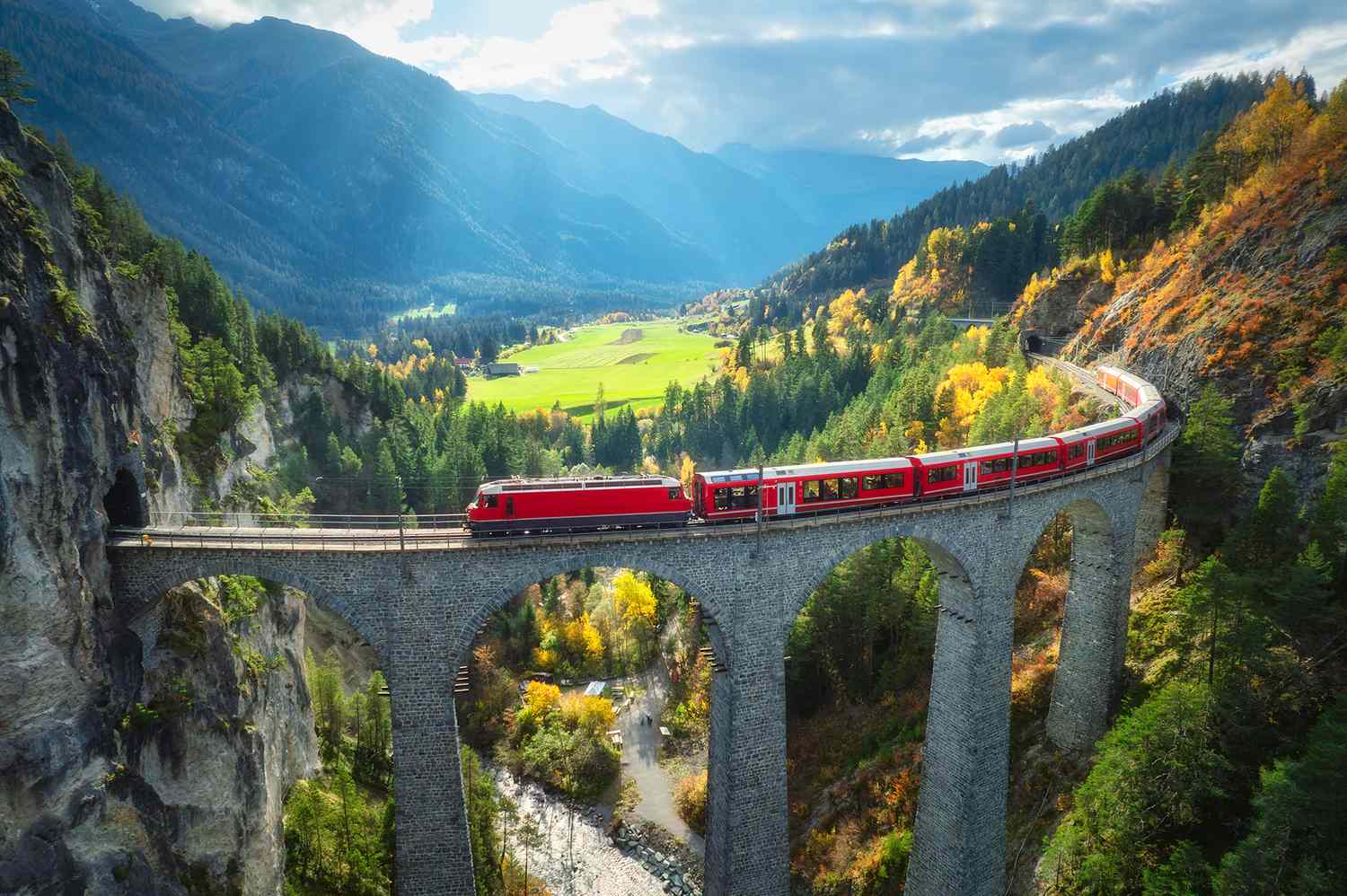
The valley has long attracted artists and intellectuals drawn to its remoteness, and that history gives even its quieter corners a sense of considered purpose. The Bernina Express passes through the southern edge of this landscape, offering one of the more instructive approaches to understanding the valley’s scale before arriving within it.
Jura: The Region That Switzerland Forgot to Market
Few regions in Europe carry a UNESCO designation with so little international recognition attached to it. La Chaux-de-Fonds, the Jura’s principal city, was inscribed in 2009 for its grid-planned urban layout, designed in the 19th century to maximize the flow of natural light into the workshops where watchmakers spent their days. That industrial logic shaped the entire city, and it remains legible today in the wide streets and low-slung architecture that distinguish it from anywhere else in Switzerland.
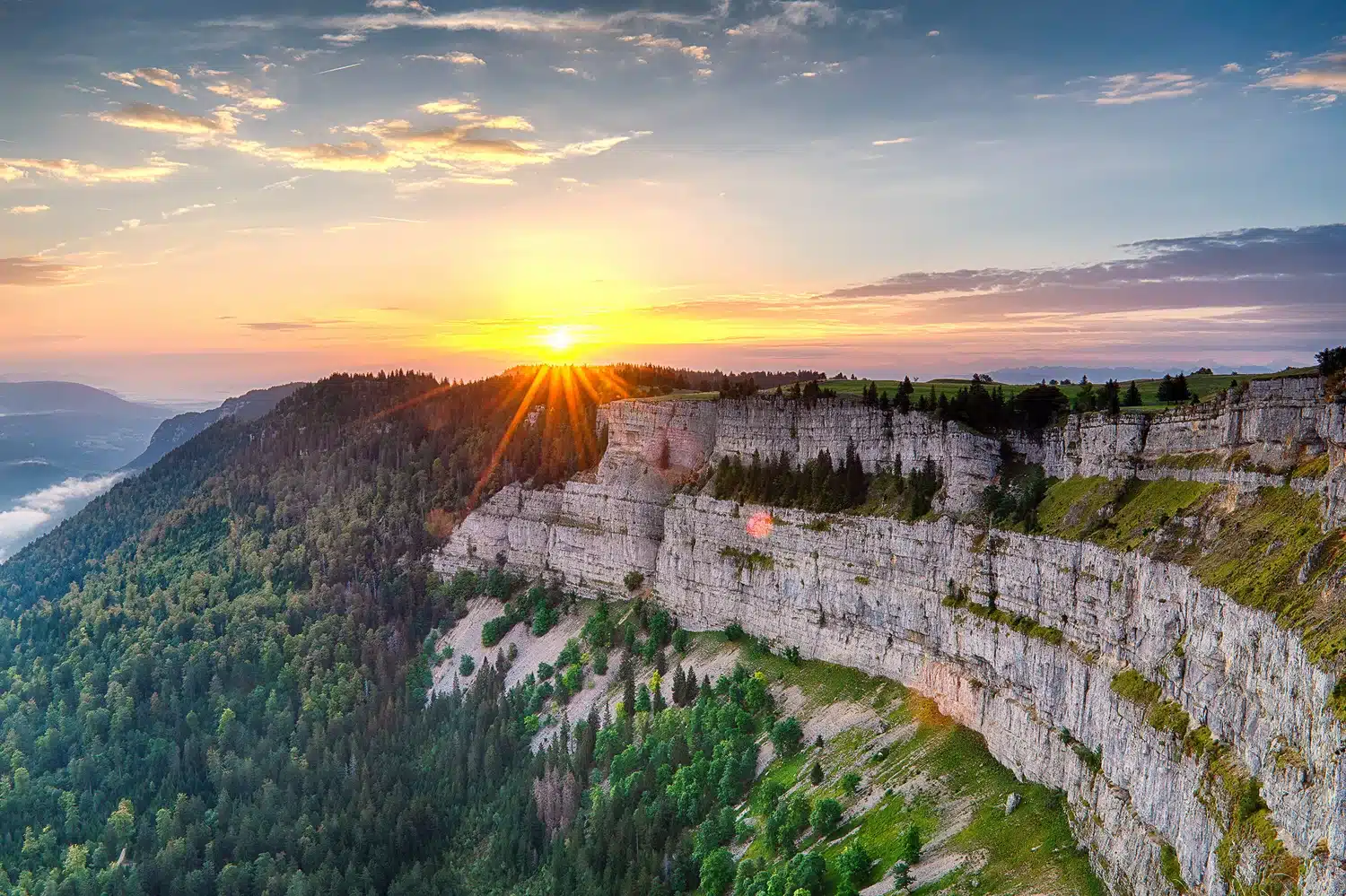
Beyond the city, the Jura unfolds as a limestone plateau of dense forest, river gorges, and long-distance trails that see a fraction of the foot traffic found in the Alps. The region sits along Switzerland’s northwestern arc, bordering France, and its character reflects that proximity: quieter, less choreographed, and more reliant on the kind of local knowledge that rarely surfaces in standard Switzerland itineraries. For travelers who have covered the country’s more obvious ground, the Jura offers a different kind of return.
Building the Itinerary: How to Sequence These Regions Without Losing the Thread
These 3 regions sequence well when approached west to east, beginning in the Jura, moving through Appenzell, and finishing in the Engadine. That progression follows a loose geographic logic, but more importantly, it builds in register: the Jura’s understated precision gives way to Appenzell’s pastoral intimacy before the Engadine opens into something more expansive and elemental.
Shoulder season, particularly late September through October, consistently outperforms July and August across all 3 regions. Summer crowds compress the Engadine’s hiking corridors and push Appenzell’s village character into the background. In autumn, the light shifts, the pace slows, and the cultural texture of each place becomes more legible.
What separates a coherent journey from a sequence of stops is local knowledge applied at the right moments: understanding which valley roads close early in the season, which artisans accept visits by prior arrangement, and how to read the landscape with the context it deserves. Switzerland’s rail network, including the Bernina Express corridor into the Engadine, handles the distances efficiently, but the interpretation of what lies along the way is where specialist guidance earns its place.
The Argument for Slowness: What These Regions Collectively Reveal About Switzerland
Switzerland’s famous destinations are not the country’s defining ones. The Matterhorn and Lake Geneva are extraordinary, but they have been so thoroughly mediated by photography, tourism infrastructure, and expectation that experiencing them can feel like confirming something already known. Appenzell, the Engadine, and the Jura offer something harder to photograph and more difficult to summarize: a Switzerland that is still in conversation with its own history, still shaped by the particular pressures of altitude and isolation.
What these regions collectively reveal is that Swiss identity was built on a relationship with landscape that demanded adaptation rather than admiration. Traveling through the quieter corners of the country makes that legible in a way that a cable car summit or a lakeside promenade rarely does.