
There is a place in the Norwegian Arctic where polar bears outnumber people and where the sun does not set for four months and does not rise for another four. It is called Svalbard; it sits at 78 degrees north in the Arctic Ocean between Norway and the North Pole.
Where It Is and Why That Matters
Svalbard is an archipelago of islands roughly halfway between the Norwegian mainland and the North Pole, administered by Norway but governed by an unusual 1920 treaty that allows citizens of any signatory nation to live and work there without a visa.
Around 2,500 people live in Longyearbyen, the main settlement, which holds the distinction of being the world’s northernmost town of any significant size. There is one road out of it. Beyond that, the wilderness begins, and it does not stop for a very long time.
Svalbard covers around 24,000 square miles, of which roughly 65 percent is protected as national parks or nature reserves. Around 3,000 polar bears live here. The archipelago’s glaciers cover more than half its total land area.
In April and May, when the sea ice is still thick and the light returns after the polar night, the landscape is as close to unchanged as anywhere accessible to travelers in the northern hemisphere.

About Do Not Disturb
Do Not Disturb is a luxury travel company specializing in carefully designed journeys and considered experiences. Each itinerary we build for our clients is informed by real destination knowledge, offering insight into places, cultures, and moments that shape how a trip comes together.
If this destination has sparked ideas, the itinerary can be developed into a private journey tailored to your interests and travel style, with hand-picked stays, thoughtful routing, and experiences curated around what matters most to you.
The Light
Nothing prepares you for the Arctic light. In summer, from late April through mid-August, the sun circles the horizon without setting, casting a low, golden quality across the tundra and the ice that photographers come specifically to chase and rarely feel they have adequately captured.
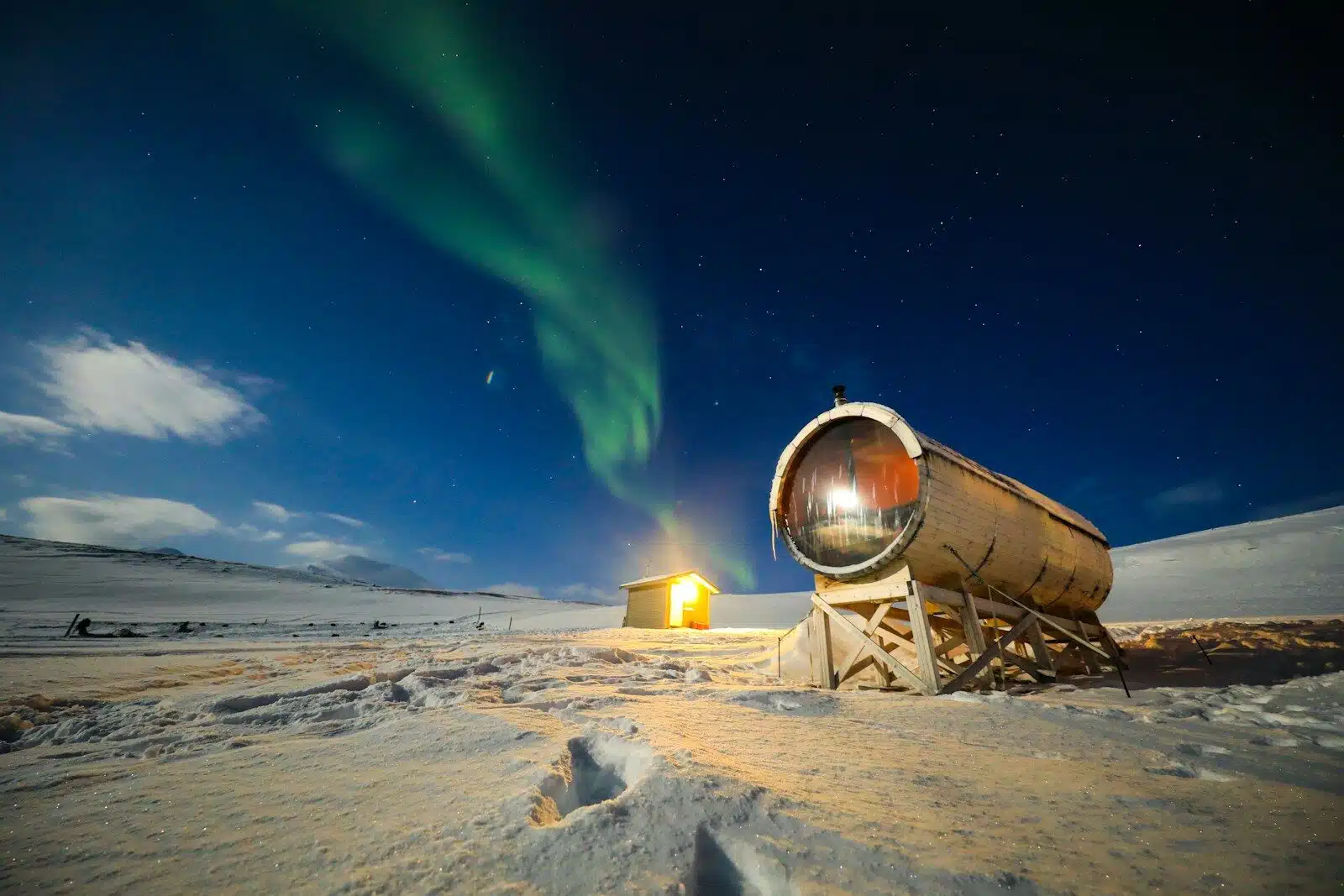
In winter, the polar night runs from late October through mid-February, and the darkness it produces is absolute in a way that city dwellers have no reference point for. What fills that darkness on clear nights is the northern lights, and in Svalbard the aurora has a backdrop of glaciers, frozen fjords, and mountain ridges that no mainland location can match.
The shoulder seasons, March and September, are when Svalbard delivers its most extreme combination of experiences. In March the light is returning after months of darkness, the sea ice is at its most stable for polar bear expeditions, and the Northern Lights are still visible.
September brings the first winter storms and the start of the aurora season alongside the last warmth of summer. Both months feel like a threshold between worlds.

What You Come For
The polar bear is the organizing principle of a Svalbard expedition, and approaching it responsibly requires a guide, a rifle, and the understanding that you are in the bear’s territory rather than the other way around. Sightings on guided snowmobile or dog sled expeditions across the sea ice are common in winter and spring, and the experience of encountering one of the world’s apex predators in its natural environment, at distance, with nothing between you and the open Arctic, is one that recalibrates your sense of the natural world in a lasting way.
Beyond the bears, Svalbard delivers glacier hikes on ice that has been accumulating for thousands of years, boat expeditions through fjords where beluga whales and walrus haul themselves onto ice floes, and snowmobile journeys across a plateau landscape so vast and so empty that the horizon feels further away than it should. In summer, the tundra comes alive with Arctic foxes, reindeer, and millions of nesting seabirds on the coastal cliffs. The birdlife alone draws ornithologists from across Europe.

Where to Stay
Longyearbyen has developed a small but serious hospitality offering in recent years, anchored by Funken Lodge, a design-forward property with the best restaurant in town and views across the Adventfjorden that make the long journey north feel entirely justified on arrival.
The Basecamp Hotel takes a more expedition-focused approach, with interiors that reference Svalbard’s trapping and mining history in a way that feels considered rather than themed. For those who want to go further into the wilderness, expedition ships operating out of Longyearbyen provide a mobile base that follows the ice and the wildlife rather than waiting for them to come to you.

Can You Travel Svalbard in Luxury?
The honest answer is that Svalbard is not the Maldives. The infrastructure is that of a remote Arctic settlement, not a resort destination, and anyone arriving with expectations built around butler service and infinity pools will need to recalibrate. What Svalbard offers instead is a different kind of luxury: total wilderness, zero crowds, and experiences that money cannot replicate closer to home.
Within those parameters, the standard has risen considerably. Funken Lodge is an accomplished property by any measure, not just by Arctic standards. The rooms are warm, well-designed, and comfortable in the way that good Scandinavian hospitality consistently delivers. The restaurant sources locally where the environment allows, the wine list is serious, and the service is attentive without being formal. After a day on the sea ice at minus 25 degrees, returning to a property of this quality matters more than it would almost anywhere else.
The expedition ships that operate out of Longyearbyen represent the other end of the luxury spectrum. The most well-appointed vessels combine genuine comfort, proper cabins, good food, and knowledgeable expedition staff with the ability to follow the ice and the wildlife into areas no land-based itinerary can reach. Spending a week aboard one, moving through fjords where no other ships are visible and pulling ashore by Zodiac to walk among walrus colonies, is the definitive Svalbard experience for travelers who want both comfort and access.

Getting There and Why It Requires Planning
Longyearbyen is served by direct flights from Oslo on SAS and Norwegian, running to around three hours. The simplicity of the journey within is deceptive. What requires planning is everything that happens after landing.
The wilderness around Longyearbyen is not accessible independently outside the town boundary; polar bear country requires armed guides, and the most extraordinary experiences, sea ice expeditions, glacier traverses, and overnight camping on the tundra, need to be arranged well in advance with operators who know the landscape and the conditions.
Plan your own version of this journey
Speak to Do Not Disturb’s luxury travel experts and turn this moment into something personal.
Related destinations
Suggested articles
The Norwegian Fjords: A Luxury Traveler’s Guide
Beyond the Maldives: Seven Islands for a Different Kind of Honeymoon
The Ultimate Norway Honeymoon Guide

One Island or Two? Splitting Your Maldives Honeymoon Between Resorts

Best Honeymoon Destinations for Autumn

Italy vs Greece for Your Honeymoon – Which is Better?
48 Hours in Lima: Where to Eat, Stay and Explore

A Cultural Honeymoon in Peru: Machu Picchu, Cusco, the Sacred Valley and the Amazon

Peru or Mexico: Which Ancient Civilization Should You Visit First?
The Best Time to Visit Machu Picchu for Fewer Crowds
Why So Many Travelers Fall for Kanazawa
Kyoto or Kanazawa – Which Is Better for Traditional Japan?
What Is a Kissaten? Inside Japan’s Historic Coffee Shop Culture