

Helsinki is a city that provides a unique experience, depending on your intentions. Two days is enough to move through its design districts, waterfront markets, and smoke saunas without rushing, but only if the itinerary holds. This is how to spend 48 hours in Finland’s capital with purpose.
Where to Stay: Luxury Hotels in Helsinki
Helsinki’s hotel offering is compact but well-defined. The strongest options for a 48-hour itinerary sit within or adjacent to the Design District, placing guests within walking distance of the waterfront, Market Square, and the main gallery and showroom corridors along Uudenmaankatu and Iso Roobertinkatu.
Hotel St. George, on Yrjönkatu, is the benchmark property for this kind of visit. It occupies a 19th-century building with a considered art collection and direct proximity to both the Design District and Esplanadi Park. Rooms are well-proportioned, and the internal courtyard functions as a practical anchor between morning and evening. The Lilla Roberts, a short distance south, offers a comparable position with a more restrained aesthetic and slightly smaller scale.
Both properties are consistently in demand, particularly during summer and around key design calendar dates. Availability at either requires forward planning, and the better room categories are rarely accessible without forward planning.

About Do Not Disturb
Do Not Disturb is a luxury travel company specializing in carefully designed journeys and considered experiences. Each itinerary we build for our clients is informed by real destination knowledge, offering insight into places, cultures, and moments that shape how a trip comes together.
If this destination has sparked ideas, the itinerary can be developed into a private journey tailored to your interests and travel style, with hand-picked stays, thoughtful routing, and experiences curated around what matters most to you.
Morning One: Design District and Cultural Institutions
The Design District covers roughly a square kilometer in the southern part of the city, bounded by Punavuori and Kaartinkaupunki. Within it, around 200 studios, galleries, and independent retailers operate in close proximity, most of them concentrated along Uudenmaankatu and the surrounding side streets. The density makes it possible to cover significant ground on foot in a single morning, though the quality of what you encounter depends on knowing which spaces are worth entering.
The Design Museum on Korkeavuorenkatu provides useful context for the district. Its permanent collection traces Finnish design from the late 19th century to the present, with particular depth around the functionalist and postwar periods that shaped the country’s international reputation. Temporary exhibitions typically focus on contemporary practice.
The district functions as both a retail and professional quarter. Many of the studios operate as working spaces that also sell directly, which means access and opening hours vary. Not all are straightforward to visit without prior coordination.

Afternoon One: The Waterfront and Market Square
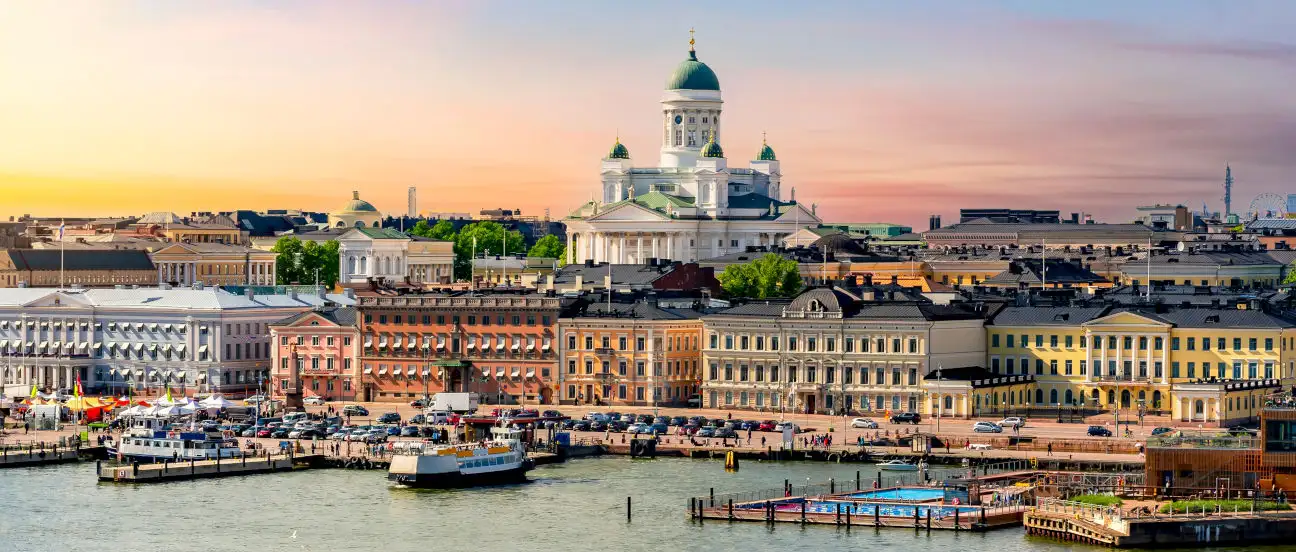
The South Harbour marks a clear shift in Helsinki’s urban logic. Where the design districts are interior and walkable, this part of the city is oriented outward, toward the water. The Old Market Hall, built in 1889, operates as a working food market rather than a tourist attraction, with vendors selling Finnish fish, cured meats, and seasonal produce. It sits directly on the harbor, adjacent to the open-air Market Square, which functions as a secondary retail and food point during warmer months.
From the harbor, ferries run to Suomenlinna, a UNESCO World Heritage Site built across a cluster of islands roughly fifteen minutes offshore. The fortress was constructed under Swedish rule in the mid-18th century and later passed to Russia before becoming part of independent Finland. Its scale is considerable, with preserved bastions, dry docks, and a submarine museum spread across the islands.
Suomenlinna requires time to navigate properly. The ferry schedule and island layout make independent visits straightforward in principle, but the historical depth of the site rewards structured guidance.

Evening One: Where to Eat and Drink in Helsinki
Helsinki’s serious restaurant kitchens are concentrated in Punavuori and Kamppi, two adjacent neighbourhoods within walking distance of the city centre. The cooking here draws on Nordic technique and Finnish produce, with fermentation, foraged ingredients, and domestic fish appearing across menus at multiple price points. Restaurants in this area book out in advance, and the better tables are not always visible through standard reservation platforms.
A first evening works well structured around a single main reservation, with drinks before or after rather than a full progressive dinner. Helsinki’s bar scene is relatively compact; many of the better wine bars and natural wine lists sit within the same neighbourhoods as the restaurants, making it practical to move between them on foot.
Finnish dining hours run earlier than in much of southern Europe. Kitchens typically close by ten, which shapes how an evening sequences. Arriving without a confirmed reservation at the better-regarded addresses is a reliable way to lose the first night.

Morning Two: Sauna Culture and the Löyly Experience
Sauna is not a leisure category in Finland; it is a civic institution. There are an estimated three million saunas in a country of five and a half million people, and the practice carries social and cultural weight that most visitors underestimate. Approaching it as a wellness activity misses the point entirely.
Löyly, on the Hernesaari waterfront, is the most accessible entry point for first-time visitors. Opened in 2016 and designed by Avanto Architects, the building integrates three saunas, including a smoke sauna, with direct access to the sea for cold-water swimming. The smoke sauna, which operates without a chimney and requires hours of preparation before use, represents the oldest form of the tradition and is the variant most closely tied to Finnish cultural identity.
Availability for the smoke sauna is limited and not guaranteed on arrival. The broader Löyly experience is public, but how it is incorporated into a structured itinerary affects what is actually accessible.

Afternoon Two: Kallio, Hakaniemi, and Leaving Well
Kallio and Hakaniemi sit directly north of the centre, separated from the design-led south by the Pitkäsilta bridge. The shift is structural as much as aesthetic: these are residential, working-class neighbourhoods with a denser street grid, fewer tourists, and a different commercial character. Hakaniemi Market Hall, a two-story brick building on the square, is the practical anchor. The ground floor covers fresh produce, meat, and fish; the upper floor runs to textiles, hardware, and everyday goods. It functions as a neighbourhood market rather than a visitor destination, which is precisely what makes it useful at this point in the itinerary.
The final hours before departure are best spent here rather than doubling back south. Helsinki Airport is accessible directly from the city centre by train, with a journey time of around 30 minutes, meaning the northern neighbourhoods sit logically on the way out. Ending the itinerary in Kallio avoids the compression that comes from returning to areas already covered and keeps the two days structurally clean.

Why Helsinki Works in 48 Hours
Helsinki is at its best when approached in sequence. The city is compact, but it does not give itself away immediately. Its appeal is quieter than Copenhagen’s, less theatrical than Stockholm’s, and more dependent on how the city is put together than on any single headline attraction.
And yet that is precisely what makes it work so well over 48 hours.
The city is compact enough to navigate on foot, substantial enough to sustain curiosity, and structured around experiences that feel distinctly Finnish rather than imported for visitors. Design remains part of daily life rather than a marketing exercise. The market halls still serve local residents. Sauna culture retains its social function. Even the relationship with the waterfront feels practical before it feels picturesque.
What Helsinki asks for is not more time, but a clear plan and a willingness to let the city unfold at its own pace. Put the Design District, the harbor, Suomenlinna, Löyly, and the northern neighbourhoods together in the right sequence, and the city begins to make sense. The individual experiences are worthwhile. The way they connect is what gives the itinerary its shape.
Two days is enough to leave with a proper sense of the place and a reason to return.
Plan your own version of this journey
Speak to Do Not Disturb’s luxury travel experts and turn this moment into something personal.
Related destinations
Suggested articles

What Finland Gets Right About Wellness

Best Glass Igloo Hotels in Finland

The Best Honeymoon Destinations for LGBTQ+ Couples

The Most Romantic Train Journeys for a Slow Honeymoon

Chianti’s Luxury Villas: Stay Like a Renaissance Noble
Best Luxury Hotels in Finnish Lapland

Luxury Safaris: Why Laikipia Is Kenya’s Best-Kept Secret
Tromsø: The Gateway to Arctic Norway
Where to Go On Honeymoon? A Guide to Help You Choose

Why Kenya Is Perfect for a Luxury Honeymoon

Lake Como vs Lake Garda: Which Italian Lake Is Right for You?
The Norwegian Fjords: A Luxury Traveller’s Guide

Beyond the Maldives: Seven Islands for a Different Kind of Honeymoon