

On this page
Two volcanic peaks rising from the Caribbean. Here is what they are, how to experience them, and why no photograph quite prepares you for the reality.
There are landmarks you have seen so many times in photographs that the actual thing risks feeling familiar. The Pitons are not one of them.
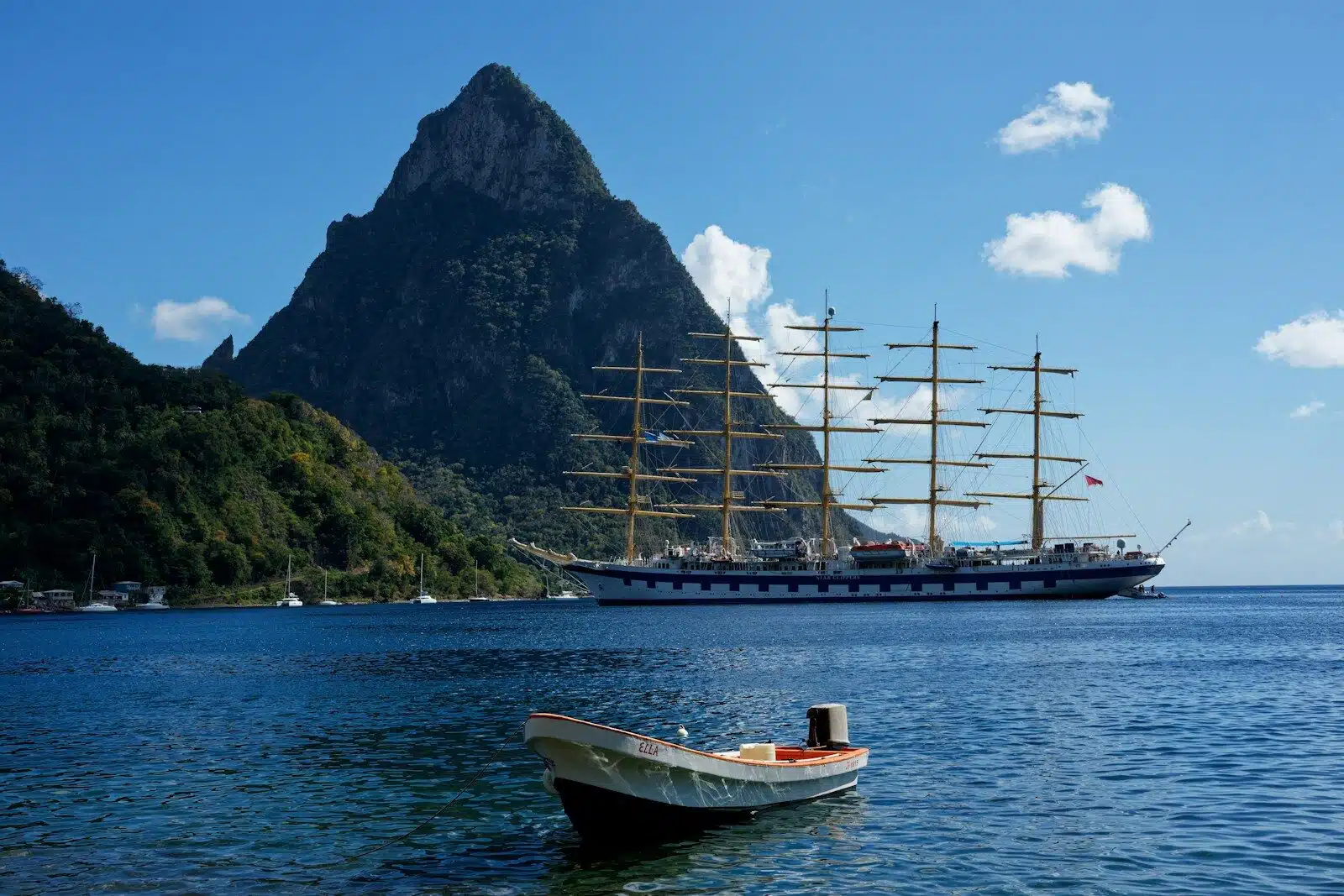
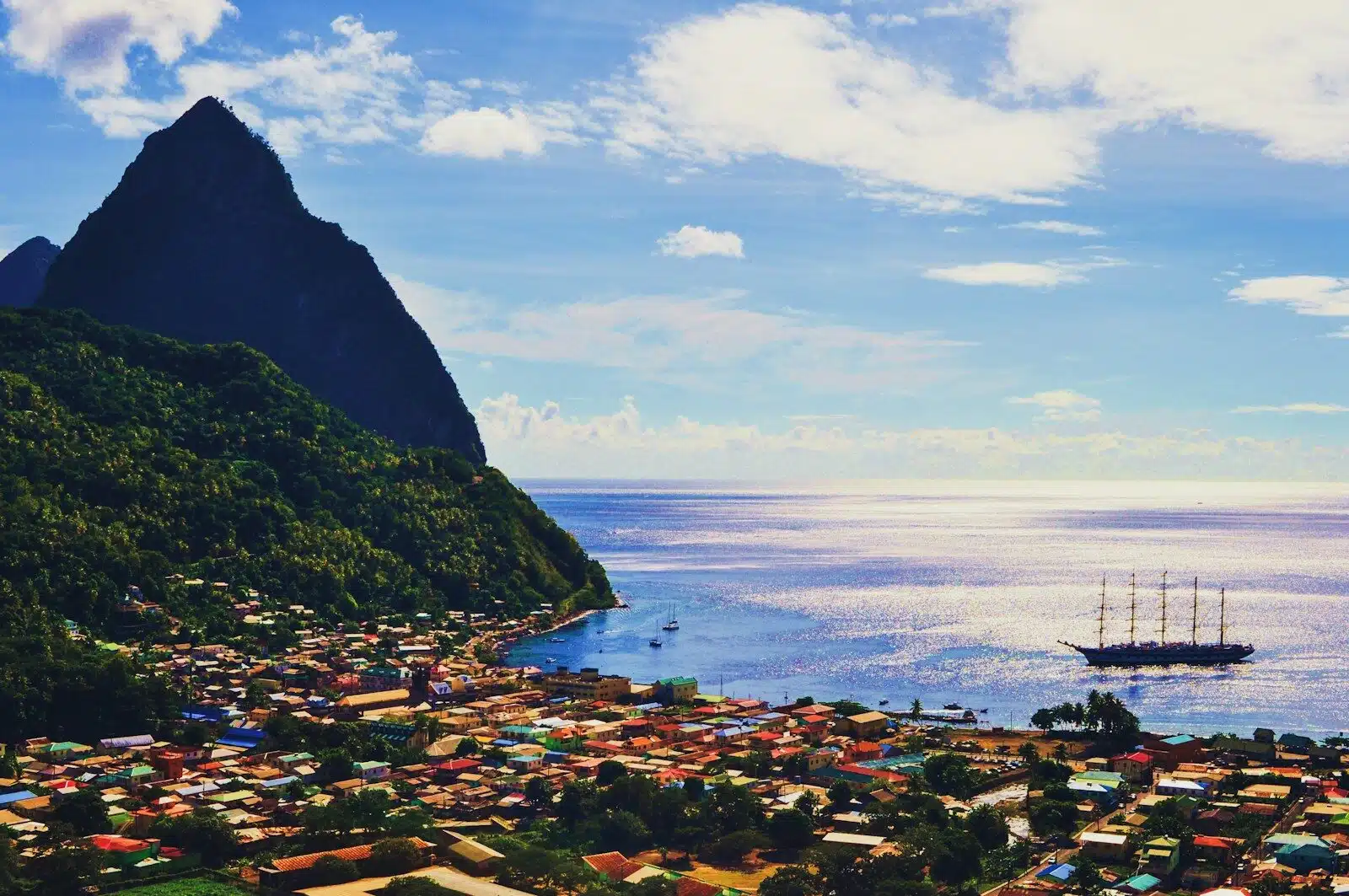
Gros Piton and Petit Piton rise from the southwestern coast of St Lucia with a drama that photographs consistently fail to convey, partly because the scale only becomes apparent when you are standing at the base looking up, and partly because the surrounding context, the Caribbean sea directly below, the rainforest climbing the slopes, the fishing village of Soufriere at their feet, is difficult to compress into a single frame.
They are the reason most people come to St Lucia, and they are worth understanding properly before you arrive.
What the Pitons Actually Are
The Pitons are the eroded remnants of lava domes formed by volcanic activity millions of years ago. Gros Piton is the larger of the two at 786 meters. Petit Piton stands at 743 meters and is the more visually striking, its near-vertical sides making it look taller than its twin from most angles.
Together they form the centerpiece of the Pitons Management Area, a UNESCO World Heritage Site designated in 2004 that covers the volcanic landscape, the coral reefs offshore and the intervening waters of the Soufriere Marine Management Area.
The geology beneath them is still active. Sulphur Springs, a collapsed volcanic crater a short drive from Soufriere, is the only drive-in volcano in the Caribbean. The hot springs, bubbling mud pools and sulphurous vents that characterise the site are a direct expression of the same volcanic system that produced the Pitons.
How to See Them
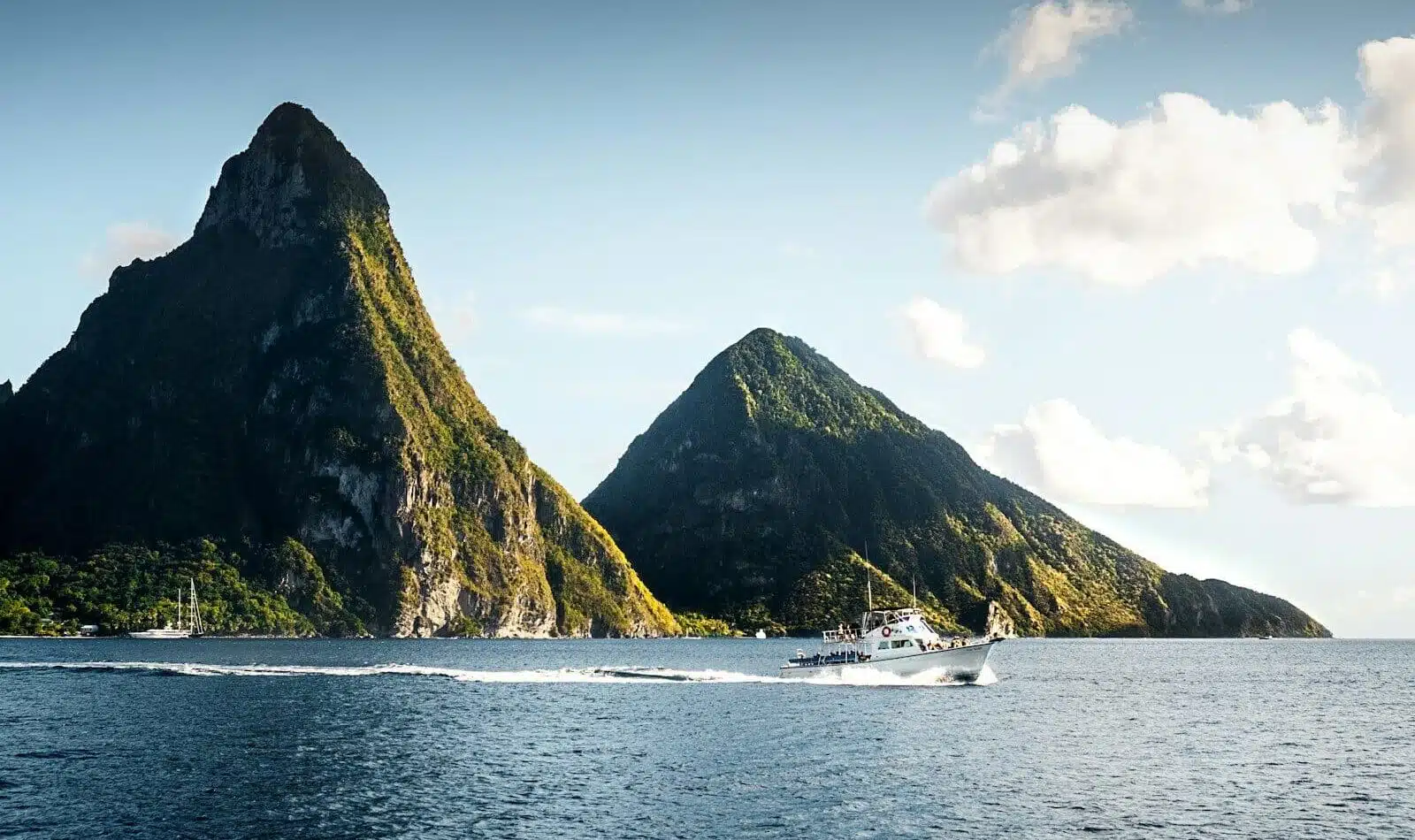
Most visitors see the Pitons from the water first, either on arrival by boat from Castries or on a day charter from one of the island’s marinas. The view from the sea looking east, with both peaks rising symmetrically from the shoreline, is the classic image and worth experiencing on its own terms rather than as a backdrop.
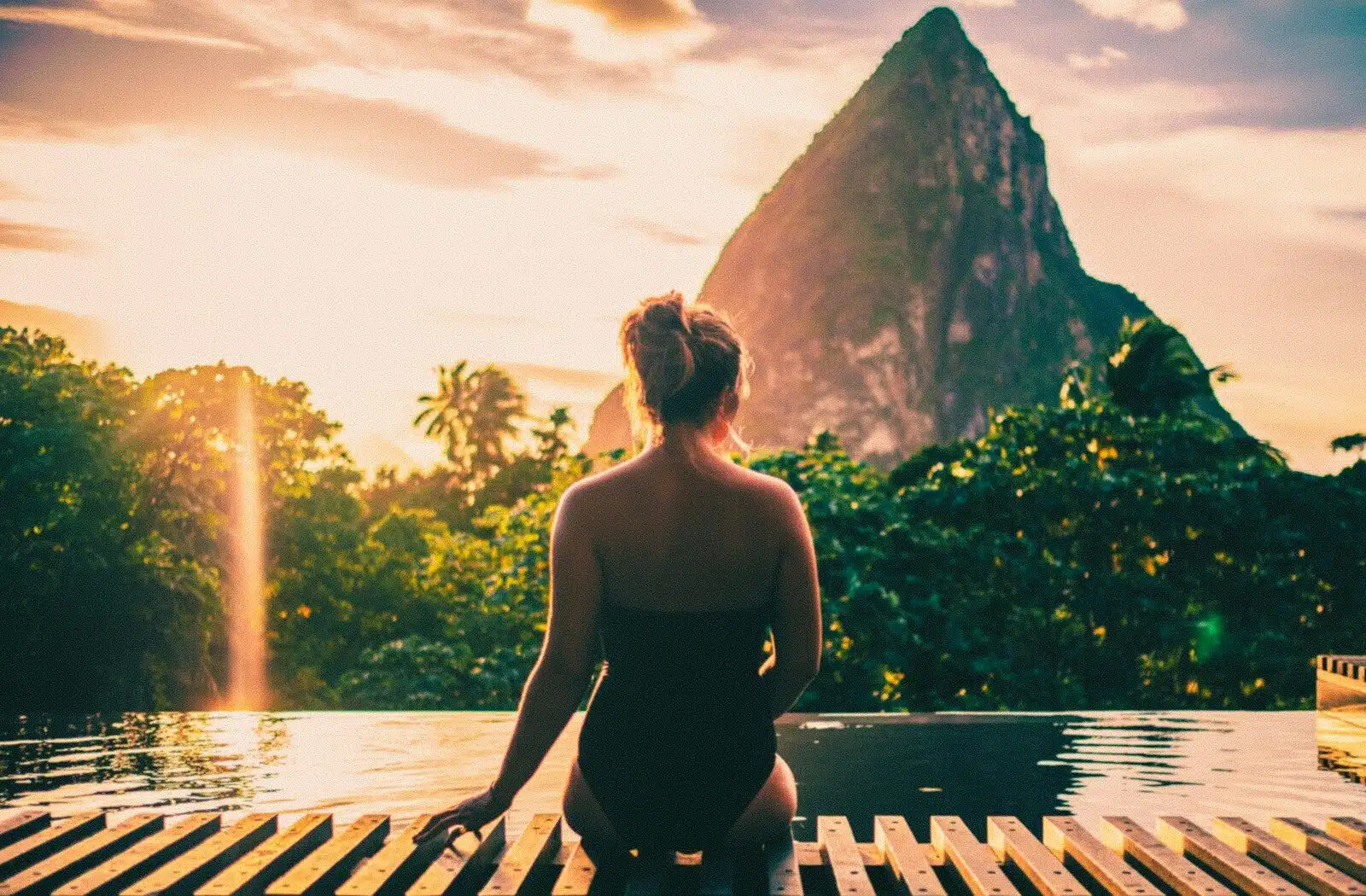
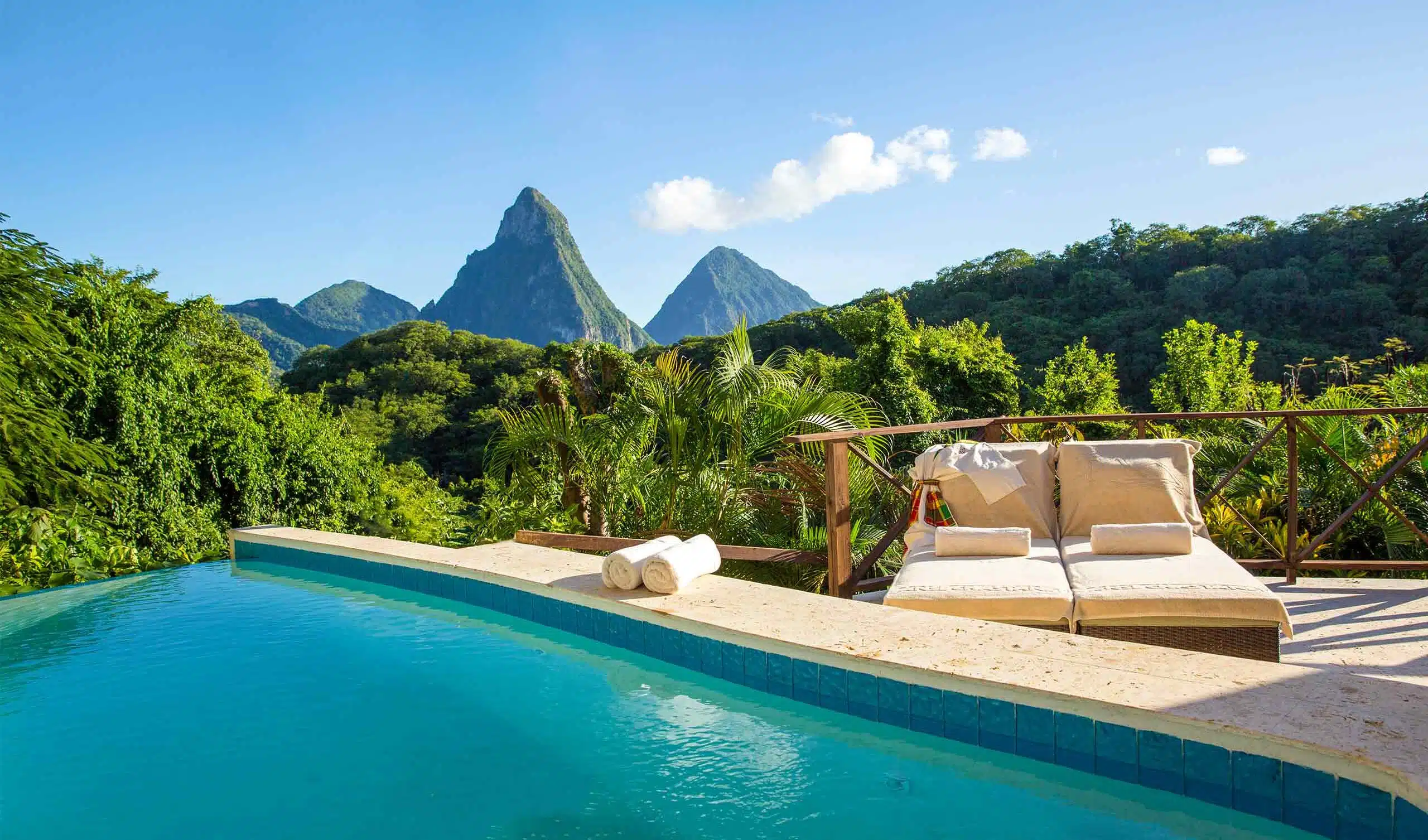
From land, the best viewpoints are from the resort properties in the Soufriere area, several of which are positioned specifically to frame the Pitons from their terraces, pools and rooms.
The Ladera Resort sits on a ridge between the two peaks at 300 meters, with open-sided rooms and suites that face directly onto them. Anse Chastanet and Sugar Beach both offer exceptional Piton views from beach level.
The drive along the west coast road from Castries to Soufriere, through Marigot Bay and the banana plantations, brings the Pitons into view progressively as you round the bends of the southwest coast. It is one of the more rewarding road journeys in the Caribbean.
Hiking Gros Piton
Gros Piton is hikeable. Petit Piton requires technical climbing equipment and experience and is not a casual undertaking. The distinction matters because visitors occasionally arrive expecting to climb both.
The Gros Piton trail begins at the base of the peak near the village of Fond Gens Libre and takes around two to three hours to ascend depending on fitness and pace.
A licensed local guide is mandatory, both by regulation and by practical necessity given the trail’s gradient and the absence of clear waymarking in sections. The summit rewards with views across the island in every direction, down to the Caribbean on the west and the Atlantic on the east, and across to Petit Piton from an angle that reveals its true scale.
The hike is demanding. The trail rises steeply and is uneven throughout. The heat and humidity are significant factors, particularly later in the morning. Starting before seven in the morning, when the temperature is lower and the summit views are often clearest before cloud builds, makes a meaningful difference to the experience. Do Not Disturb arranges guides, transfers and early departures for guests wanting to build the hike into their itinerary properly.
Not every visitor needs to climb Gros Piton to appreciate it. One of the best ways to experience the peaks is from the water, whether on a private boat charter, a sunset cruise or a day spent sailing along the southwest coast. The views from the sea often provide a better sense of the Pitons’ scale than the summit itself, particularly when combined with a stop at Sugar Beach, which sits directly between the two peaks.
The Snorkelling Below Them
The Pitons Management Area extends underwater, and the marine environment below the peaks is as protected and as rewarding as the landscape above. The coral gardens off Anse Chastanet, directly below the northern slopes of Petit Piton, are among the best snorkelling in the eastern Caribbean. The reef begins just meters from the shore, the water is clear and the marine reserve protects a diversity of coral and fish life that more accessible reefs in the region have lost.
A private snorkel charter from Soufriere allows time in the water without the group tour schedule. The same boats that take guests out to view the Pitons from the sea can anchor offshore and let you swim directly beneath them, which is a perspective on the landscape that no photograph from the shore manages to replicate.
Where to Stay
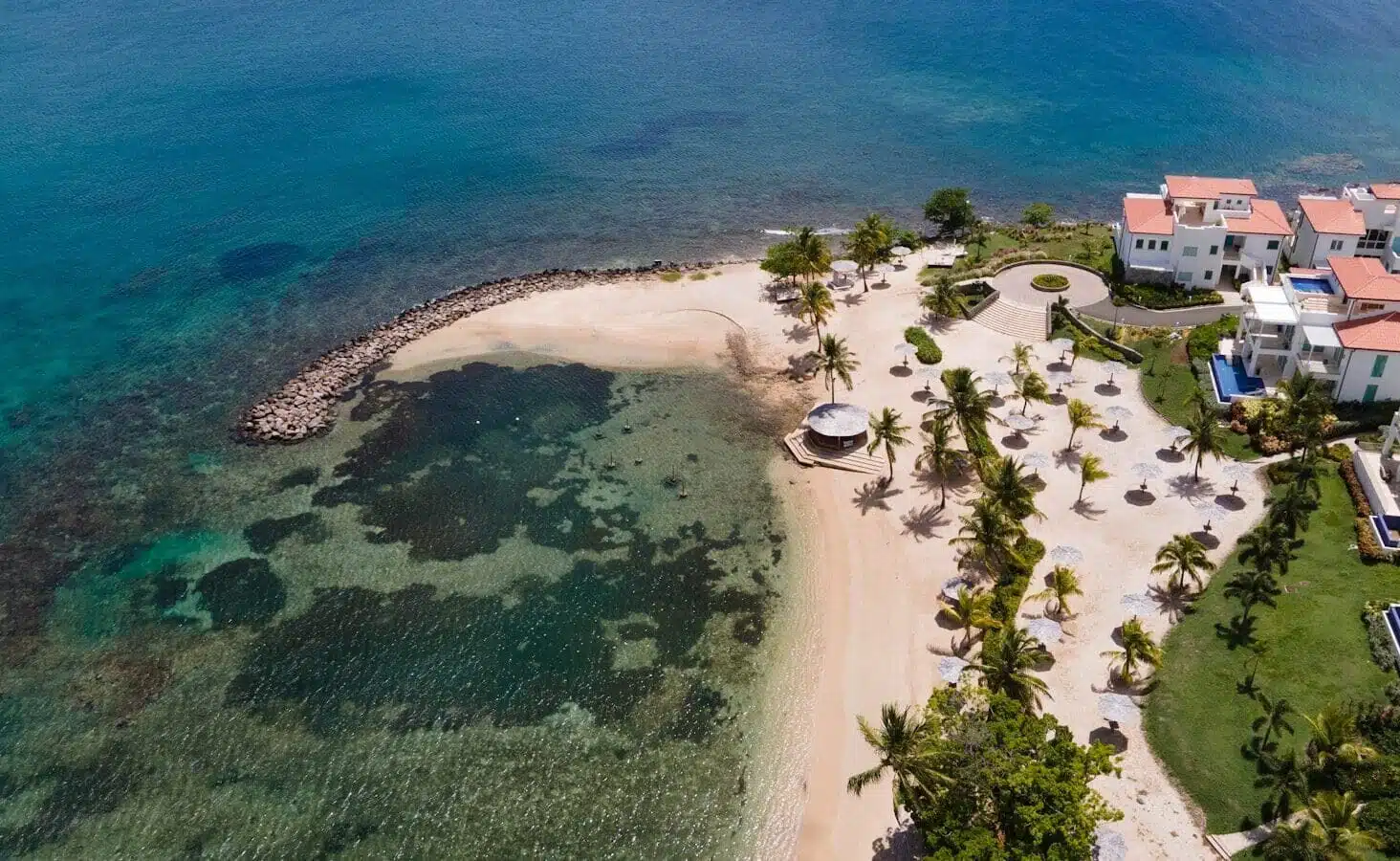
The resort properties closest to the Pitons are concentrated in and around Soufriere on the southwest coast. Ladera, positioned between the two peaks on the ridge, offers the most dramatic immediate views. Sugar Beach, a Viceroy Resort, sits in the valley between the Pitons with direct beach access and one of the most striking pool settings in the Caribbean. Anse Chastanet occupies a hillside above its own beach with a long-established reputation for diving and snorkelling.
All of these properties are around ninety minutes from Hewanorra International Airport by road. Do Not Disturb arranges helicopter transfers for guests wanting to arrive over the Pitons rather than past them, a fifteen-minute flight that serves as both a practical transfer and one of the better arrival experiences in the Caribbean.
When to Go
The dry season from December through May offers the most reliable weather for hiking and outdoor activity. January through April in particular combines low humidity, consistent trade winds and minimal rainfall with the peak visibility that makes the summit views from Gros Piton most rewarding. The wet season from June through November brings afternoon showers that typically clear quickly, but the higher humidity makes the hike more demanding and the summit views are less reliable.
Do Not Disturb plans tailor-made St Lucia holidays including resort selection, Piton hike arrangements, private snorkel charters and full flight routing from your US departure city. Get in touch to start planning.