
A privately guided visit to Naoshima Art Island led by a curator-level expert, offering clear insight into Japan’s most influential contemporary art site through those who helped shape it.
Naoshima sits quietly in the Seto Inland Sea, a short ferry ride from the port of Uno. From the water, the island reveals little. Low hills. Concrete forms half-buried in the landscape. A working industrial shoreline to the north. It does not announce itself as an art destination.
Arrival is deliberately modest. There are no grand entrances or sweeping vistas. Instead, the island asks for attention. The ferry docks and the pace is relaxed. Art appears gradually as you begin your tour around the island
To explore Naoshima with a curator is to move through the island with a different lens. The experience is not about covering sites efficiently but about understanding why each work exists where it does, and how the island itself became one of the most influential cultural experiments of the last half-century.
Cultural and Historical Context
Naoshima’s reputation today as a global centre for contemporary art obscures its industrial past. For much of the twentieth century, the island was defined by Mitsubishi Materials’ copper smelter, established in 1917 on the northern coast. The refinery brought employment and infrastructure, but it also scarred the landscape. Acid gas emissions stripped vegetation from the hills, leaving the island visibly damaged and environmentally compromised.
By the 1980s, Naoshima faced the same pressures as many rural Japanese communities: depopulation, economic stagnation, and a fading sense of purpose. The pivot came in 1985, through an unlikely meeting between Naoshima’s mayor, Chikatsugu Miyake, and Tetsuhiko Fukutake, founder of the Benesse Corporation. Fukutake envisioned a place where children from around the world could gather in nature. When he died suddenly in 1986, his son Soichiro Fukutake inherited the idea and radically expanded it.
Soichiro Fukutake rejected the prevailing model of urban development he saw transforming Tokyo. He believed culture could restore meaning to places that had been economically exhausted. His philosophy, rooted in the concept of well-being, would shape Naoshima’s future. In 1987, he invited architect Tadao Ando to the island. Ando was initially unsettled by the damaged terrain, but he was persuaded by Fukutake’s conviction that architecture could coexist quietly with landscape.
What followed was not a single project, but a long-term experiment. Benesse House opened in 1992 as a hybrid of museum and hotel, dissolving the boundary between art, architecture, and daily life. The Art House Project began in 1998, placing contemporary installations inside abandoned homes in the village of Honmura. Chichu Art Museum opened in 2004, almost entirely underground, designed to hold only works by Claude Monet, James Turrell, and Walter De Maria.
The success of Naoshima led directly to the launch of the Setouchi Triennale in 2010, extending the art island model across twelve islands and helping to revive a region facing demographic decline. Naoshima became the philosophical anchor of this wider movement.

Why Private, Curator-Led Access Matters
Naoshima receives hundreds of thousands of visitors each year. Most arrive on tightly timed day trips, navigating bus schedules and museum reservations with little room for pause. Interpretation is often limited to wall text or brief explanations from volunteer guides.
A curator-led visit changes the structure of the day. Rather than moving sequentially through museums, the island is read as a whole. Works are discussed in relation to one another. Decisions made decades apart are connected through shared ideas of site, material, and community.
The most respected private tours are led by individuals who live on the island and have academic or institutional ties to the Setouchi Triennale. The Art Island Centre is widely regarded as the leading authority. Its director, Andrew McCormick, is a former Japanese government-sponsored researcher at Hiroshima University who specializes in Naoshima’s art and social history. His tours balance scholarship with lived experience, offering insight that goes far beyond published guides.
For university-level or professional groups, it is sometimes possible to arrange sessions with Meng Qu, an assistant professor at Hokkaido University and a leading international scholar of the art island revitalization model. These conversations place Naoshima within a global framework of cultural regeneration, examining both its successes and its limits.
What You See
A curator-led day often begins at Benesse House, where art and architecture are inseparable. Ando’s concrete walls frame the Seto Inland Sea with deliberate restraint. Works by Bruce Nauman and Richard Long are not announced. They are encountered through movement.
At Chichu Art Museum, the emphasis shifts to light. Monet’s Water Lilies are illuminated entirely by natural daylight, their appearance changing subtly as clouds pass overhead. James Turrell’s installations demand patience, asking visitors to recalibrate their perception of colour and depth. Walter De Maria’s work is experienced through scale and silence.
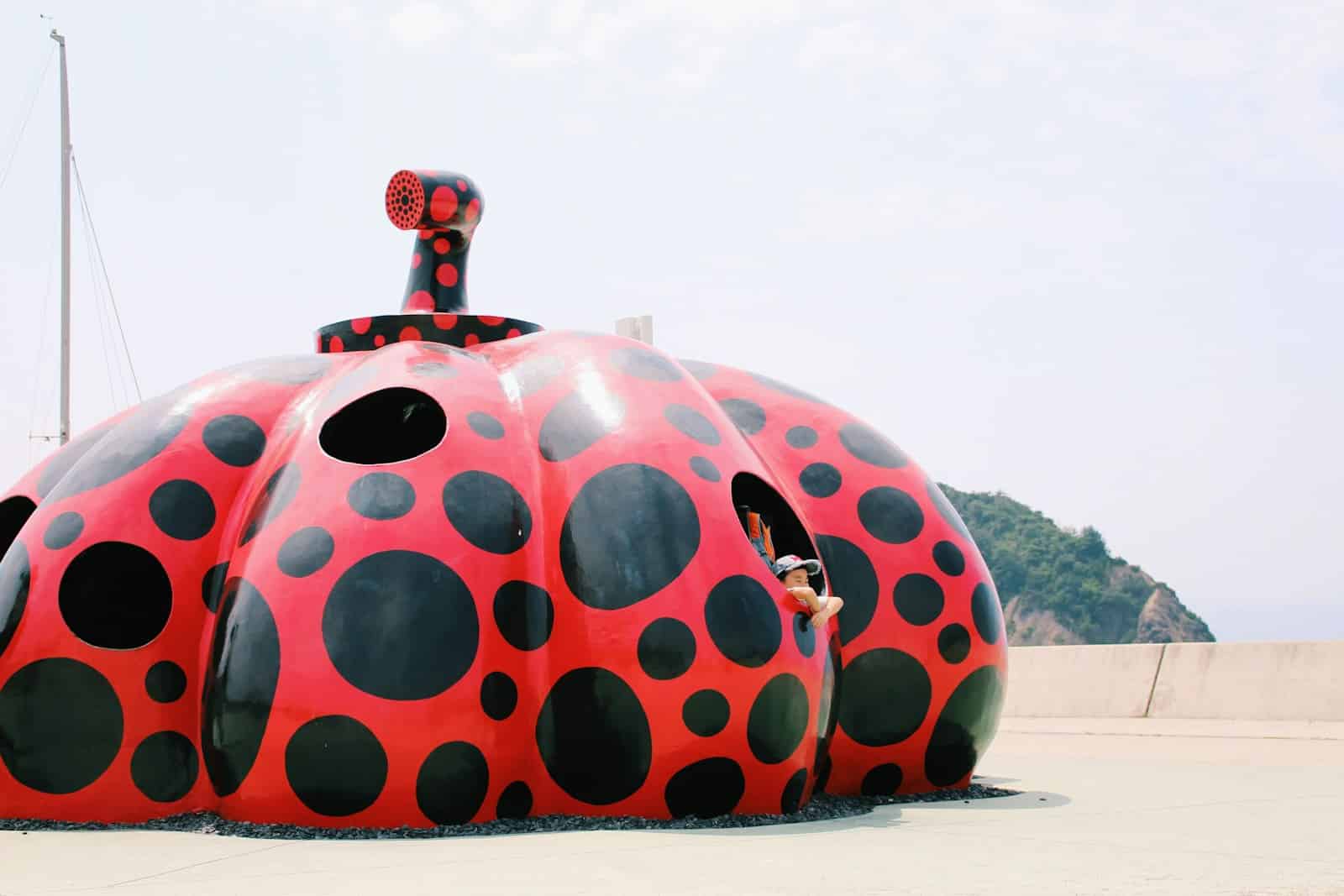
In Honmura village, the Art House Project offers a different register. Here, contemporary art inhabits traditional wooden homes, storehouses, and shrines. A curator explains not only the artwork, but the negotiations that allowed it to exist within an aging community. These are not neutral spaces. They are lived environments, shaped by compromise and trust.

How Curated Access Elevates the Experience
Without expert guidance, Naoshima can feel fragmented. Timed tickets, crowded buses, and competing itineraries pull attention away from the work. The island becomes something to manage rather than inhabit.
A curated visit removes friction. Logistics are handled in advance, including the critical requirement to secure Chichu Art Museum tickets exactly 180 days ahead of the visit. Private transport allows the island to be navigated fluidly, connecting Honmura and the southern museum area without waiting for public buses.
More importantly, the presence of a curator reframes the experience. Questions are welcomed. Context is layered gradually. Time is given to sit, observe, and return to a work after initial impressions settle. The island reveals itself slowly, which is precisely how it was designed to be experienced.

The 2025 Setouchi Triennale Context
Visiting Naoshima in 2025 places you within a Triennale year, when the island is at its most active. The festival runs in three sessions: spring from April 18 to May 25, summer from August 1 to August 31, and autumn from October 3 to November 9.
During these periods, curator talks and special programmes are more frequent, though visitor numbers increase significantly. The Triennale committee also operates official guided tours that include boat transfers and expert commentary. These can provide useful structure, but they lack the depth and flexibility of a private curator-led experience.
A major addition in 2025 is the opening of the Naoshima New Museum of Art, designed by Tadao Ando. Directed by Akiko Miki, formerly of the Palais de Tokyo in Paris, the museum focuses on contemporary Asian art. New commissions by artists such as Takashi Murakami and Cai Guo-Qiang mark a shift toward a broader regional conversation, one that a knowledgeable guide can help contextualize within Naoshima’s established philosophy.
How Do Not Disturb Makes This Possible
Do Not Disturb approaches Naoshima as a long-form experience rather than a checklist. Private curator-led access is arranged through trusted academic and institutional relationships, prioritising depth over visibility.
Visits are timed to avoid peak congestion where possible, with logistics structured to maintain a natural flow across the island. Transport, ticketing, and scheduling are handled seamlessly, allowing the focus to remain on the art and its setting.
Guides are selected for their ability to communicate complex ideas clearly and without performance. The result is an experience that feels considered and unforced, shaped around curiosity rather than coverage.
Ready to explore Naoshima Art Island with a curator-level expert and experience the Setouchi Triennale with clarity and ease? Speak with Do Not Disturb to begin your journey.
Related destinations
Suggested articles
Costa Rica for Adventure Lovers: Luxury Edition
Full Moon Parties in Thailand: The History, the Hype, and the Reality
Koh Samui Luxury Guide: From Fishing Village to Five-Star Island
Exploring Thailand’s Chiang Mai Temple Circuit

Visiting the Ruins of Ayutthaya: Thailand’s Former Capital
How to Experience Spanish Wine Tours in Rioja
A Luxury Guide to Spain’s Basque Country
Gaudí’s Barcelona: How to Understand and Visit His Work
How to Plan the Perfect Luxury Trip to Angkor Wat
A Guide to Sri Lanka’s Tea Plantations
The Maldives Fixed Its Arrival Problem: Inside the New Velana Airport
The Best Islands in Australia for a Luxury Beach Holiday
How to Plan a Luxury Australian Outback Experience