
On this page
The Brando is Marlon Brando’s monument. An eco-friendly, ultra-luxury offering you simply can’t refuse.
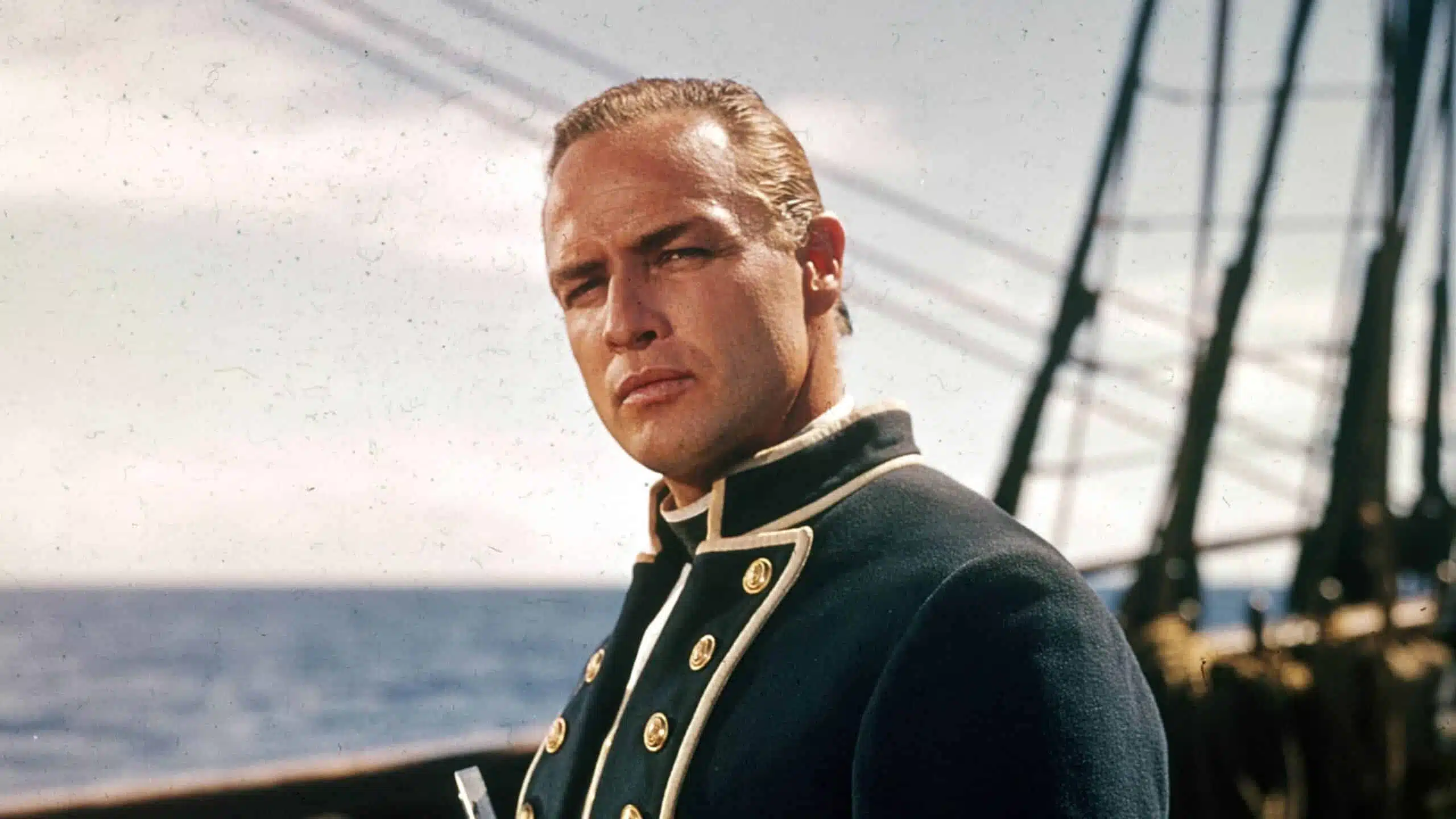
In 1960, Marlon Brando arrived in Tahiti to play Fletcher Christian in MGM’s lavish remake of Mutiny on the Bounty. The production would become infamous: wildly over budget, creatively troubled, and plagued by Brando’s legendary difficult behavior on set.
But something unexpected happened. Somewhere between takes, between the chaos of a $20 million production spiraling out of control, Brando fell irrevocably in love with the islands themselves. The islands of French Polynesia represented the perfect antidote to the fakery of Hollywood.
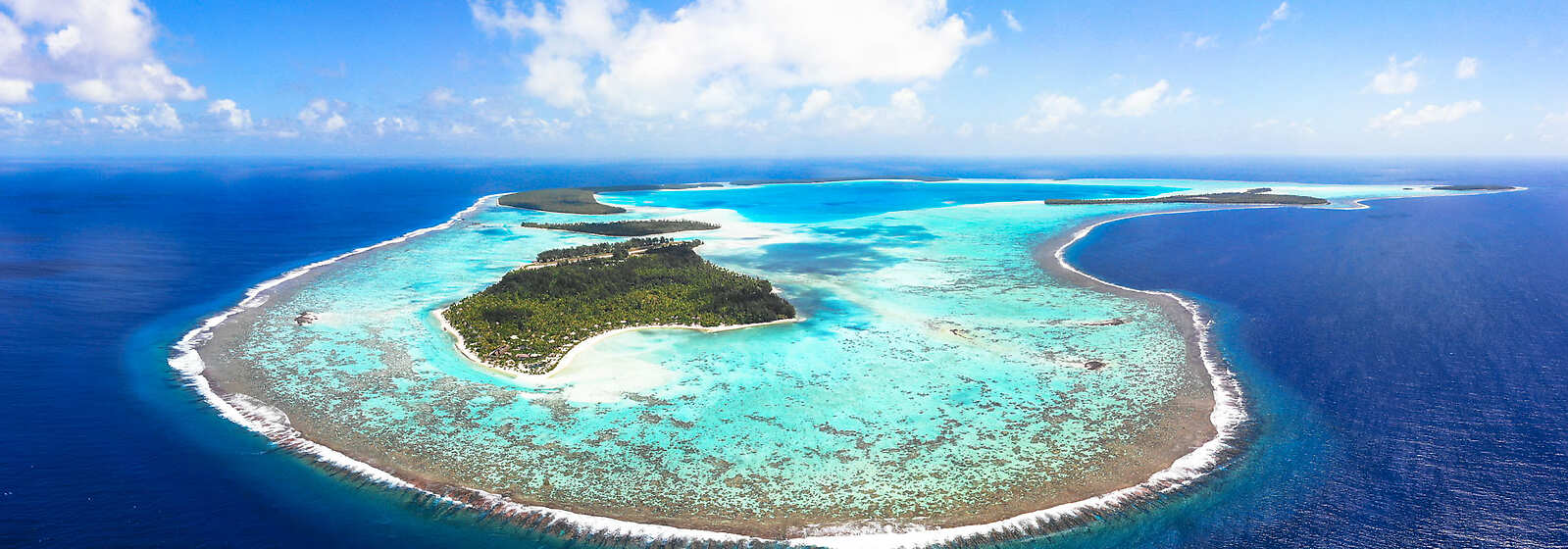
The filming took place across French Polynesia’s impossibly beautiful archipelagos, but one location captivated Brando completely: Tetiaroa, a small atoll 30 miles north of Tahiti. Twelve tiny motus (islets) arranged in a near-perfect circle around a turquoise lagoon, uninhabited except for coconut crabs and seabirds. The Polynesian royal family had used Tetiaroa as a summer retreat for centuries. Standing on that blindingly white sand, surrounded by nothing but ocean and sky, Brando saw something that his fame and fortune had never provided: sanctuary.
The filming wrapped in 1962. The movie was a critical and commercial disaster. Brando’s marriage to his co-star Tarita Teriipaia would eventually end. But his relationship with Tetiaroa? That deepened into obsession.
Brando Purchases Paradise
In 1966, Brando did something that still seems impossibly romantic: he bought an entire atoll.
The purchase wasn’t simple. French Polynesian land laws, especially regarding atolls with historical significance, made foreign ownership nearly impossible. But Brando leveraged his celebrity, his marriage to a Tahitian woman, and his genuine passion for Polynesian culture to negotiate a 99-year lease with the Polynesian government.
His vision was remarkably prescient for 1966: he would create a sustainable research station and small resort that would demonstrate how tourism and conservation could coexist. Remember, this was the era when “environmentalism” wasn’t yet a word in common usage. Rachel Carson’s Silent Spring had only been published four years earlier. The first Earth Day was still four years away.
Brando built a small hotel—Hotel Tetiaroa—with a handful of bungalows. It was rustic, sometimes dysfunctional, powered by unreliable generators. But it was his. He spent months at a time there, escaping Hollywood’s machinery, reading, studying marine biology, and entertaining friends. He established scientific research programs studying everything from coconut crab populations to coral reef health.
The hotel operated sporadically through the 1970s and 80s, more personal retreat than commercial venture. Guests were typically friends, researchers, or adventurous travelers willing to rough it. There was no air conditioning, no reliable electricity, and certainly no luxury amenities. But the atoll remained pristine, protected by Brando’s fierce guardianship against development pressures that were transforming other Polynesian islands into resort complexes.
Bringing Brando's Vision to Life
Brando died in 2004, leaving behind a complicated legacy: revolutionary actor, difficult personality, passionate environmentalist, and owner of one of the world’s most beautiful pieces of real estate. His children inherited Tetiaroa along with a challenge: their father had wanted the atoll developed sustainably, but the old hotel had deteriorated beyond repair. They needed to either abandon the property or undertake the most ambitious eco-resort project ever attempted.
Enter Richard Bailey, a Pacific Beachcomber hotelier who’d known Brando for years and shared his environmental passion. Bailey proposed something audacious: build the world’s first luxury resort to achieve net-zero carbon emissions and energy self-sufficiency, while raising rather than lowering the bar for luxury hospitality.
The concept seemed contradictory. Luxury resorts are energy-intensive operations requiring massive electrical power, constant fresh water, elaborate food service, and climate control. Remote atolls have none of these things. Every luxury resort in French Polynesia relied on diesel generators, desalination, and regular supply boats burning fossil fuels. How could you possibly build a truly sustainable luxury resort on a remote atoll?
Bailey spent years solving these problems. The solution would cost over $100 million and require engineering innovations that had never been attempted at this scale.
The Brando Opens for Business
The Brando, which opened in 2014, represents a decade of problem-solving that redefined what’s possible in sustainable luxury.
The energy system is the crown jewel: a hybrid setup using coconut oil biofuel generators combined with massive solar panel arrays providing 100% of the resort’s power needs. The coconut oil comes from Polynesian agricultural waste—nuts that would otherwise rot. There are no fossil fuels. None. An island resort running entirely on sunshine and coconuts.
The air conditioning uses deep seawater cooling, the first system of its kind in French Polynesia. Pipes drop 3,000 feet into the ocean, pulling up water that’s a constant 40°F. This cold water cools the resort’s air conditioning system, reducing electricity usage by 90% compared to conventional systems. The warmed seawater returning to the ocean actually helps marine life by bringing nutrient-rich deep water to the surface.
Fresh water comes entirely from on-site sources. The resort captures rainwater and purifies it, while also using reverse osmosis desalination powered by the renewable energy system. There are no water shipments. No plastic bottles. No dependence on supply chains.
Waste management approaches obsessive: comprehensive recycling, composting of all organic waste (which becomes fertilizer for the organic gardens), and zero single-use plastics anywhere on property. Even the villa construction used sustainable materials, such as coconut lumber, reclaimed wood, and local coral stone.
The result is a resort that actually improves the atoll’s environmental health rather than degrading it. The coral reefs surrounding Tetiaroa are healthier now than when the resort opened, thanks to scientific research programs and strict environmental protocols. Sea turtle populations have increased. The bird sanctuary that Brando established remains protected.
What The Brando Offers Today
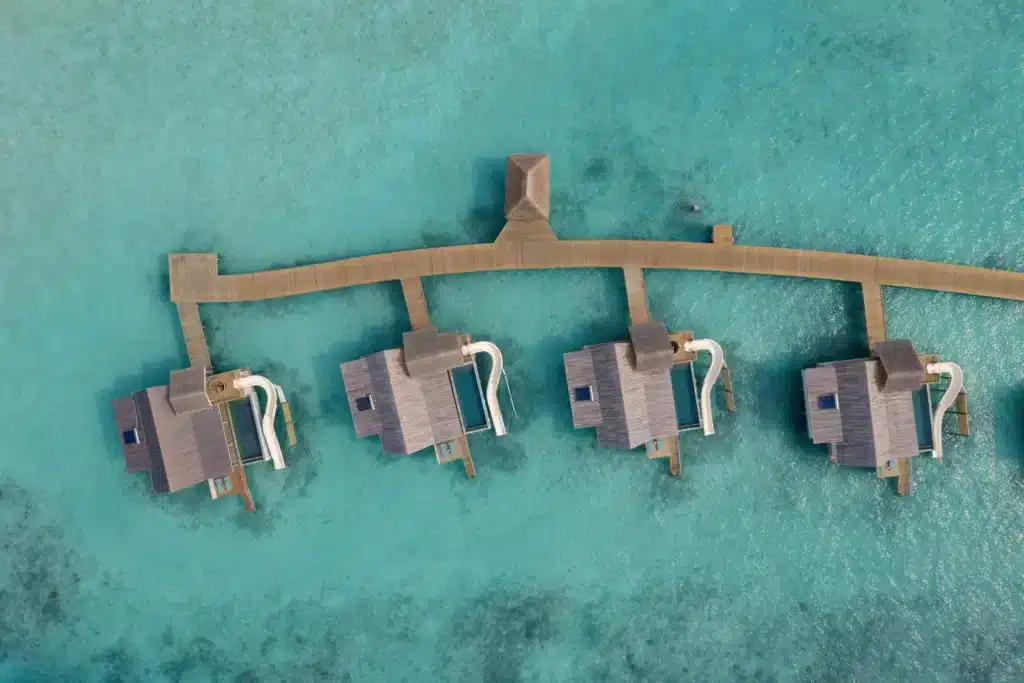
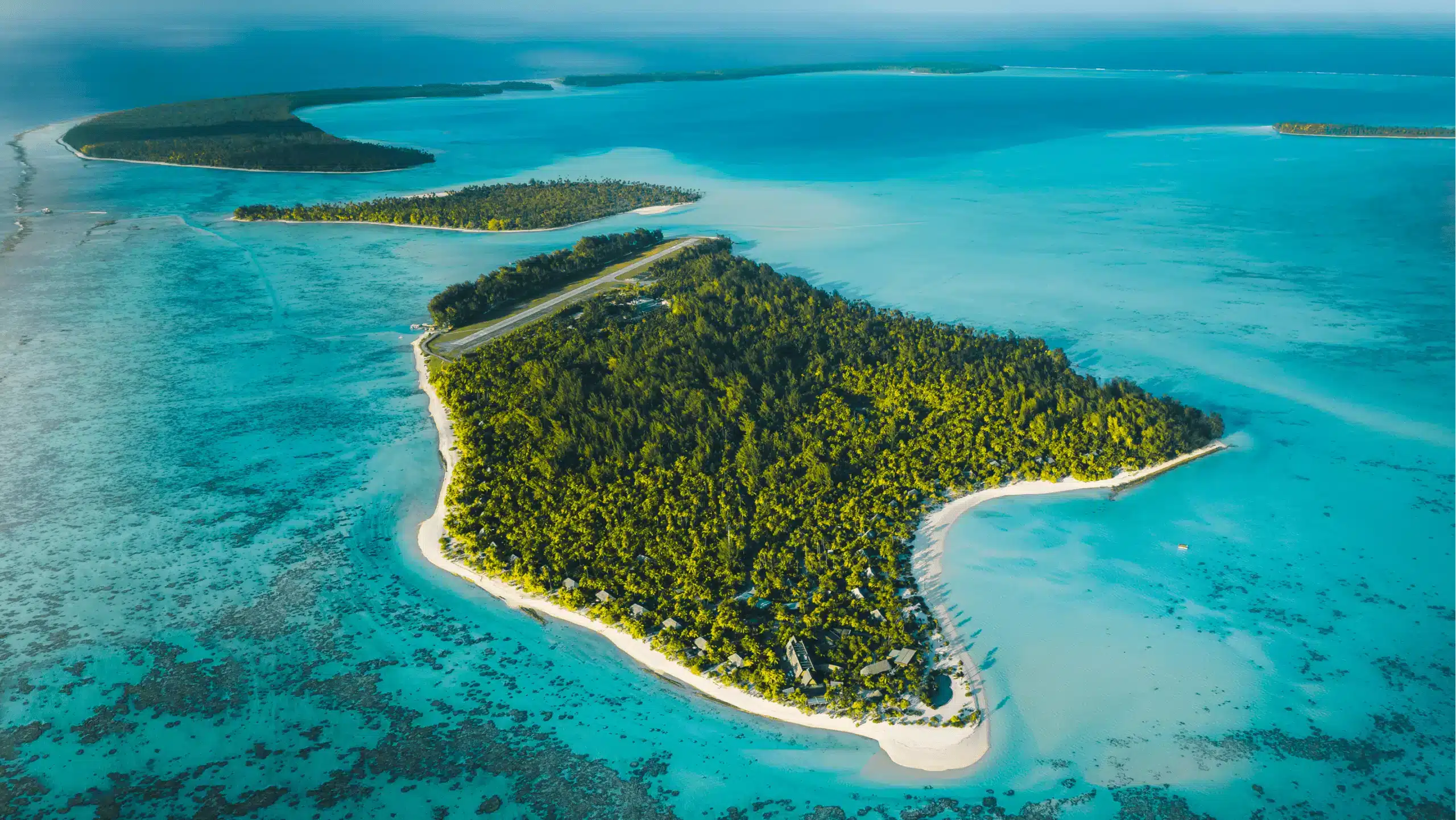
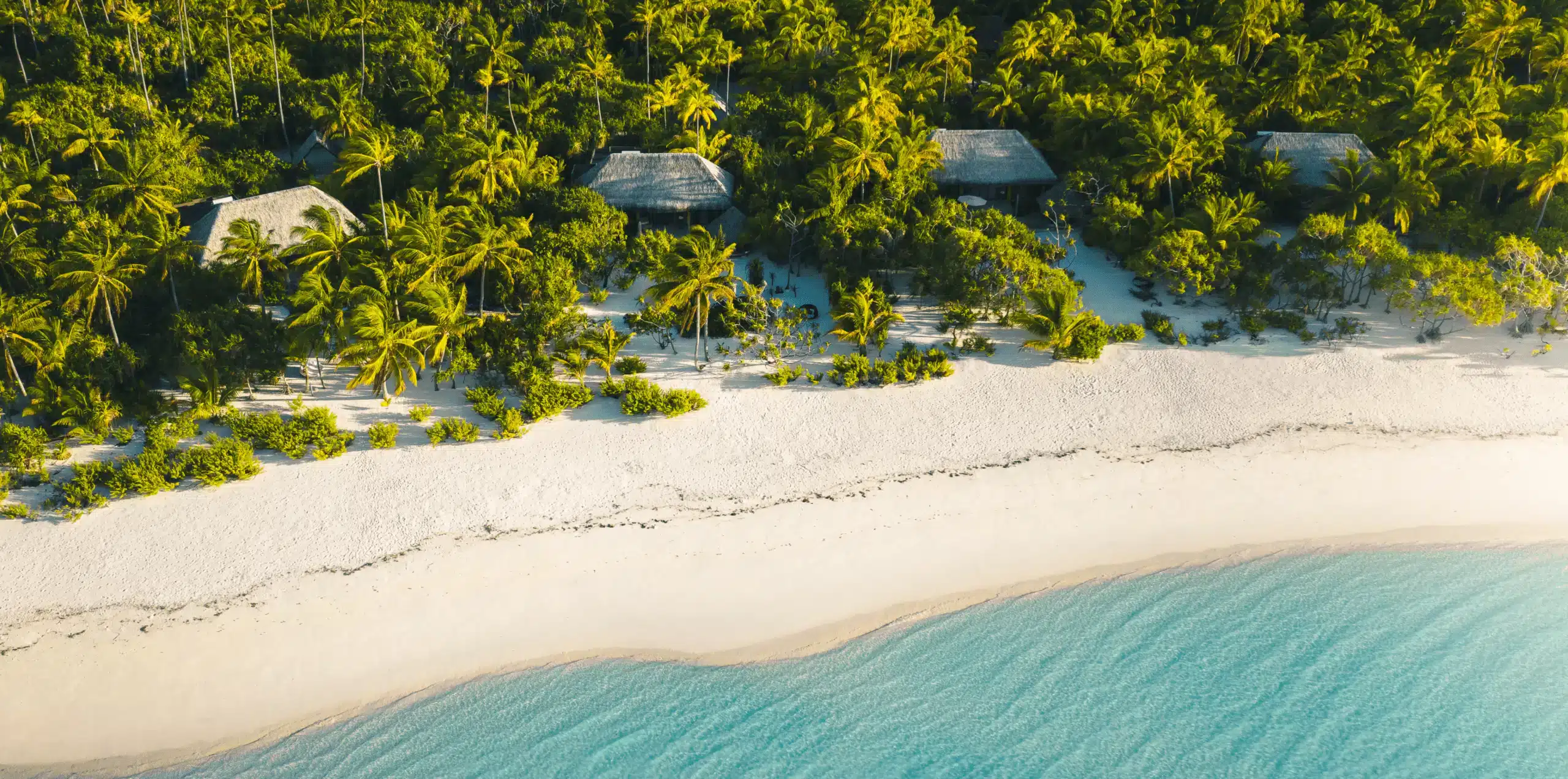
The resort consists of just 35 villas scattered across one motu (Onetahi), ensuring you’ll rarely glimpse other guests. This isn’t Club Med; this is radical privacy wrapped in sustainability wrapped in luxury that would satisfy the most demanding travelers.
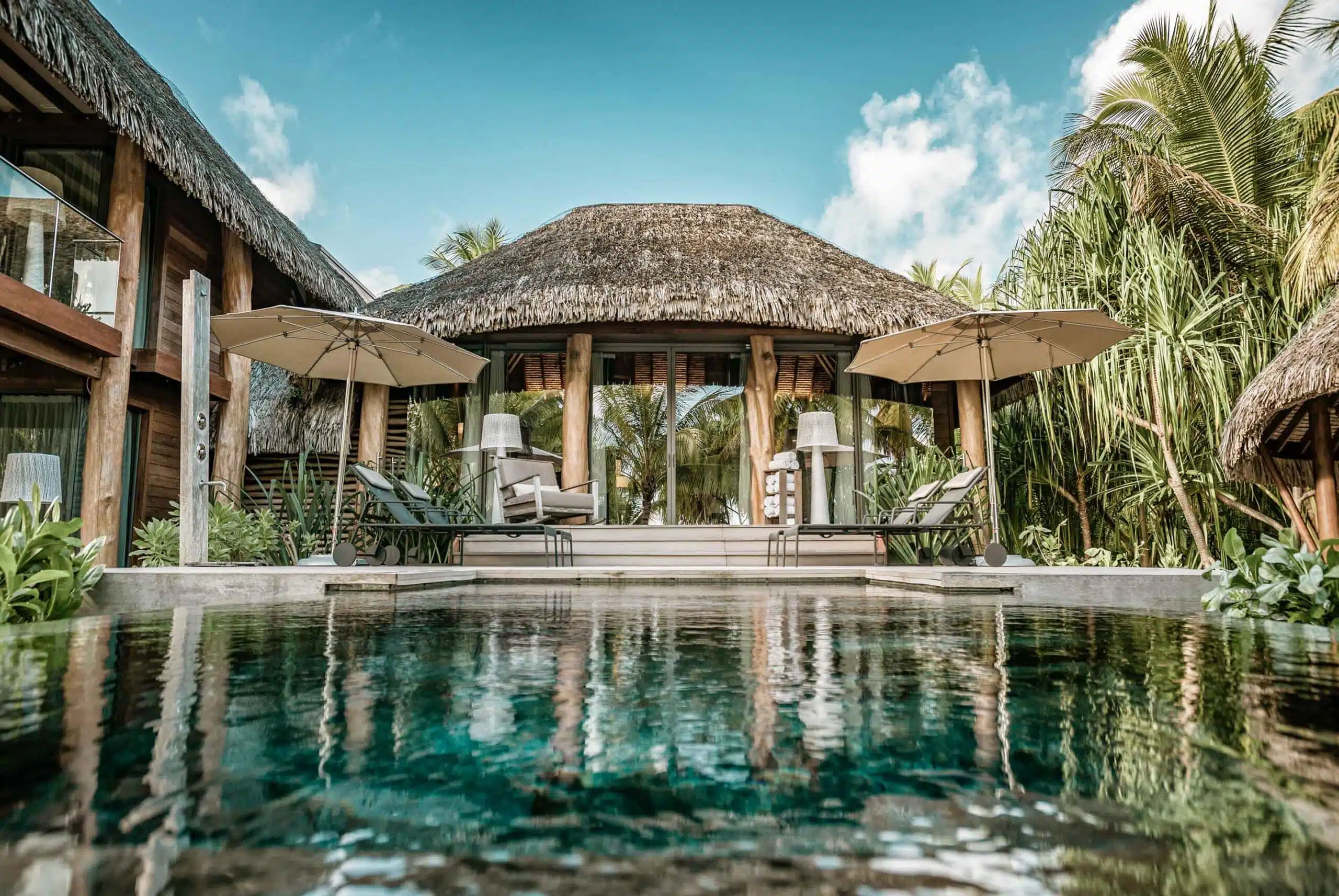
Each villa spans 1,000 square feet with a plunge pool, outdoor dining area, separate living space, and design that somehow feels both primitive and sophisticated. Natural materials dominate: driftwood, woven pandanus, coral stone. But the technology is cutting-edge: Bose sound systems, tablets controlling everything from lighting to temperature, espresso machines, and wifi that actually works (powered by satellite, naturally).
The bathrooms alone justify the rates: twin rain showers, massive soaking tubs, natural stone, and that deep seawater air conditioning keeping everything perfectly cool without the typical hotel AC noise.
But the real luxury is what you can’t photograph: silence broken only by waves and birds, a lagoon so clear you can see individual grains of sand 20 feet down, and the profound privacy of knowing exactly 69 other humans share your atoll (35 villas × 2 guests, maximum).
The experience deliberately disconnects you. There are no televisions (unless you request one). No news. No cars. No crowds. Just bicycles, the spa, two restaurants, a bar, and thousands of acres of protected nature. You can snorkel the lagoon’s coral gardens directly from the beach. Take guided kayak expeditions through mangrove channels. Visit the island’s scientific research station. Learn about Polynesian culture from local staff. Or simply lie in your hammock, watching palm fronds sway, remembering what it feels like when your biggest decision is whether to have fish or lobster for dinner.
The dining deserves special mention: two restaurants serving French-Polynesian fusion using fish caught daily, organic produce from the resort’s gardens, and imported specialties that arrive twice weekly via supply boat (still necessary for things you can’t grow on an atoll). The wine cellar would satisfy serious collectors. And the breakfast? Delivered to your villa each morning in a traditional woven basket, with fresh pastries, tropical fruits, yogurt from Tahiti, and coffee that tastes better when consumed on your private deck.
Marlon Brando's Legacy, Realized
Here’s what makes The Brando genuinely significant: it proves that sustainability and luxury aren’t opposites. For decades, “eco-resort” implied rustic accommodations, cold showers, and virtue-signaling discomfort. The Brando demolishes that assumption. You can have chilled champagne, perfectly cooled rooms, gourmet meals, and silk sheets, all while generating zero carbon emissions and actually helping the environment.
This was Brando’s vision, though he never lived to see it realized. He understood something most people didn’t in 1966: that the earth’s most beautiful places would only survive if we could demonstrate economic models that made preservation more profitable than exploitation.
The resort isn’t cheap. Villas start around $3,000 per night, and most guests stay 5-7 nights (there’s a three-night minimum). The all-inclusive rate covers meals, most activities, and transfers from Tahiti via the resort’s private plane. It’s a significant investment.
But consider what you’re purchasing: you’re supporting the ongoing scientific research programs studying climate change’s impact on atolls. You’re funding the employment of 110 Polynesian staff members earning above-market wages. You’re helping prove that remote, pristine environments can thrive economically without being destroyed. And yes, you’re experiencing one of the planet’s most exclusive, private, and beautiful resorts—sleeping where Marlon Brando once slept, swimming in waters he fought to protect, and benefiting from a vision he spent 40 years nurturing.

Why It Matters
Climate change threatens atolls existentially. Rising seas and warming oceans are destroying coral reefs, eroding beaches, and threatening the very existence of low-lying Pacific islands. Within decades, many atolls may become uninhabitable.
The Brando exists as proof that there’s another path. By demonstrating that remote islands can achieve energy independence, water self-sufficiency, and environmental restoration while operating a luxury resort, it provides a model other properties can follow. Several resorts in French Polynesia have since adopted similar technologies—deep seawater cooling, solar power, and comprehensive waste management—directly inspired by The Brando’s success.
Brando would probably find this amusing: his greatest legacy might not be The Godfather or On the Waterfront, but a hotel. A hotel that demonstrates you can protect paradise while sharing it. That luxury and responsibility can coexist. That the future of tourism doesn’t have to mean the destruction of the places we love.
He fell in love with an atoll in 1960 while making a forgettable movie. Every guest who falls asleep to the sound of waves lapping Tetiaroa’s shore, cooled by deep ocean currents and powered by tropical sunshine, lives inside Brando’s dream.
Paradise, it turns out, was worth fighting for. And when done right, paradise can be shared without being destroyed.
That’s the real mutiny on the bounty—rebelling against the assumption that we must choose between luxury and sustainability, between experiencing beauty and protecting it. Marlon Brando spent the second half of his life proving we can have both.
Ready to experience The Brando for yourself? Make an enquiry and let us craft your private island escape.