
On this page
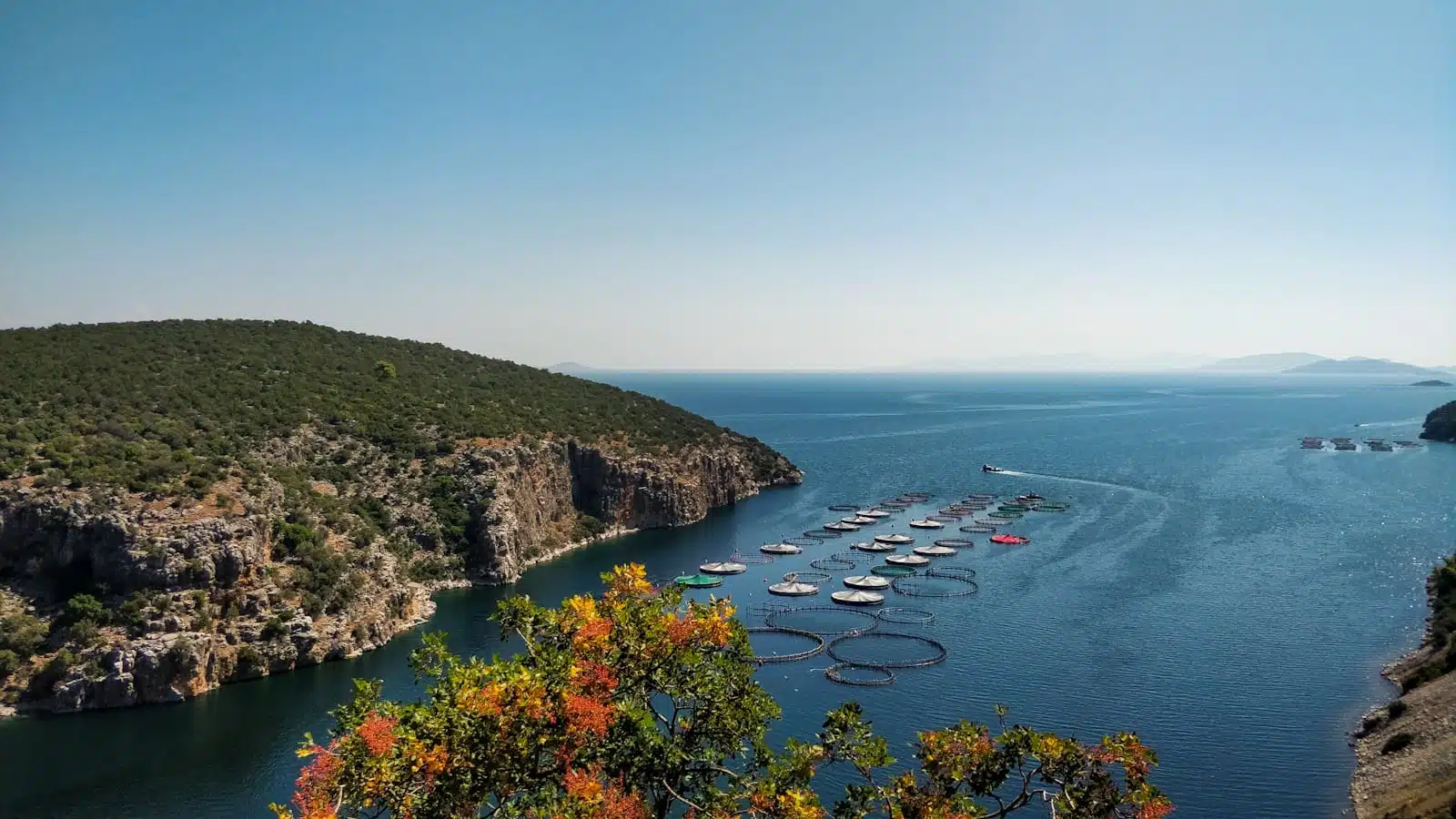
There’s a moment, driving south from Athens along the coastal road, when the city’s concrete density suddenly relents. The apartment blocks give way to umbrella pines, the traffic thins, and the Saronic Gulf appears on your left, improbably blue against the Attic light. This is the beginning of the Athens Riviera, a forty-kilometer stretch of coastline that most international visitors bypass entirely in their rush to catch ferries to Mykonos or Santorini. Their loss, increasingly, is becoming apparent.
What Exactly Is the Athens Riviera?
The term itself is relatively recent, a branding exercise that has nonetheless stuck because it captures something true. The Athens Riviera refers to the coastal suburbs and resort towns extending from Faliro, where the city meets the sea, down through Glyfada, Vouliagmeni, and Varkiza, culminating at Cape Sounion, where the Temple of Poseidon has watched over the Aegean since the 5th century BC.
Greeks have been summering here for generations. Wealthy Athenians maintain apartments in Glyfada and villas in Vouliagmeni; the Astir Palace peninsula hosted Jackie Kennedy and Frank Sinatra in its 1960s heyday. What’s changed is the arrival of international hospitality players and a recognition that this coastline offers something the islands, for all their beauty, cannot: proximity to one of the world’s great ancient cities, combined with beaches, restaurants, and hotels that rival anything in the Cyclades.
The Appeal: Why Choose Coast Over Island?
The question answers itself once you’ve experienced both. The Greek islands demand commitment: ferries or domestic flights, luggage logistics, the tyranny of schedules. They reward that effort magnificently, but they also enforce a certain isolation.
The Athens Riviera operates on different terms. You land at Athens International, and within forty minutes you’re checking into a five-star property with the Saronic Gulf shimmering beyond your terrace. The Acropolis is a short drive north; Cape Sounion an hour south.
You can spend the morning contemplating the Parthenon, lunch at a seaside taverna in Vouliagmeni, and watch the sunset from a beach club without ever feeling rushed. This is Greece with optionality, antiquity and hedonism compressed into a single, navigable geography.
There’s also, frankly, a sophistication here that some islands struggle to match. The Riviera caters to Athenians, which means it must meet the standards of people who live surrounded by four millennia of civilization.
Where to Stay
The accommodation landscape has transformed in recent years, with two properties in particular announcing the Riviera’s arrival on the global luxury circuit.
Four Seasons Astir Palace
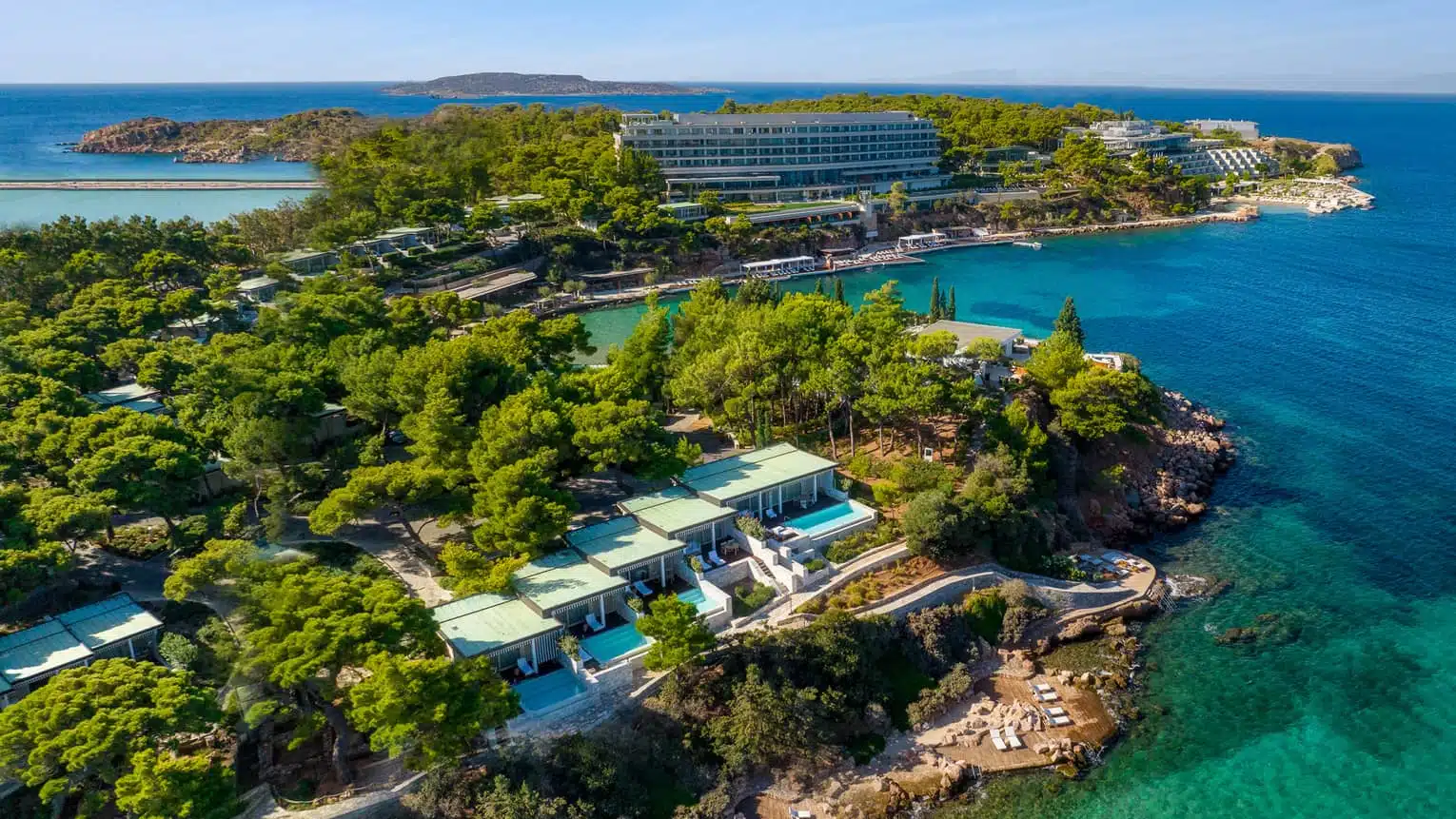
Four Seasons Astir Palace occupies the Astir Peninsula in Vouliagmeni, a spit of land that has functioned as Athens’s most exclusive address since the 1960s. The property underwent a comprehensive renovation before reopening in 2019, preserving the mid-century bones while introducing the Four Seasons standard of discreet excellence.
The setting remains extraordinary: 75 acres of pine forest and private coastline, three beaches, and views across the gulf to the distant Peloponnese. Rooms and suites are distributed between the original Arion and Nafsika buildings, their interiors referencing Cycladic minimalism without descending into cliché.
The spa draws on thalassotherapy traditions, and the dining options include Mercato, an Italian restaurant that has become a destination in its own right. What distinguishes the property, beyond its physical beauty, is the access it provides: you’re thirty minutes from the Acropolis.
One&Only Aesthesis
One&Only Aesthesis, opened in 2023, occupies a different position in the market. Set in Glyfada, closer to the city, the property channels a more contemporary aesthetic: clean lines, considered artwork, an atmosphere that feels boutique despite its scale. The beachfront setting offers direct access to the Saronic Gulf, while the rooftop restaurant and bar provide panoramic views that extend, on clear days, to Aegina and beyond.
The One&Only brand brings its characteristic attention to programming: curated experiences, wellness offerings, a sense that the hotel exists as a destination rather than merely a place to sleep. For travelers who want the Riviera experience with a slightly more urban energy, closer to Glyfada’s shopping and nightlife, this is the obvious choice.
Vouliagmeni: The Heart of the Riviera
If the Athens Riviera has a spiritual center, it’s Vouliagmeni, a small town that manages to feel like a resort and a genuine community simultaneously. The geography helps: the town occupies a narrow strip between the sea and Lake Vouliagmeni, a thermal spring-fed body of water that has drawn bathers since antiquity.
The lake, with its mineral-rich waters maintained at a constant 72 to 84 degrees Fahrenheit, offers a swimming experience unlike anything on the islands: warm, slightly sulfuric, surrounded by dramatic limestone cliffs. It’s become fashionable to dismiss the lake as touristy, but early mornings here, when the water steams gently and the crowds haven’t yet arrived, remain genuinely magical.
Beyond the lake, Vouliagmeni offers the Riviera’s most appealing concentration of beaches, restaurants, and low-key sophistication. The town beach is serviceable, but the peninsula’s private stretches, particularly Astir Beach, provide a more elevated experience: sunbeds arranged with geometric precision, attentive service, a clientele that runs to Greek shipping families and visiting Europeans.
Beyond Vouliagmeni: Glyfada to Cape Sounion
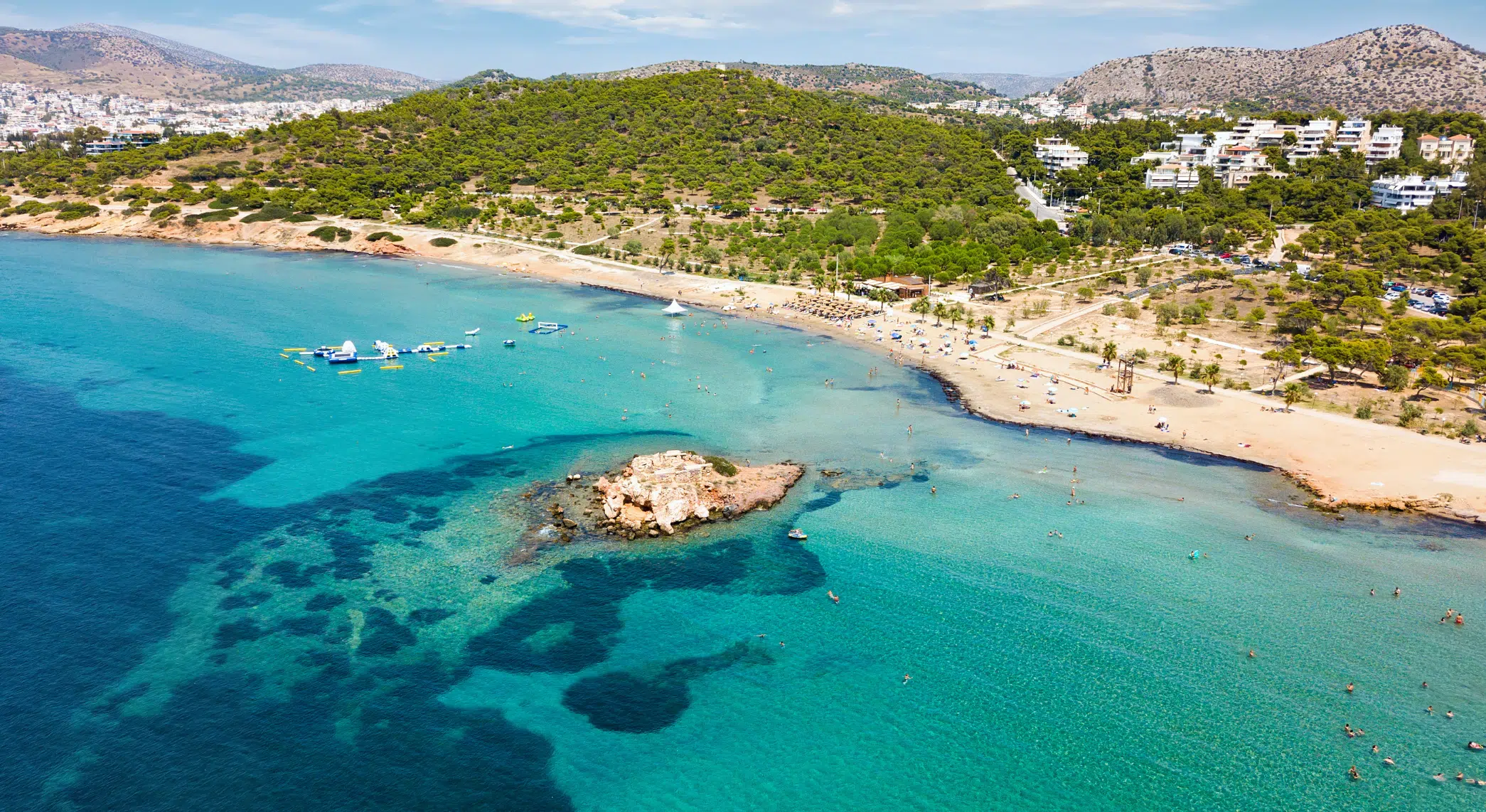
The Riviera’s character shifts as you move along its length. Glyfada, closest to Athens, is the most developed: a proper town with apartment buildings, shopping streets, and a nightlife scene that draws Athenians on summer weekends. The beach clubs here cater to a younger, more energetic crowd, and the restaurant and bar options run late into the night.
South of Vouliagmeni, the coastline grows quieter. Varkiza offers family-friendly beaches and a more relaxed atmosphere, while the road to Cape Sounion passes through increasingly undeveloped terrain: rocky coves, hillsides carpeted with maquis, and occasional tavernas.
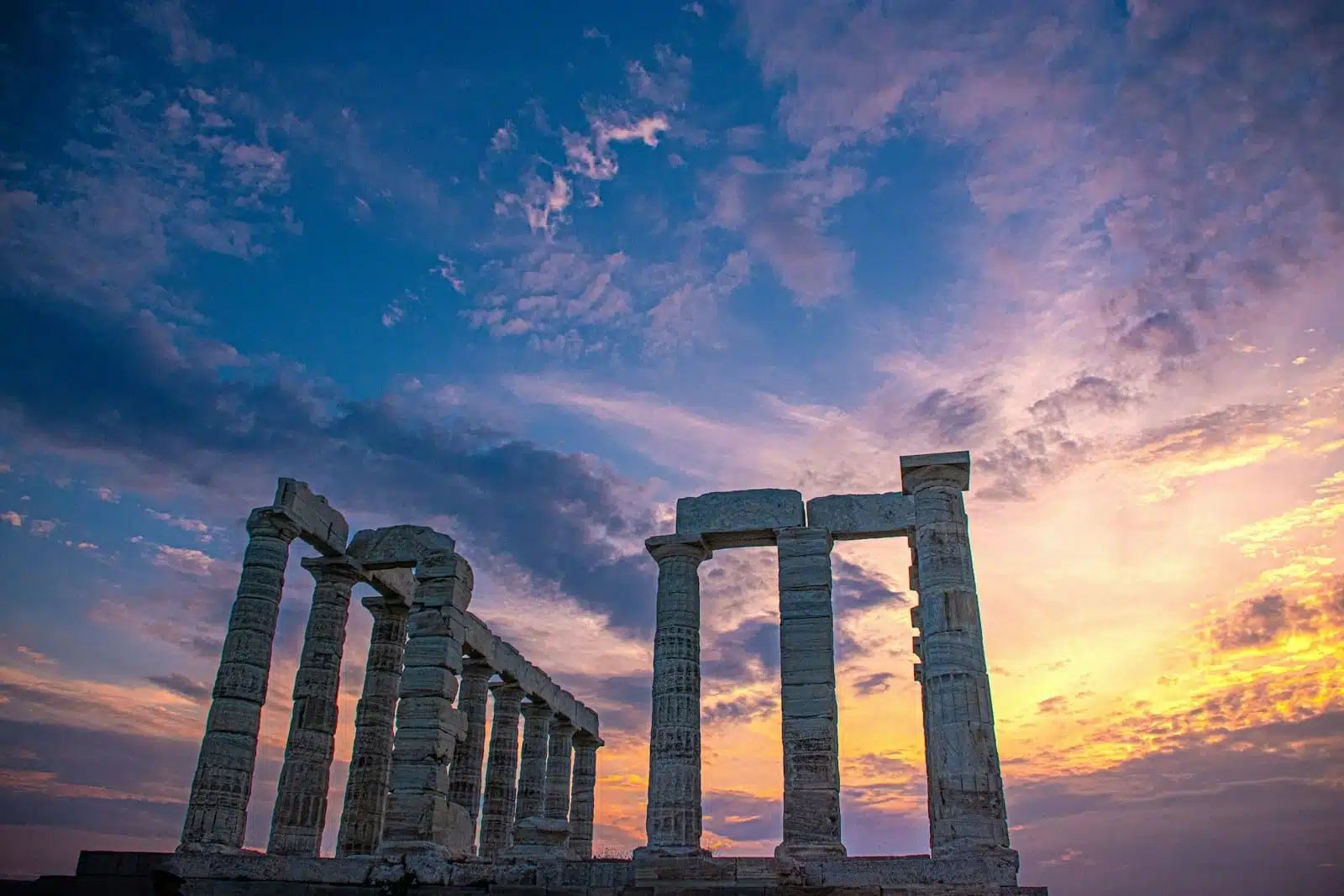
The destination, of course, is the Temple of Poseidon, one of the most dramatically sited ancient monuments in Greece. Perched on a promontory sixty meters above the sea, the temple’s remaining columns frame sunsets that have been celebrated since Byron carved his name into the stone (please don’t follow his example).
Arrive late afternoon, as the tour buses depart and the light softens. Watch the sun drop behind the Peloponnese, the sea shifting from blue to gold to violet. Understand, in that moment, why the Greeks placed their temples where they did: not merely for worship, but for the cultivation of awe.
Eating and Drinking
The Riviera dining scene reflects its Athenian clientele: discerning, well-traveled, impatient with mediocrity. Standards are high, and restaurants that coast on location alone don’t survive long.
Island, sprawling across a waterfront terrace in Vouliagmeni, has become synonymous with the Riviera lifestyle. The setting is undeniably spectacular, with tables extending almost to the water’s edge. The crowd is glamorous, the music calibrated to enhance rather than overwhelm, and the menu spans grilled seafood, sushi, and Mediterranean sharing plates. It’s the kind of place where lunch extends imperceptibly into early evening, where the bill grows larger than anticipated.
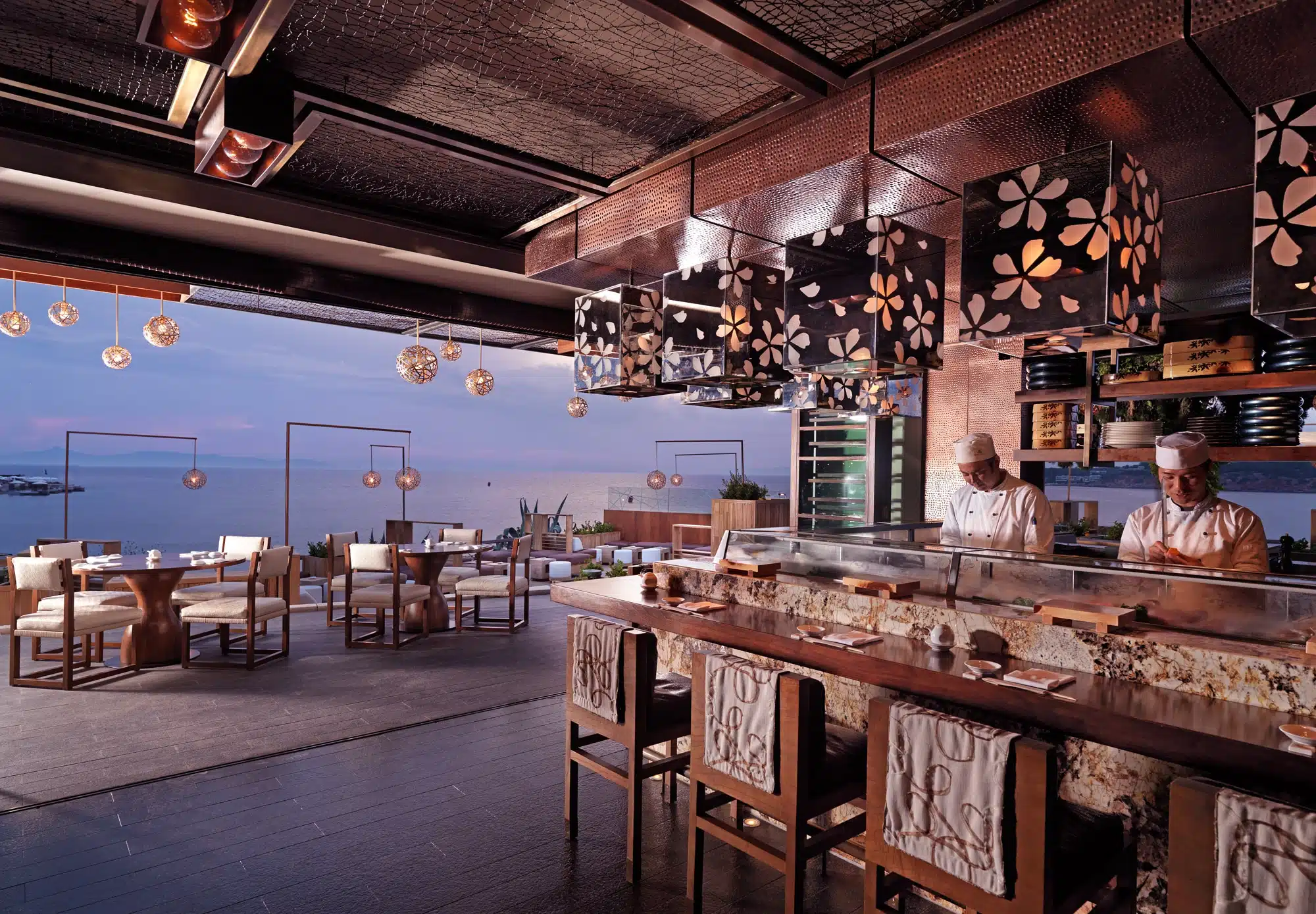
Matsuhisa Athens, the Nobu offshoot at the Four Seasons, brings the brand’s signature fusion to the Attic coast. The terrace setting, overlooking the Astir beaches, provides context that most Nobu outposts lack: you’re eating Japanese-Peruvian cuisine within sight of waters where Athenian triremes once sailed. Whether this enhances the black cod miso is debatable, but the quality is unimpeachable.
For something more traditional, Lambros in Vouliagmeni has served fresh fish to locals for generations. The setting, a simple taverna overlooking the small-boat harbor, makes no concessions to fashion. Choose your fish from the display, specify how you want it cooked (grilled, always grilled), and eat it with nothing more than lemon, oil, and a salad of tomatoes and onions.
The beach club scene deserves its own mention. Astir Beach, on the Four Seasons peninsula, provides the Riviera’s most polished sand-and-sunbed experience, with day passes available to non-hotel guests. Bolivar Beach Bar, further north in Alimos, attracts a younger crowd with DJ sets and a party atmosphere that intensifies as the sun descends. Akanthus, in Glyfada, strikes a middle ground: upscale but unstuffy, with food that exceeds typical beach club expectations.
The Cultural Dimension
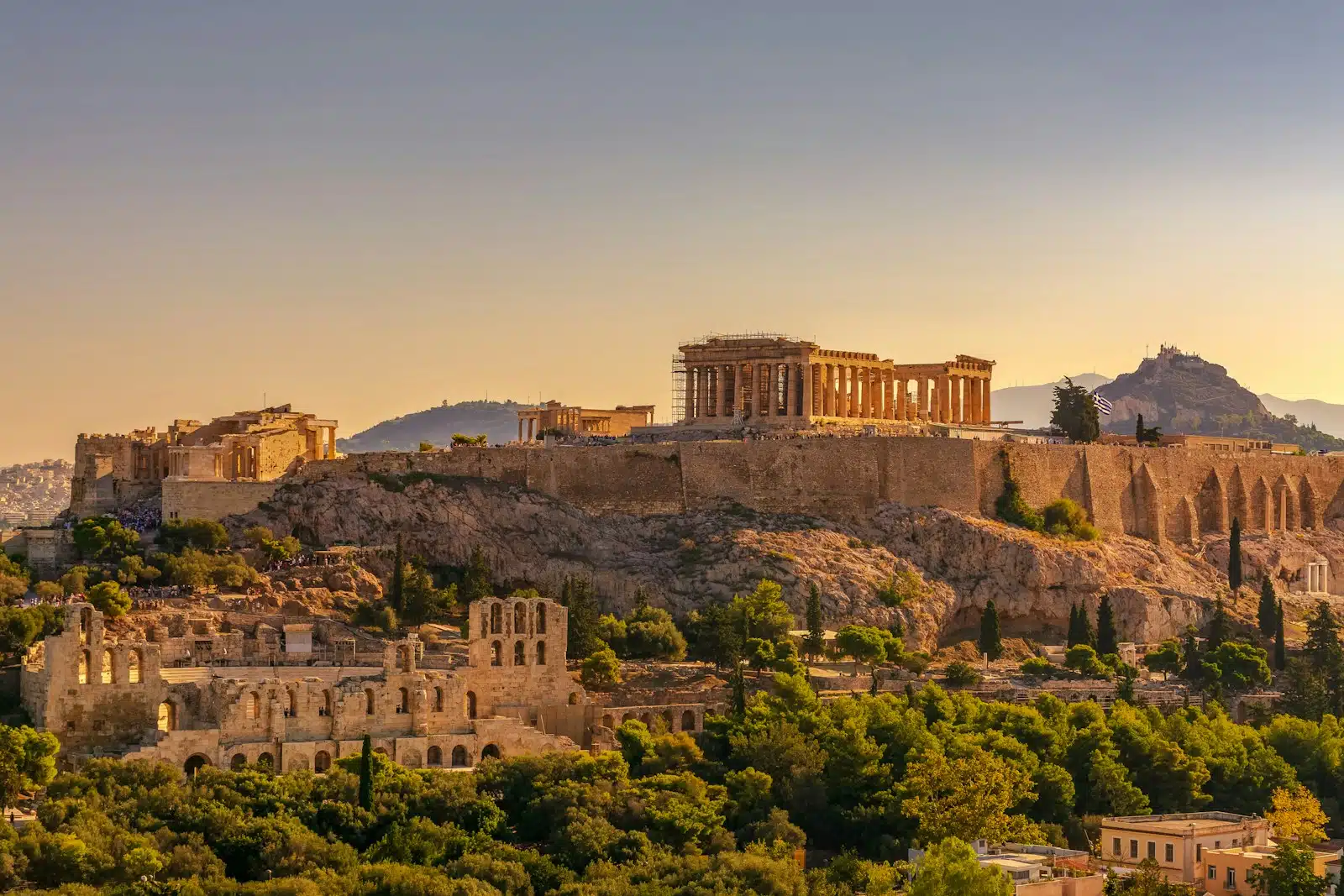
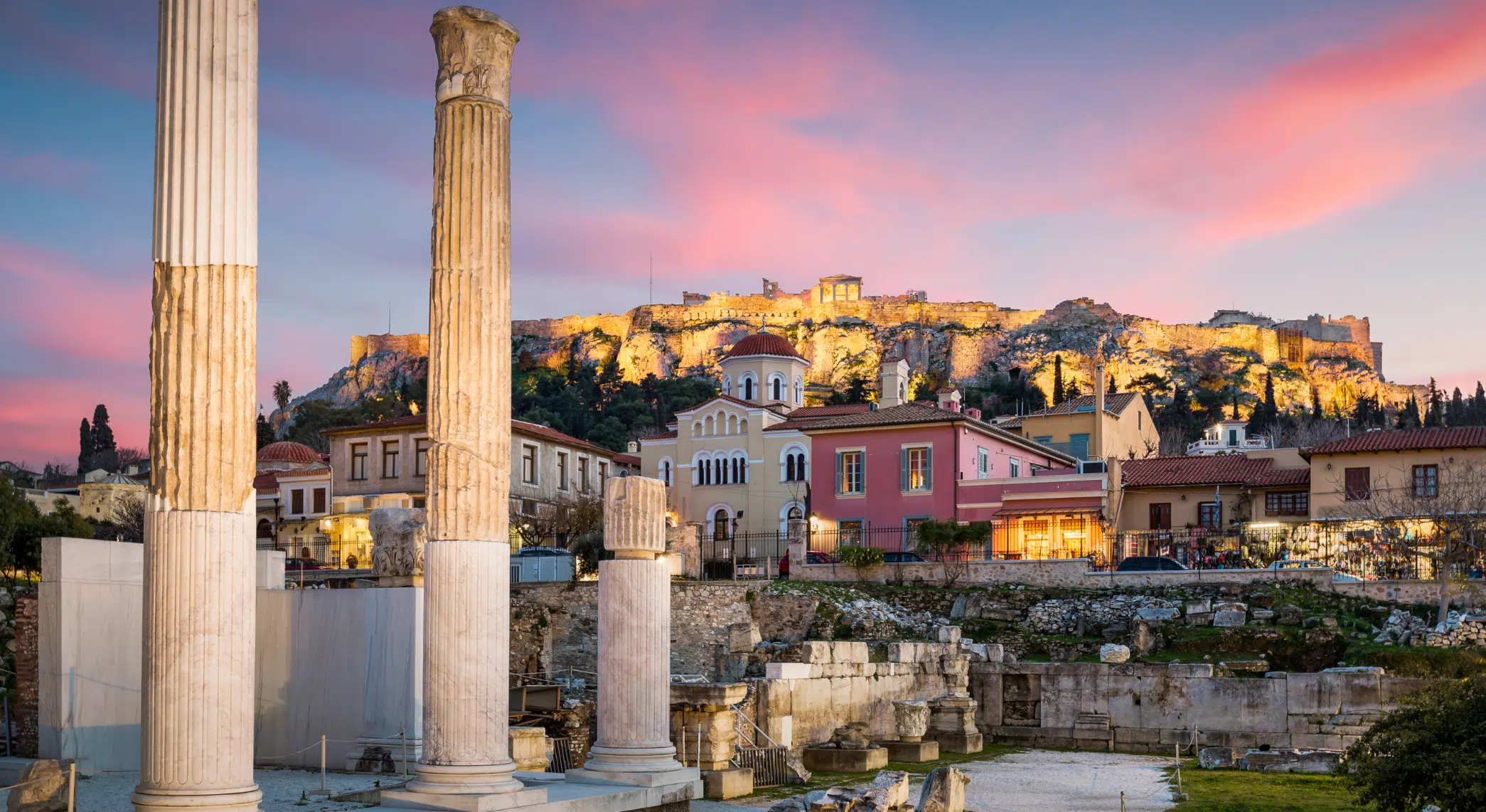
Unlike the islands, the Riviera allows for easy integration of cultural pursuits without logistical gymnastics. The Acropolis and its museum are thirty to forty minutes north, depending on traffic. The National Archaeological Museum, housing the greatest collection of Greek antiquities in the world, requires a similar journey.
Beyond Sounion’s famous temple, the coastline hides less celebrated sites. The sanctuary of Artemis at Brauron, where young Athenian girls once performed rituals honoring the goddess, lies slightly inland. The ancient silver mines of Lavrio, whose wealth funded the Athenian navy that defeated the Persians at Salamis, can be explored with guided tours. Even the Astir Peninsula has history: the pine forests were planted in the 1950s as part of the resort’s development, transforming what had been scrubland into the verdant landscape visible today.
For contemporary culture, the Stavros Niarchos Foundation Cultural Center, designed by Renzo Piano and opened in 2016, occupies the northern edge of the Riviera in Faliro. The complex houses the National Library and National Opera of Greece, but the landscaped park surrounding it, with its gentle hills and water features, has become a gathering place for Athenians seeking green space. Catching a performance here before retreating to a Vouliagmeni hotel represents a very particular kind of Athenian luxury.
Practical Considerations
The Riviera operates year-round, though its character shifts with the seasons. Summer (June through September) brings the beach clubs, the long evenings, the full expression of coastal Greek life. But spring and autumn offer their own appeal: fewer crowds, milder temperatures ideal for exploring Athens and Sounion, and hotel rates that drop considerably. Even winter has its partisans: the light along this coast in December, low and golden, possesses a quality that photographers treasure.
Getting around is easiest by car, though the tram from central Athens reaches Voula and Glyfada. Taxis are plentiful; hotels arrange transfers seamlessly. Unlike the islands, you won’t spend hours on ferries or waiting for connections. The Riviera’s luxury, in part, is the luxury of time reclaimed.
A Different Kind of Greece
The Athens Riviera will never replace the Cyclades in the traveler’s imagination, nor should it try. The islands offer something irreplaceable: that sense of arrival after a sea crossing, the contained world of an island community, the particular quality of light that has drawn artists and writers for centuries.
But the Riviera proposes an alternative vision of Greek travel, one that integrates antiquity and modernity, city and sea, culture and hedonism.
For travelers with limited time, the Riviera offers a concentrated Greece: the Parthenon and Poseidon’s temple, world-class hotels and tavernas unchanged in decades, beaches that rival the islands’ best.
If you know the Cyclades already, it provides a counterpoint, a chance to experience Greece without the familiar rhythms of island-hopping. This is Greece as Athenians experience it: ancient, modern, beautiful, and surprisingly close to everything.
We design bespoke Greek itineraries, combining coastal luxury with cultural experiences. Whether you’re seeking a standalone Riviera escape or a journey that links coast and islands, our travel experts craft experiences tailored to you. Get in touch to start planning.