
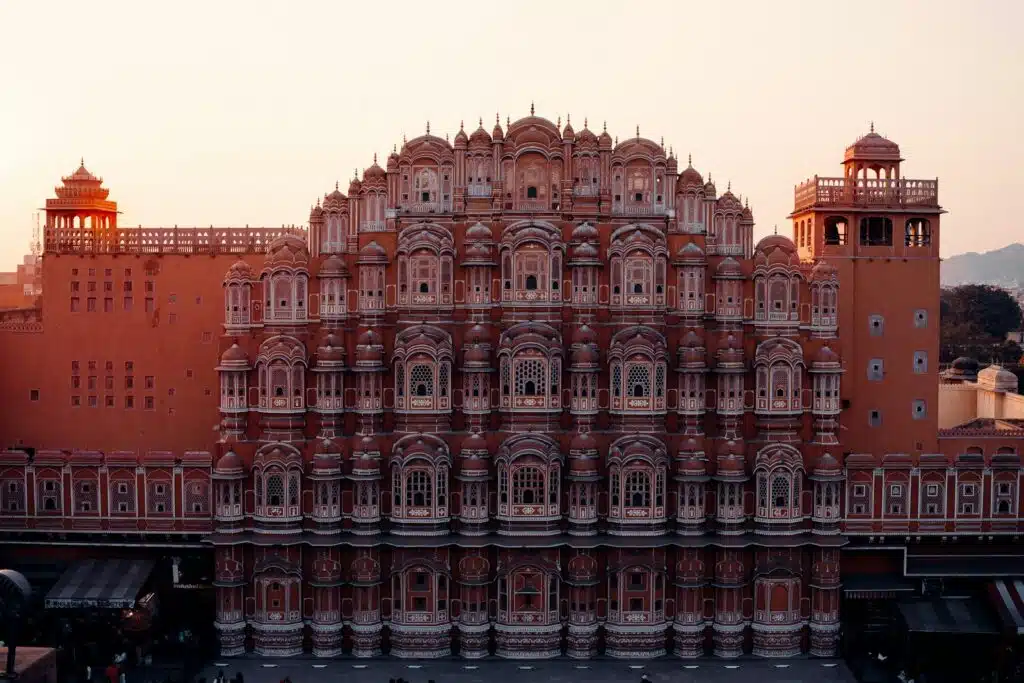
Rajasthan is India’s most visually striking region. Each major city (Jaipur, Jodhpur, Udaipur, Pushkar) has a distinct personality and architectural character.
Jaipur: The Gateway and Pink City
Jaipur is Rajasthan’s most commercial and accessible city. It’s the largest, the most developed, and typically the entry point for Rajasthan travel. The city is built on a grid (unusual for Indian cities), which makes navigation logical. The architecture is distinctly Rajasthani, and the entire old city is painted pink (a deliberate color choice made in the 1800s and maintained as tradition).
The primary sights are City Palace (still partly royal residence, partly open to the public), Hawa Mahal (the ornate window palace, iconic architecture), and Jantar Mantar (astronomical observation instruments). But the real Jaipur experience is moving through neighborhoods, experiencing the bazaars, and understanding how the city functions as commerce and culture rather than just tourism.
Amber Fort (outside the city, perched on a hilltop) is worth a day trip. The palace complex is dramatic, the architecture is impressive, and the views across landscape are exceptional. Going early morning (before crowds) is essential.
Shopping in Jaipur is excellent. The bazaars sell textiles, gemstones, metal work, and traditional crafts. The shopping is most authentic when you move beyond tourist areas into neighborhood markets where locals shop.
Where to Stay in Jaipur
The positioning matters significantly. The old city (near Hawa Mahal and City Palace) is atmospheric but busy and noisy. Properties in this area position you for experiencing authentic Jaipur but require acceptance of urban chaos. Alternatively, positioning on the periphery (still within the city but slightly removed) provides quieter experience with easier navigation while maintaining city access.
Palace hotels or heritage properties in Jaipur offer both architectural interest and positioning for city exploration. Contemporary luxury hotels also exist, but palace properties are more distinctive.
Food and Restaurants
Jaipur’s restaurant scene includes serious establishments doing refined Rajasthani and Indian cooking alongside street food. The city’s bazaars contain specific street food vendors worth seeking: jalebis (fried sweets), samosas, regional noodle dishes.

About Do Not Disturb
Do Not Disturb is a luxury travel company specializing in carefully designed journeys and considered experiences. Each itinerary we build for our clients is informed by real destination knowledge, offering insight into places, cultures, and moments that shape how a trip comes together.
If this destination has sparked ideas, the itinerary can be developed into a private journey tailored to your interests and travel style, with hand-picked stays, thoughtful routing, and experiences curated around what matters most to you.
Jodhpur: The Blue City and Desert Positioning
Jodhpur sits at the edge of the Thar Desert and feels more remote than Jaipur. The city is famous for its blue-painted houses cascading down hillside and the dramatic fort perched on a cliff above. The aesthetic is more severe and visually striking than Jaipur.
The primary sight is Mehrangarh Fort, which dominates the landscape visually and contains both museum spaces and hotel accommodations. Staying within the fort positions you uniquely (you’re living within one of Rajasthan’s most dramatic fortifications). The architecture is fortress rather than pleasure palace (more austere, defensive), which creates different energy.
The city below offers genuine neighborhood exploration, excellent bazaars, and a noticeably slower pace than Jaipur. The blue color is distinctive enough that simply walking through neighborhoods is always interesting visually.
Day trips from Jodhpur include Osian (desert town with temples) and various smaller villages where desert culture remains primary and tourism is minimal.
Where to Stay in Jodhpur
Fort positioning is unique and worth experiencing, but it’s also quite touristy. Staying in the city below provides more genuine engagement with neighborhoods. Alternative positions exist on the desert periphery where you’re positioned between city and desert landscape.
Smaller palace hotels in Jodhpur often offer genuine character without the tourism volume of Mehrangarh.
Food and Restaurants
Jodhpur’s food reflects desert positioning and traditional Rajasthani cooking. Street food is genuine and excellent. Restaurants in the bazaar or neighborhood areas offer more authentic experience than tourist-focused establishments.

Udaipur: Romantic Lake City
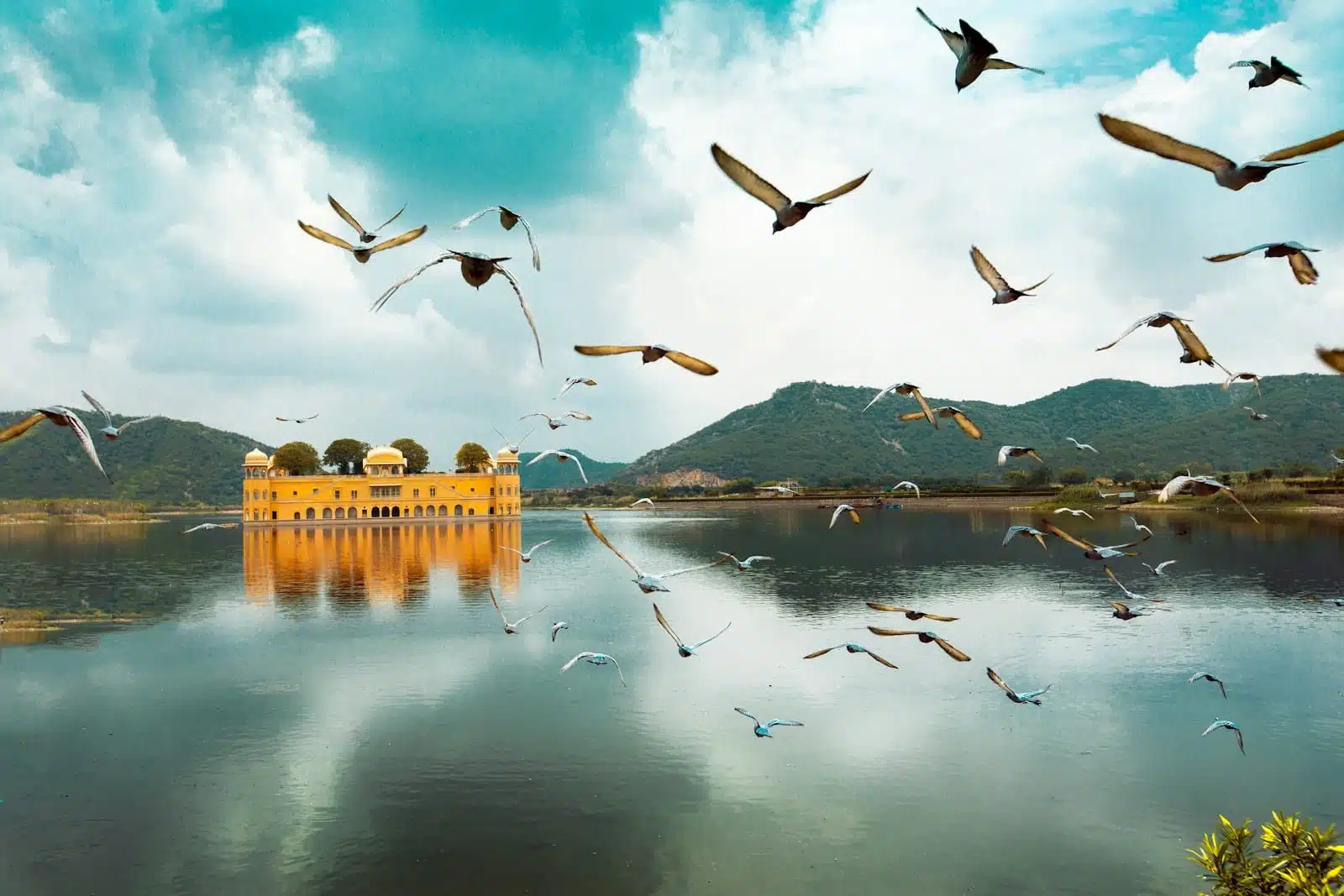
Udaipur is considered to be Rajasthan’s romantic city. Built around a lake with multiple palaces positioned on the water, the aesthetic is fundamentally different from desert cities. The water creates greenery and softens the landscape. The positioning creates numerous viewpoints where water and architecture intersect dramatically.
The primary experience is simply being in the city: walking neighborhoods, exploring along the waterfront, experiencing how the city relates to water. The City Palace contains both royal residences and hotel positioning. Lake Palace (island palace) and Taj Lake Palace provide specific palace experiences (see Palace Hotels section for details).
Exploring neighborhoods by foot is the best way to understand Udaipur. The city is compact. The orientation around water creates natural pathways. The bazaars are less overwhelming than Jaipur’s but distinctly Rajasthani in character.
Day trips include Hawa Mahal (another palace, smaller than the main city palace), various temples, and surrounding villages.
Where to Stay in Udaipur
The positioning significantly shapes experience. Waterfront positioning (whether on the lake or along backwater canals) creates different experience than interior city positioning. Palace hotels offer architectural interest. Contemporary luxury properties also exist.
The best positioning allows neighborhood exploration while maintaining water access and visual connection to the lake.
Food and Restaurants
Udaipur’s restaurant scene includes serious establishments alongside excellent street food. The bazaar areas offer traditional Rajasthani food. Lake-facing restaurants provide specific dining atmosphere.

Pushkar: Sacred Town and Markets
Pushkar is a pilgrimage city in the desert with sacred lake, temples, and spiritual energy. Unlike other Rajasthani cities focused on palace culture, Pushkar is focused on sacred geography. The town is compact, walkable, and maintains genuine religious function alongside tourism.
The market is interesting for textiles, handicrafts, and cultural goods (not tourist trinkets but actual community commerce). The town has bohemian energy without being manufactured – it retains an authentic edge of creative chaos that’s distinctive to Indian cities.
Pushkar Camel Fair (November/December) is famous but crowded.
Where to Stay in Pushkar
Pushkar has guesthouses and small hotels rather than major resorts. The positioning should be central for genuine town engagement. Heritage properties offer some character.
The experience here is fundamentally different from palace tourism: it’s sacred geography and community culture rather than sightseeing.
Food and Restaurants
Pushkar offers excellent vegetarian food (given sacred status and religious practice). Street food is popular with locals. Restaurants positioned around the sacred lake provide atmospheric dining experiences.

Ready to Experience Rajasthan?
Rajasthan offers a dramatic India experience with visual intensity, cultural richness, and multiple distinct cities with different perspectives on palace culture, palace hotels, and desert landscape. The region is well-developed for luxury travel while maintaining cultural character.
At Do Not Disturb, we build Rajasthan itineraries that balance landmark experiences with genuine neighborhood exploration, position you in properties with architectural character, coordinate private transportation that allows landscape appreciation, and structure pacing that allows absorption rather than rushing through cities.
Enquire with us to discuss your Rajasthan journey and how we can build an itinerary matching your interests.
Plan your own version of this journey
Speak to Do Not Disturb’s luxury travel experts and turn this moment into something personal.
Related destinations
Suggested articles

Kerala Luxury Travel Guide: Backwaters, Ayurveda, Beaches

India’s Most Beautiful Palace Hotels and How to Experience Them
The Best Luxury Places to Visit in India for First-Time Travelers
One Island or Two? Splitting Your Maldives Honeymoon Between Resorts

Best Honeymoon Destinations for Autumn

Italy vs Greece for Your Honeymoon – Which is Better?
48 Hours in Lima: Where to Eat, Stay and Explore

A Cultural Honeymoon in Peru: Machu Picchu, Cusco, the Sacred Valley and the Amazon

Peru or Mexico: Which Ancient Civilization Should You Visit First?
The Best Time to Visit Machu Picchu for Fewer Crowds
Why So Many Travelers Fall for Kanazawa
Kyoto or Kanazawa – Which Is Better for Traditional Japan?
What Is a Kissaten? Inside Japan’s Historic Coffee Shop Culture