
On this page
Beyond the stones lies the story of civilization itself.
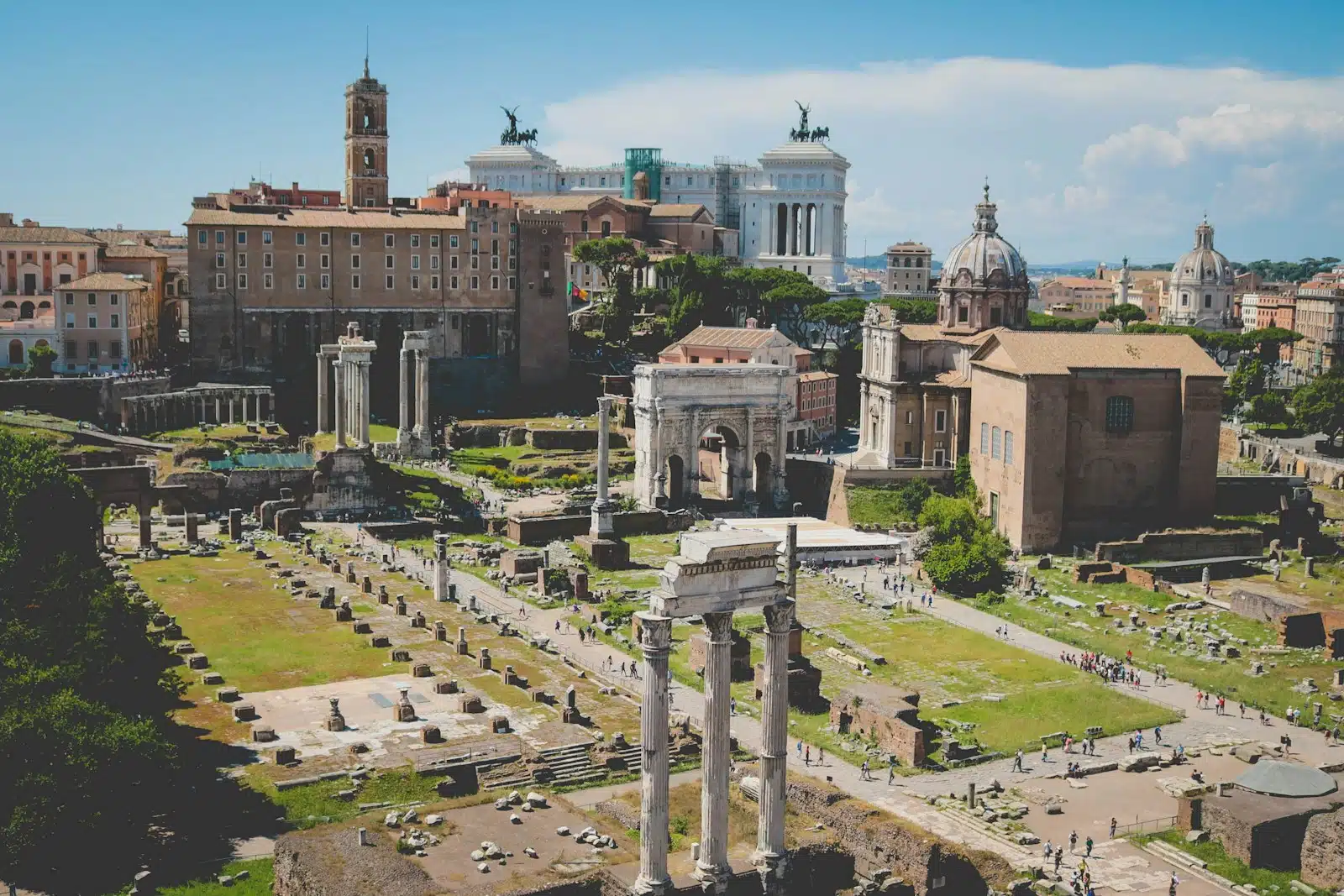
At first, the Roman Forum looks like silence — a scatter of broken marble and leaning columns washed in morning light. But step closer, and the air hums with memory. This was the stage on which civilization learned to speak. Here, politics, philosophy, architecture, and belief converged to shape the way the Western world would think and live for centuries to come.
Through Do Not Disturb, guests can experience the Forum as few ever do — privately guided by a historian or archaeologist who reads the site not as ruin, but as revelation: the blueprint of human ambition, endurance, and imagination.
The Place Where Ideas Took Shape
he Roman Forum was the first public square — the space where a society learned to be a society.
The Via Sacra, or Sacred Way, runs through its heart, worn smooth by centuries of feet. Victorious generals once paraded here in triumph; senators and citizens gathered to argue and agree. The smell of incense, the rustle of togas, the rising cadence of debate — all once filled this valley between the hills.
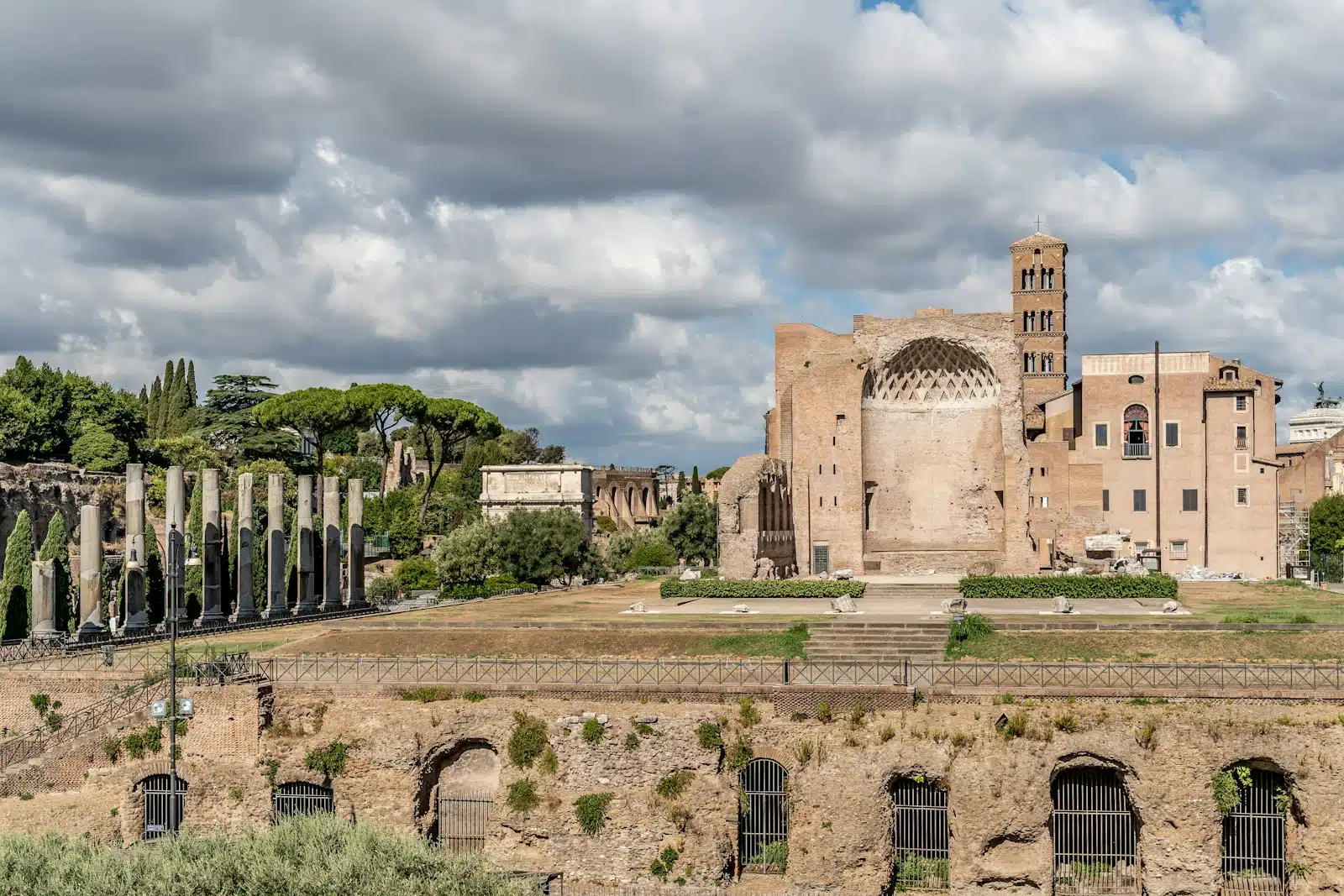
The ruins that surround it — the Temple of Saturn, the Basilica Julia, the Arch of Septimius Severus — are not fragments, but a framework. Together they formed the living architecture of an idea: that order, law, and philosophy could coexist with faith and beauty.
At its center stands the Rostra, the ancient speaker’s platform. Cicero once addressed the crowds here; Julius Caesar stood on this spot. It’s believed that his body was burned nearby, where citizens built a pyre to mourn and protest in the same breath.
Here, history is not abstract. It is human — a place where passion and power met in public view, and where the foundations of civic life were laid.
Tours we recommend
Layers of Civilization
Beyond the main avenues, the Forum opens into quieter corners, where excavation continues and time still shifts underfoot. Archaeologists uncover new details daily — fragments of fresco, coins, pottery, patterns that reappear like threads through centuries of rebuilding.
Each layer tells a story. Pagan temples became churches. Basilicas became gardens. Every era absorbed what came before, creating a landscape less like a ruin and more like a conversation.
Through Do Not Disturb, private access allows time to experience these layers closely — to walk through spaces rarely open to the public, accompanied by those who study them each day. The feeling is not of looking back, but of standing within something still alive.
There’s a rhythm to the place: the brush of wind against cypress, the sound of tools tapping faintly in the distance. You realize that archaeology is not about uncovering the past; it’s about understanding how it continues to surface.
The Palatine Perspective
From the Forum floor, the path climbs toward the Palatine Hill — the birthplace of Rome and the seat of its emperors. The ascent is steady, the view expanding with every step.
At the summit lie the remains of imperial palaces: fragments of frescoed walls, colonnades, and gardens designed for contemplation as much as display. From here, rulers could see their city spread below — the Forum alive with voices, the Tiber glinting in the distance.
What endures most from this height is not grandeur but proportion. The geometry of the Palatine reflects Rome’s belief that harmony, not dominance, sustains power. It was from here that emperors understood their role not as separate from their people, but as part of a greater order — a conversation between vision and responsibility.
Light, Geometry, Meaning
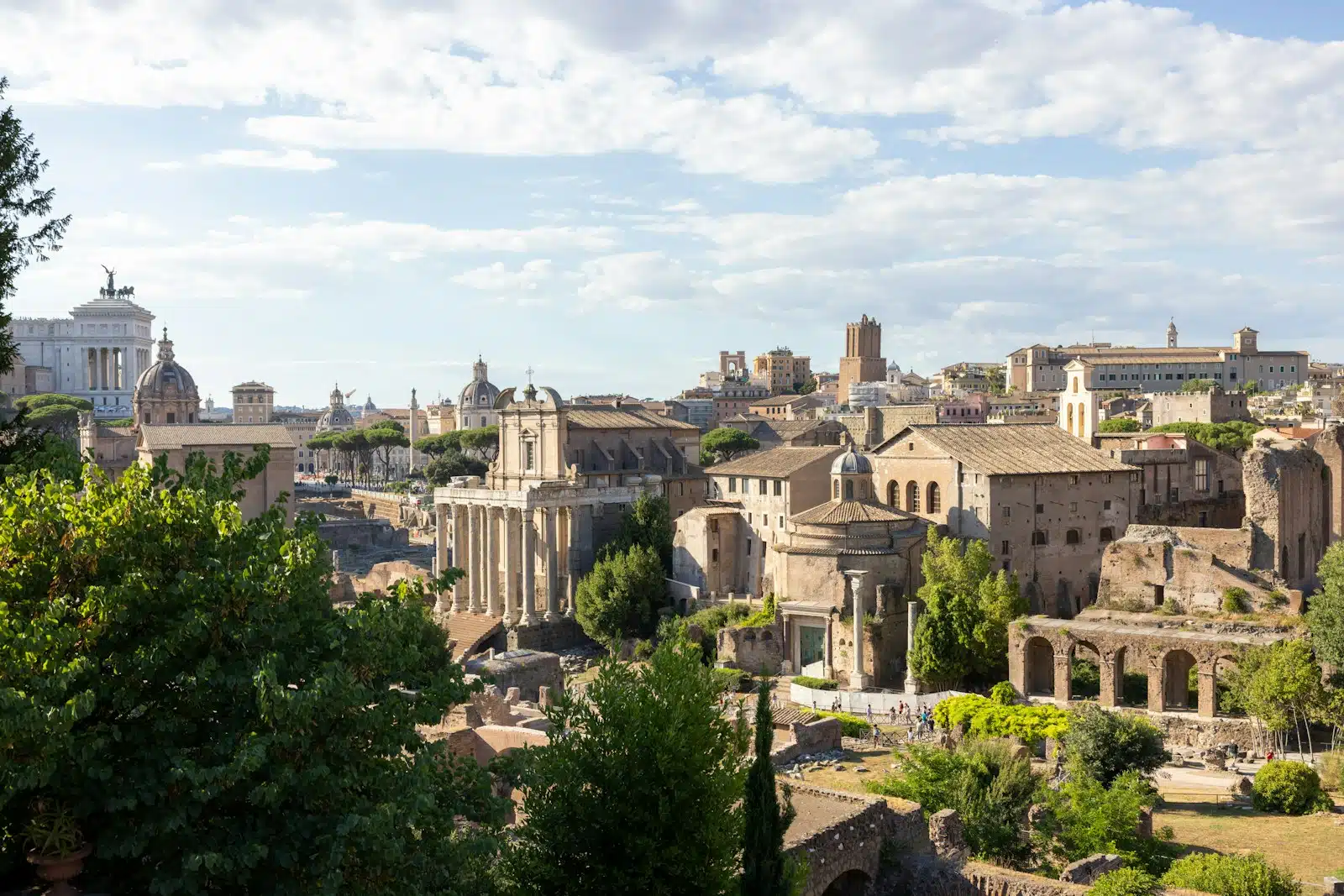
As the sun climbs, the Forum becomes a living sundial. Shadows move across the temples, tracing time in slow geometry. Your guide points to the alignments — how the Temple of Antoninus and Faustina faces the Basilica Aemilia, how arches frame sightlines toward the Capitoline.
Nothing here is accidental. The Forum was designed to make people think about their place in the world — between the gods above and the earth beneath. Architecture wasn’t decoration. It was dialogue.
In this stillness, the concept of civilization feels tangible. You begin to understand that these stones weren’t built just to impress, but to instruct — a city teaching itself to live with purpose.
The Sacred Flame
At the Forum’s eastern edge lies one of its most evocative spaces: the House of the Vestal Virgins. Marble statues line a quiet courtyard, their faces softened by centuries. Between them, water trickles from an ancient spring.
Here, the Vestal priestesses once tended the sacred flame of Vesta, goddess of the hearth — the fire that symbolized the life of the city itself. As long as it burned, Rome endured.
The symbolism feels timeless. Civilization, like that flame, survives only through care and renewal. In this still garden, surrounded by the remains of temples and triumphs, belief and structure coexist. It is the emotional heart of the Forum — proof that what truly lasts is not dominance, but devotion.
The Living Blueprint for Modern Society
From the terraces above, modern Rome stretches into view — domes, rooftops, and distant glass reflecting the same light that once fell on marble. The continuity is undeniable.
The Forum gave the world more than monuments. It gave us systems: law, order, dialogue, design. Every city built since has borrowed from it. Every debate held in a public square echoes this one.
Seen through the lens of Do Not Disturb, the Forum is not a ruin but a living blueprint — evidence that civilization endures through conversation, through shared space, through the belief that beauty and reason belong together.
Here, the past is not something to remember, but something to rejoin.
Why This Moment Matters
History is easy to visit. Understanding its relevance is rarer.
In the Roman Forum, Do Not Disturb transforms ruins into revelation. Through private access and expert insight, this experience restores the connection between what was built and what it began — the origins of law, architecture, and public life as we know it.
It’s not nostalgia. It’s continuity. A quiet encounter with the blueprint of civilization itself.
Walking Through Time: The Roman Forum Reimagined is part of Do Not Disturb’s curated collection of Roman experiences — designed for travelers who seek to understand not just what Rome built, but what it inspired.
Speak with one of our travel experts to arrange your private historian-led walk through the Forum and Palatine Hill — where the story of civilization still unfolds.