Waking up in a 13th-century castle with turrets and stone walls isn’t a fantasy: it’s a Tuesday night in Ireland. Whether you’re sleeping in a luxury hotel built inside an actual fortress or renting a converted tower house, castle stays are one of Ireland’s best-kept advantages over every other European destination. Here’s what you need to know.
Why Ireland Has So Many Castles
Ireland has over 30,000 castles, castle ruins, and fortified houses. That’s more per square kilometer than anywhere else on earth. This isn’t an accident. It’s centuries of invasion, rebellion, and paranoia.
The Normans started it after 1169, building motte-and-bailey fortifications to dominate conquered territory. Then came the Anglo-Irish lords, who fortified obsessively because the Irish kept rebelling, understandably. By the 1600s, every family with money or power had a castle. Tower houses, standalone fortified homes, became the Irish answer to English manor houses. They were defensive, intimidating, and perfect for a landscape where raiding neighbors was a legitimate business model.
Ireland’s castles aren’t mostly Disneyland fantasies like in other countries. Many are genuinely old, genuinely fortified, and deeply connected to actual history. Some are perfectly preserved. Others are atmospheric ruins. A few are still lived in by descendants of the original families. That’s what makes staying in one feel different. You’re not in a recreation. You’re in something real.

Ashford Castle
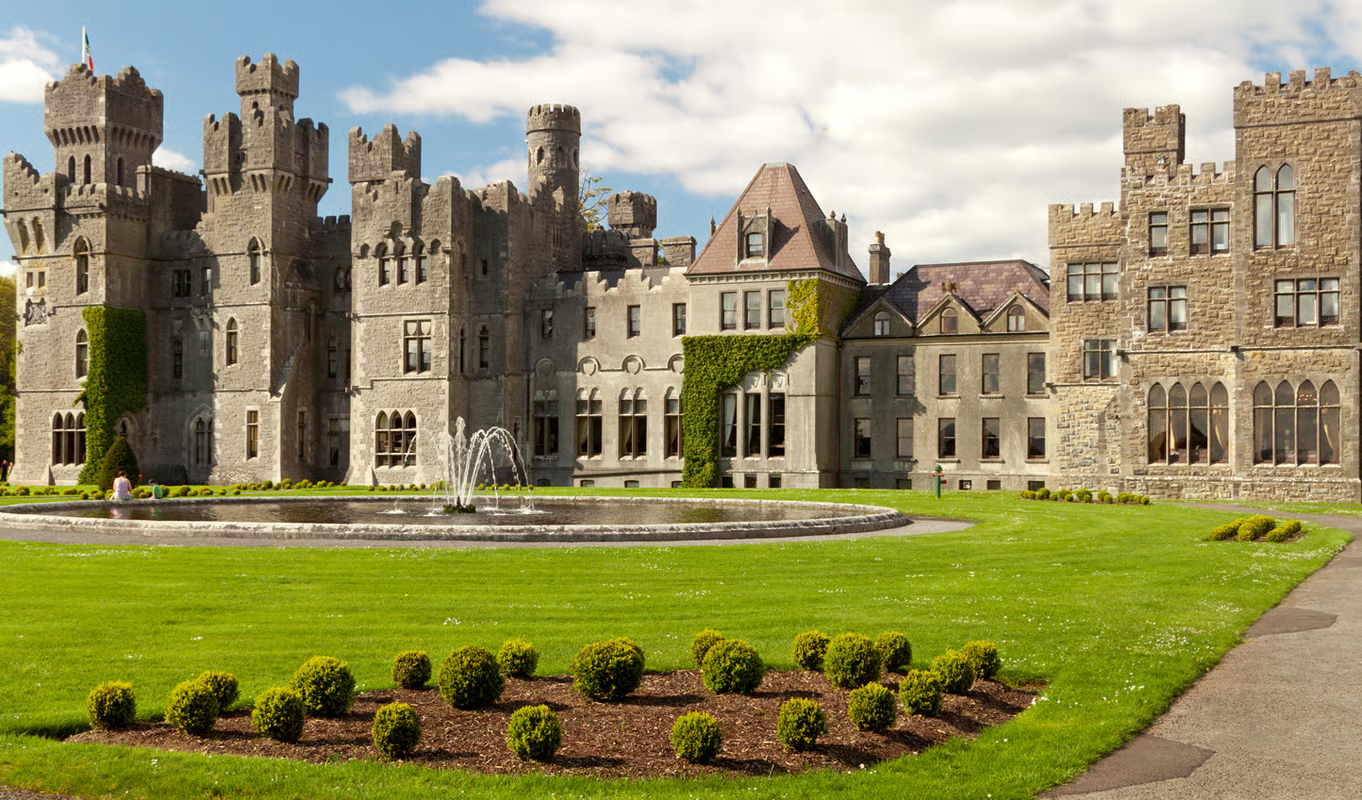
If you’re serious about sleeping in an actual castle, Ashford Castle in Mayo is the obvious first choice. Built in 1228, it’s the heavyweight champion with 350 acres of grounds, a private lake, service that anticipates your needs before you know you have them. Rooms in the original castle building come with canopied beds, views that stretch for miles, and the kind of quiet that only comes from centuries-old stone walls. It’s expensive, which is sort of the point. You’re not just paying for a bed; you’re buying a proper historical experience.
Dromoland Castle
Dromoland Castle, also in Clare, approaches the same idea differently. It’s 15th century, equally impressive on arrival, but somehow feels less formal than Ashford. You’re sleeping in actual castle chambers rather than carefully designed hotel wings, which makes the medieval character more immediate. The grounds have a golf course, a spa, and enough history baked into the walls that you stop noticing the luxury amenities after the first hour. It’s still expensive, but it doesn’t feel like you’re paying for a hotel experience in a castle wrapper. It feels like you’re staying in someone’s very grand family home.

Ballynahinch Castle
Ballynahinch Castle sits in Connemara on the edge of a river, surrounded by moorland and mountains that look unchanged for centuries. The building itself is 18th century, later than most Irish castles, but it feels older, and it has been a hotel for decades without losing its authenticity. This isn’t a luxury resort wrapped in castle aesthetic. It’s a real building with stone walls, narrow corridors, and creaking floors.
The real draw is location and isolation. Ballynahinch puts you deep in Connemara, surrounded by bog, mountain, and water with minimal crowds. The hotel runs a small fishing operation on the river. There’s a good pub downstairs where locals still drink.

What to Actually Expect
Staying in a castle isn’t like a five-star hotel. Even the luxury ones have quirks.
Stones get cold. Medieval castles were designed for defense, not comfort. Modern heating helps, but expect cooler rooms than standard hotels. Fires, if available, are brilliant. Layers are your friend.
Plumbing is complicated. Historic castles often have water pressure issues, small bathrooms carved into thick walls, and showers that are more polite spray than drenching. It’s part of the charm.
Hallways are confusing. If you’re in an actual castle, expect to get lost. Medieval architecture was not designed for intuitive navigation.
Noise travels. Stone walls transmit sound strangely. Expect to hear footsteps, voices, and doors closing more than in modern hotels. This can have a strangely cinematic quality. You half expect to see Ingrid Bergman walking down a hallway in period dress.
The history is real. Unlike manufactured “castle experiences” elsewhere, you’re in actual buildings where real events happened. People fought here. People died here. People lived here for centuries. That can feel thrilling or unsettling depending on your disposition. Some guests report strange occurrences. Irish castles have ghosts, or so the locals claim.
Staff know the place. Even in luxury hotels, staff can tell you which wall is 13th century, which wing was added in 1850, and which corner hosted a famous siege. This context makes the stay feel less like a hotel and more like a museum you can sleep in.

Practical Notes
Most castle hotels require a minimum two-night stay in peak season from June to August. Book months ahead for July or August. Shoulder seasons, April to May or September to October, offer better availability and rates. Winter is cheapest, but rooms are colder and days are short.
Location matters. Castles in County Mayo and County Galway put you near the Wild Atlantic Way. County Limerick and County Clare castles are close to the Cliffs of Moher and The Burren. County Kerry castles suit Ring of Kerry exploration. Do not just pick based on luxury. Choose based on which region you want to explore.
Most luxury castles have restaurants open to non-guests. It’s worth booking dinner even if you’re not staying overnight.

The Bottom Line
Staying in an Irish castle is one of the best reasons to visit Ireland. You can’t do this in most places. Even the simplest castle stay beats a standard hotel because you’re sleeping in something with real history and character.
From centuries-old turrets to candlelit halls, we’ll curate a stay that feels timeless, personal, and entirely your own.
Related destinations
Suggested articles
A Guide to Sri Lanka’s Tea Plantations

The Maldives Fixed Its Arrival Problem: Inside the New Velana Airport
The Best Islands in Australia for a Luxury Beach Holiday
How to Plan a Luxury Australian Outback Experience
A Luxury Guide to Australia’s Wine Regions

How to Plan a Luxury Trip to Australia’s Great Barrier Reef
The Best Luxury Hotels in Seychelles

Best Caribbean Islands for Private Jet Travellers
Island-Hopping in the Caribbean: The Best Routes for a Luxury Trip
Santorini or Mykonos: How to Choose the Best Greek Island for You
The Athens Riviera: Greece’s Glamorous Coastline Beyond the Islands
Paros: The Greek Island Stealing Attention from Mykonos and Santorini
The Best Greek Islands for Luxury Travel: How to Choose the Right One