



16 days
|£6,395

The Australian Outback has historically challenged luxury travellers, its remoteness and harsh climate resisting comfortable exploration. That’s changed. A handful of properties, Longitude 131° foremost among them, now provide bases from which to experience the Red Centre in style.
The Red Center of Australia operates on geological time. The sandstone that forms Uluru began as sediment in an ancient seabed 550 million years ago, compressed and tilted and eroded into the formation visible today. Kata Tjuta, the domed rock formations 25 kilometers distant, emerged from the same processes, their rounded shapes contrasting with Uluru’s sheer faces. The desert that surrounds them, far from the barren wasteland of imagination, supports ecosystems adapted to extremes: mulga woodlands, spinifex grasslands, waterholes that sustain life through months without rain.
The Anangu people have called this country home for at least 60,000 years, their continuous connection to the land predating the pyramids by tens of millennia. Uluru sits at the intersection of songlines, the dreaming tracks that crisscross the continent, encoding navigation, law, and spiritual knowledge in landscape features. The rock is not merely sacred; it is a living archive of human experience, its caves containing art that documents generations of ceremony and storytelling.
This context matters for visitors. Uluru was returned to Anangu ownership in 1985, and the traditional owners have shaped how tourism operates here. Climbing the rock, once permitted, was banned in 2019 at Anangu request. Certain areas remain off-limits, their significance requiring protection from casual observation. The experience available to visitors is richer for these boundaries, the cultural interpretation programs providing access to knowledge that unguided wandering could never reveal.

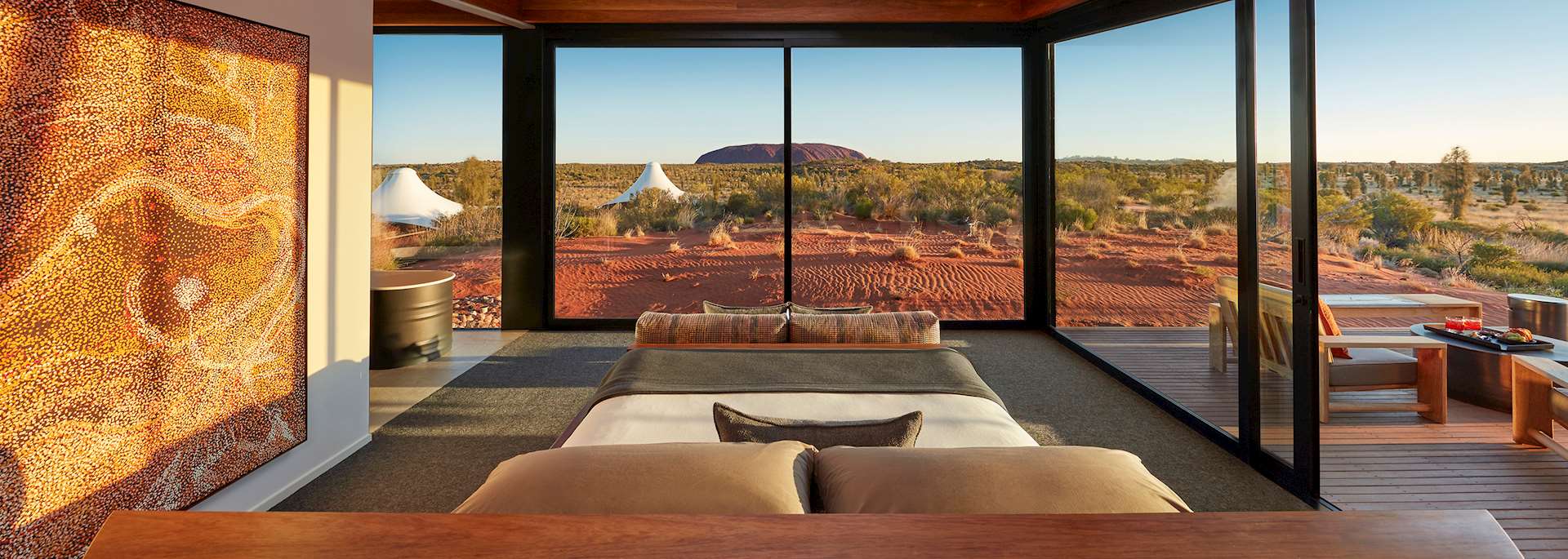
Longitude 131° has redefined what Outback accommodation can achieve. This Baillie Lodges property, named for the meridian on which Uluru sits, comprises 16 tented pavilions positioned for uninterrupted views of the rock.
The design channels a refined safari aesthetic: canvas structures elevated on platforms, their interiors mixing indigenous artworks with contemporary comfort, their orientation ensuring that Uluru appears framed through floor-to-ceiling windows from your bed.
King beds face the desert panorama. Bathrooms feature deep soaking tubs positioned to capture the same views. Climate control maintains comfort despite external temperatures that can exceed 40°C in summer. The “tented” description, while technically accurate, undersells the sophistication: these are permanent structures with canvas walls, their appointments rivaling boutique hotels anywhere.
The property operates on all-inclusive terms, with meals, beverages, and signature experiences included in rates that reflect the exclusivity. Dining occurs in the Dune House, a central pavilion whose cuisine draws on native Australian ingredients: kangaroo, emu, quandong, wattleseed, and finger lime appearing in preparations that honor indigenous food traditions.
The wine list emphasizes Australian producers, with selections from Barossa, Margaret River, and the Adelaide Hills accompanying meals that unfold as the desert light shifts through its evening transformation.
What distinguishes Longitude 131° beyond comfort is access. The property’s position within the Uluru-Kata Tjuta National Park eliminates the transit time that guests at more distant accommodations must accept. Sunrise excursions depart minutes before dawn, delivering guests to viewing platforms as the rock emerges from darkness.
Sunset sessions provide front-row positions as Uluru cycles through its famous colour changes. The Field of Light, Bruce Munro’s acclaimed installation of 50,000 illuminated stems carpeting the desert floor, lies adjacent to the property, accessible for private viewing impossible from other bases.
Longitude 131° occupies the luxury apex, but alternatives exist for travellers seeking different price points or atmospheres.
Sails in the Desert, the flagship property at Ayers Rock Resort, provides five-star accommodation without Longitude 131°’s exclusivity or price tag. The 228 rooms surround a pool area whose gum trees attract bird life, and the facilities include multiple restaurants, a spa, and the resort’s cultural center. The setting, in Yulara township rather than within the national park, requires shuttle transfers to Uluru itself, adding time that Longitude 131° guests avoid.
This is the most polished choice within Ayers Rock Resort, set at the eastern edge of Yulara and only a short walk from the Town Square. Its architecture is defined by the white sail-shaped canopies that shade pathways and courtyards, giving the entire property a sense of airiness and light.
Interiors continue the theme with an earthy, contemporary palette and subtle Indigenous-inspired patterns woven into carpets and textiles, creating a soft connection to the desert landscape and the region’s cultural heritage.

16 days
|£6,395
8 days
|£10,395
Uluru and Kata Tjuta reward travellers who slow down. Sunrise and sunset are essential, with the rock shifting from soft purples into deep reds as the light changes throughout the day. A full circuit of the Uluru base walk reveals far more than distant viewpoints ever can, from ancient cave art to hidden waterholes that sustain life in the desert.
Over at Kata Tjuta, the Valley of the Winds offers one of the region’s most dramatic hikes, while the shorter Walpa Gorge walk delivers towering rock walls and quiet pockets of cool air. When night falls, the Field of Light installation transforms the desert into a glowing, dreamlike landscape.
Cultural experiences with Anangu guides add meaning to everything you see. Dot painting workshops, bush food walks, and storytelling-led visits around the base of Uluru provide perspectives that elevate the landscape beyond its visual impact.
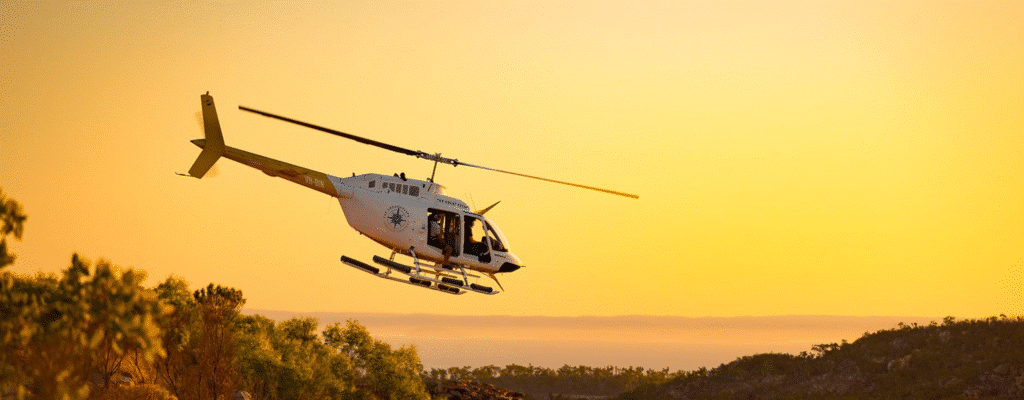
For a different vantage point, scenic helicopter flights reveal the size and solitude of the Red Centre, with Uluru, Kata Tjuta, and the desert plains stretching toward the horizon in every direction.

Travellers with extra time can broaden their Red Centre journey. Kings Canyon offers one of Australia’s finest walks, with sandstone walls and a lush waterhole hidden deep within the gorge. Alice Springs acts as the region’s cultural and logistical hub, with galleries, the Desert Park, and the Royal Flying Doctor Service museum offering insight into life in the Outback.
The West MacDonnell Ranges add another layer entirely, with gorges and cold-water swimming holes set among ancient red rock formations.
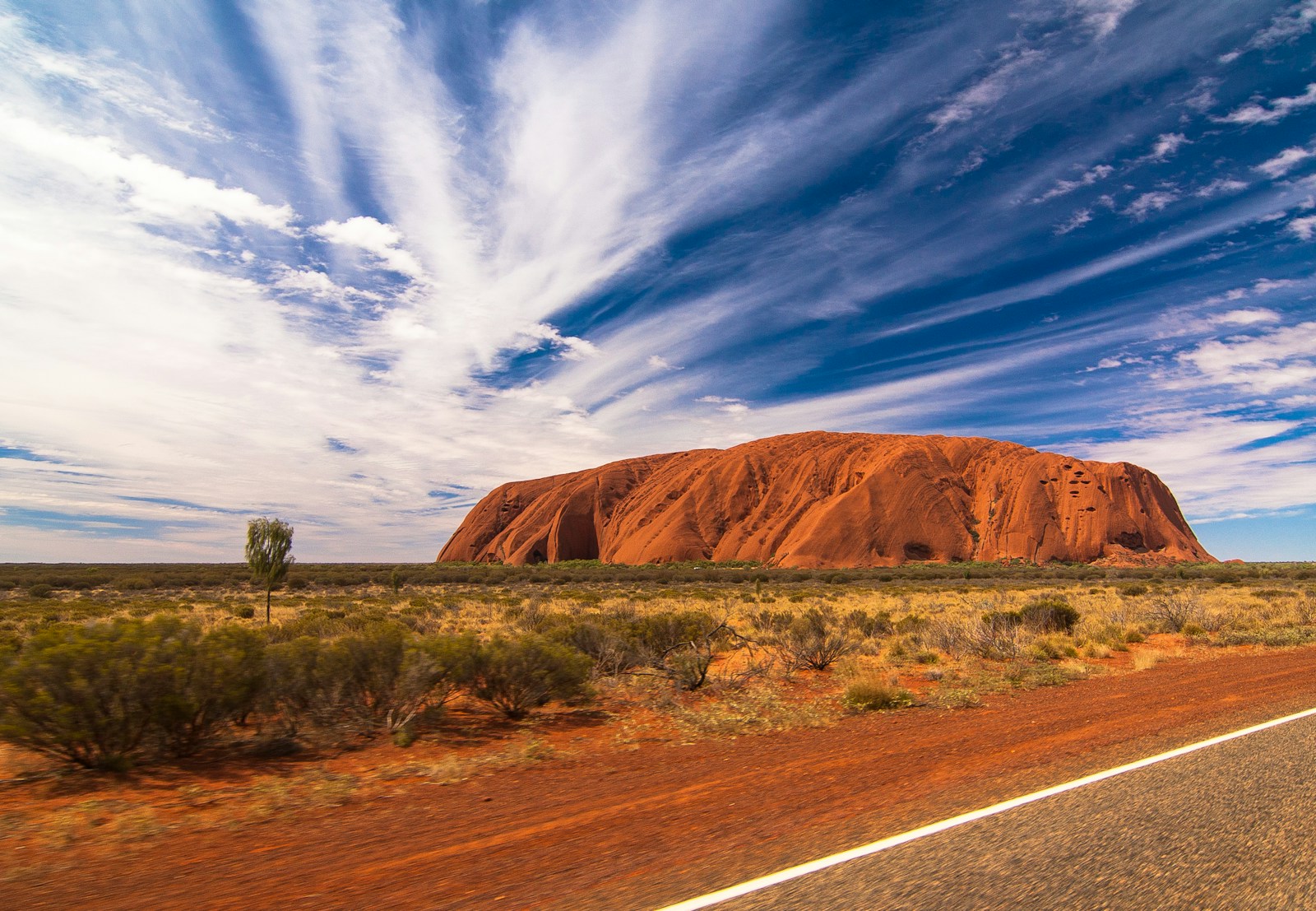
DND designs bespoke Red Centre itineraries for travellers who want to experience Uluru and its surrounding landscapes in comfort and depth. Whether you want guided cultural experiences, luxury desert lodges, scenic flights, or a full Outback circuit, we craft trips tailored to your pace and style. Get in touch to start planning.
Suggested articles

Tell us how you want to feel, we’ll take it from there.
“Our trip was truly magical and full of core memories that will last us a lifetime.”
Michael • Bora Bora Honeymoon

“We just returned from an incredible journey through Ireland, and we couldn’t have had a better experience”
Brad • Ireland Adventure
“This was a flawless experience right from the beginning, we had so many thoughts and ideas flowing around and they took all of them and perfectly curated the most beautiful honeymoon for us.”
Kris • Sicily Honeymoon
See more reviews on Trustpilot
 12 min read
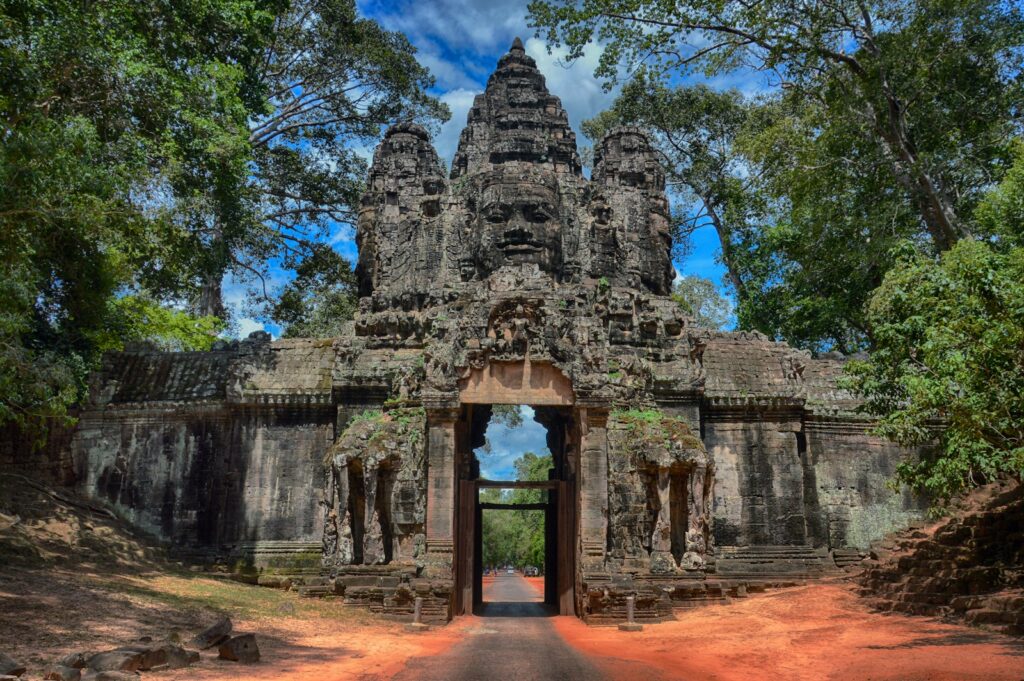
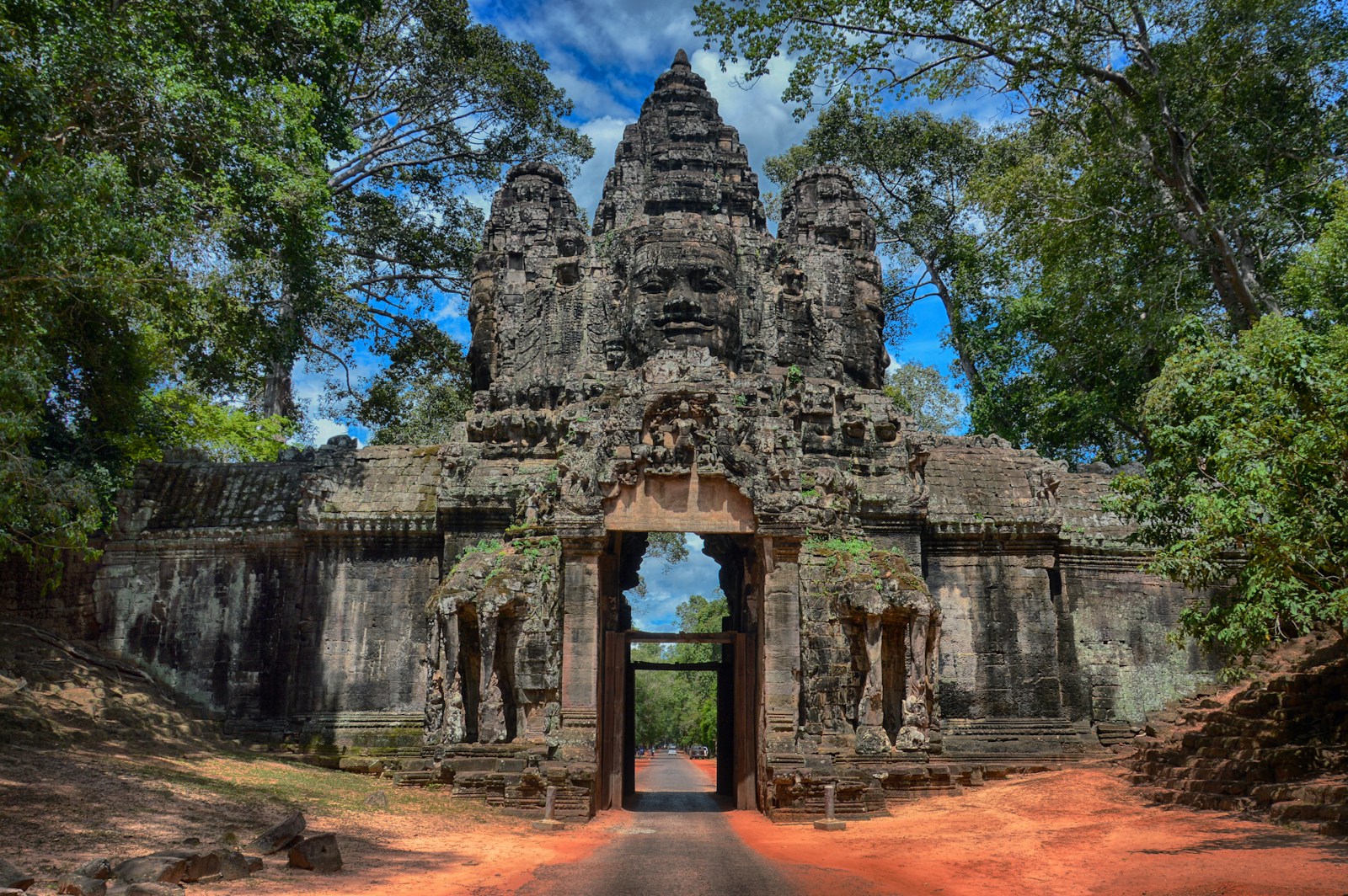
Angkor Wat is one of the world’s most extraordinary temple complexes, but experiencing it well comes down to timing, pacing and where you choose to stay. This is how to plan the perfect luxury trip.
 11 min read
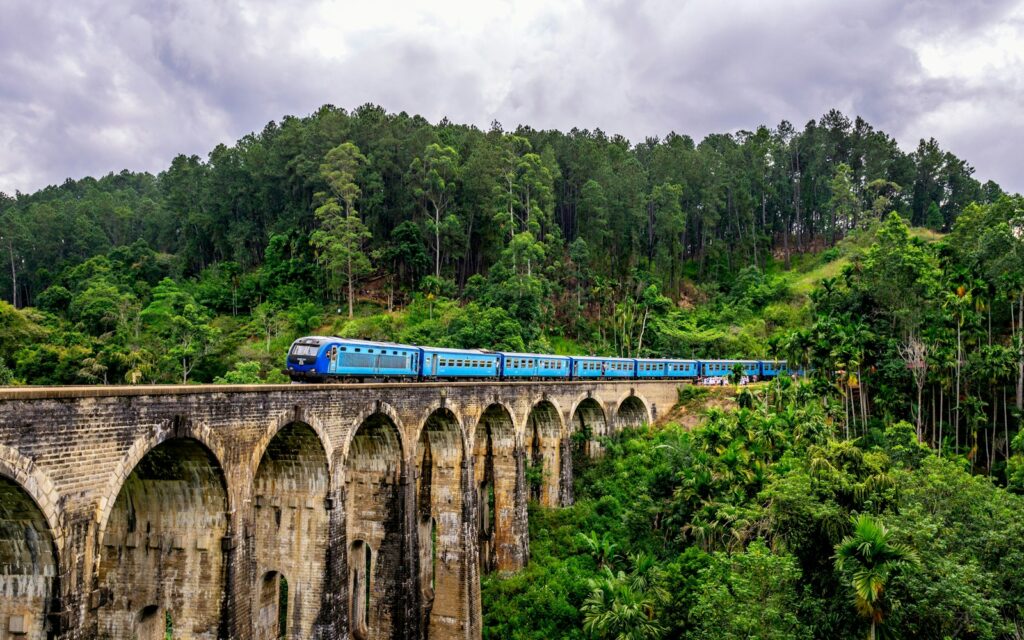
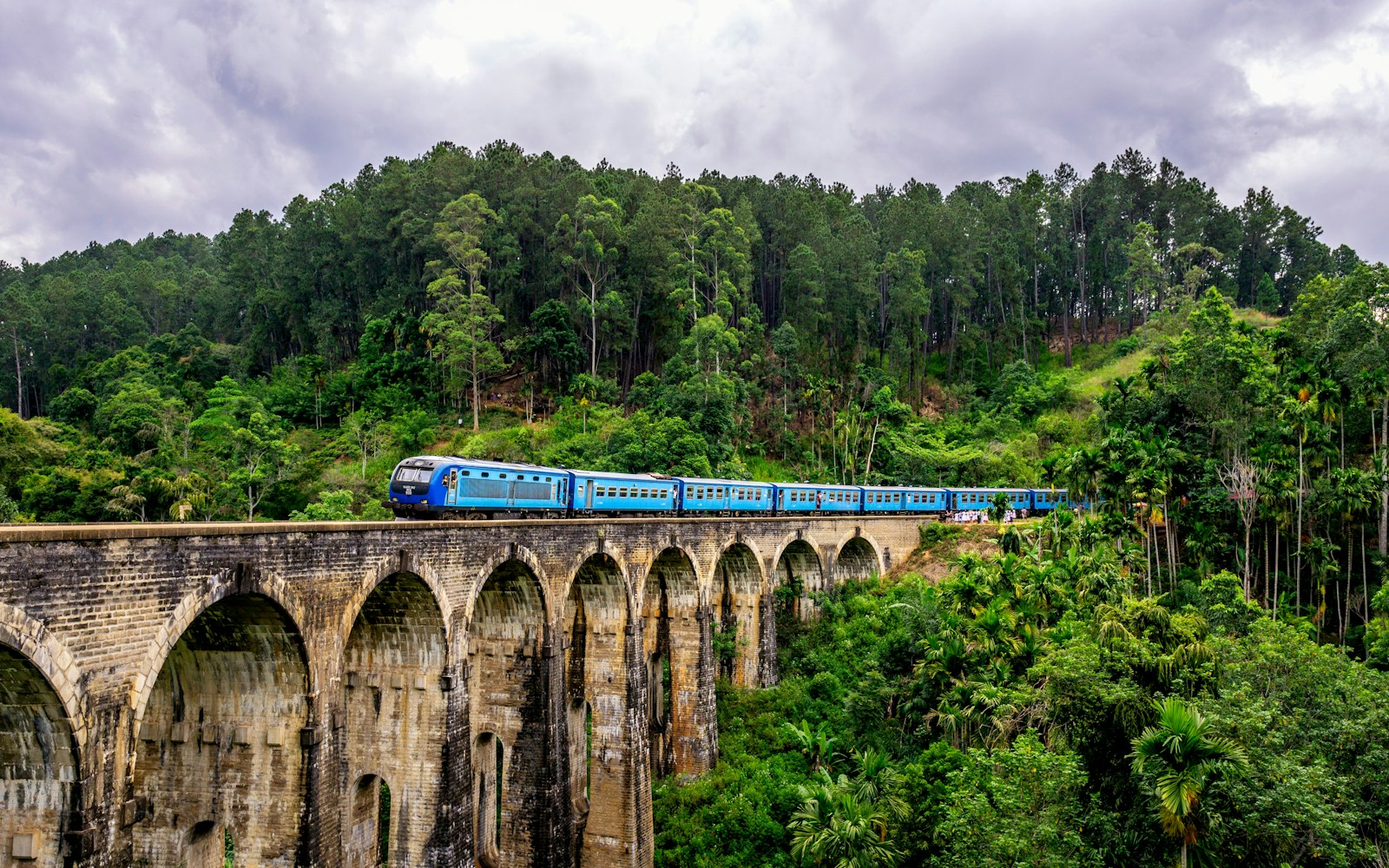
Sri Lanka’s tea country is a place where production and landscape are inseparable. From hand-plucked leaves to historic bungalows, this guide walks you through how the region looks, works and feels.
 10 min read
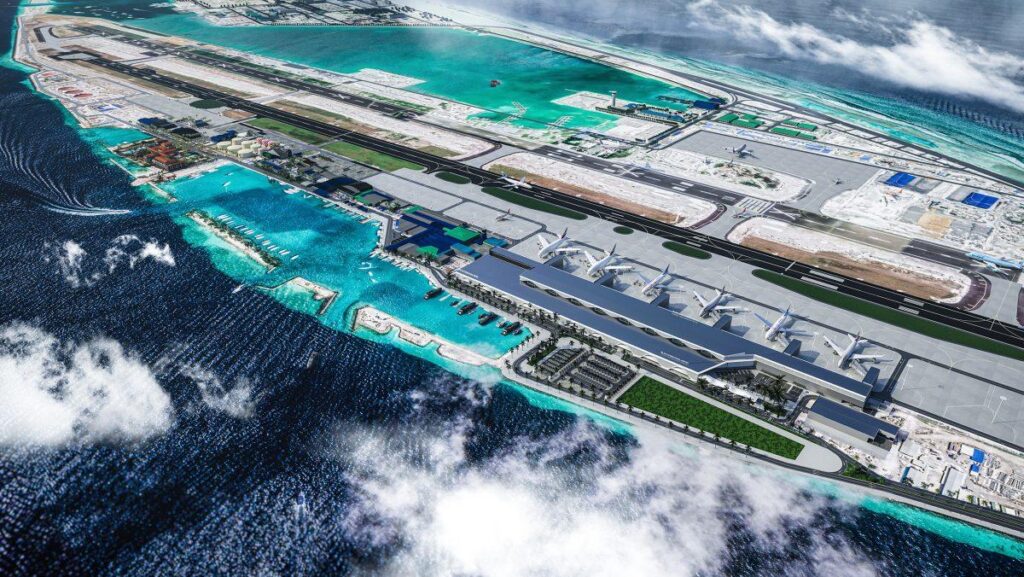
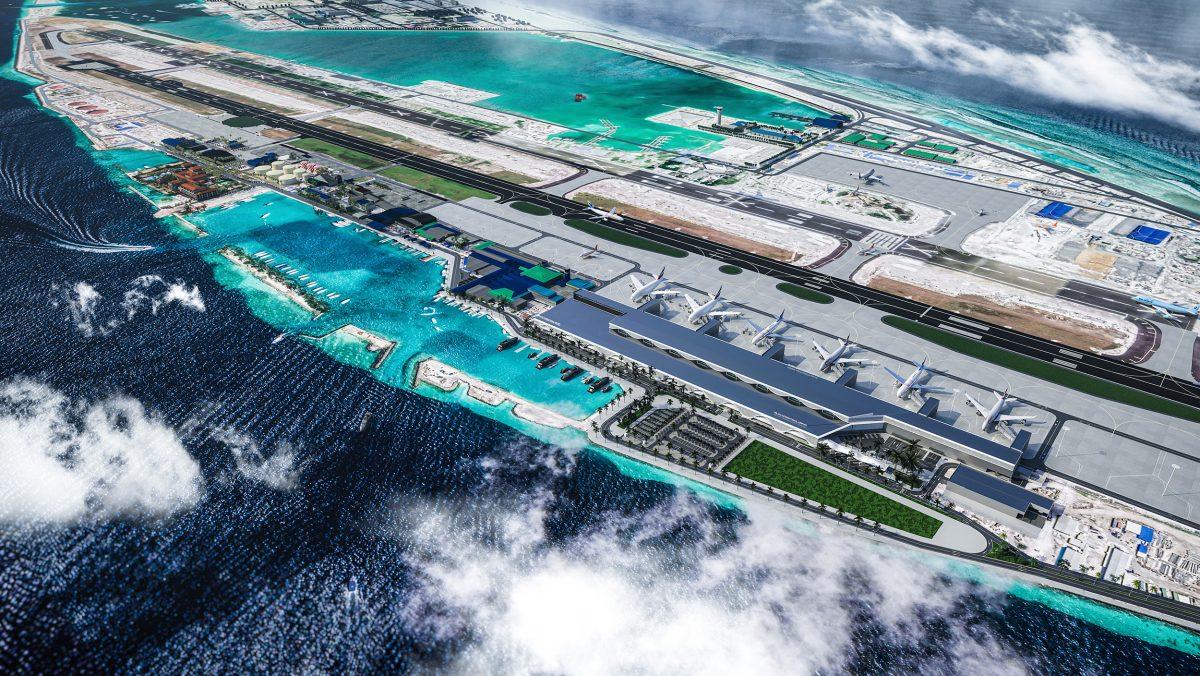
The Maldives has quietly solved its biggest travel flaw. With the new Velana International Airport, the long, chaotic arrival is replaced by speed, space and a seaplane transfer that finally feels worthy of the destination.
 13 min read
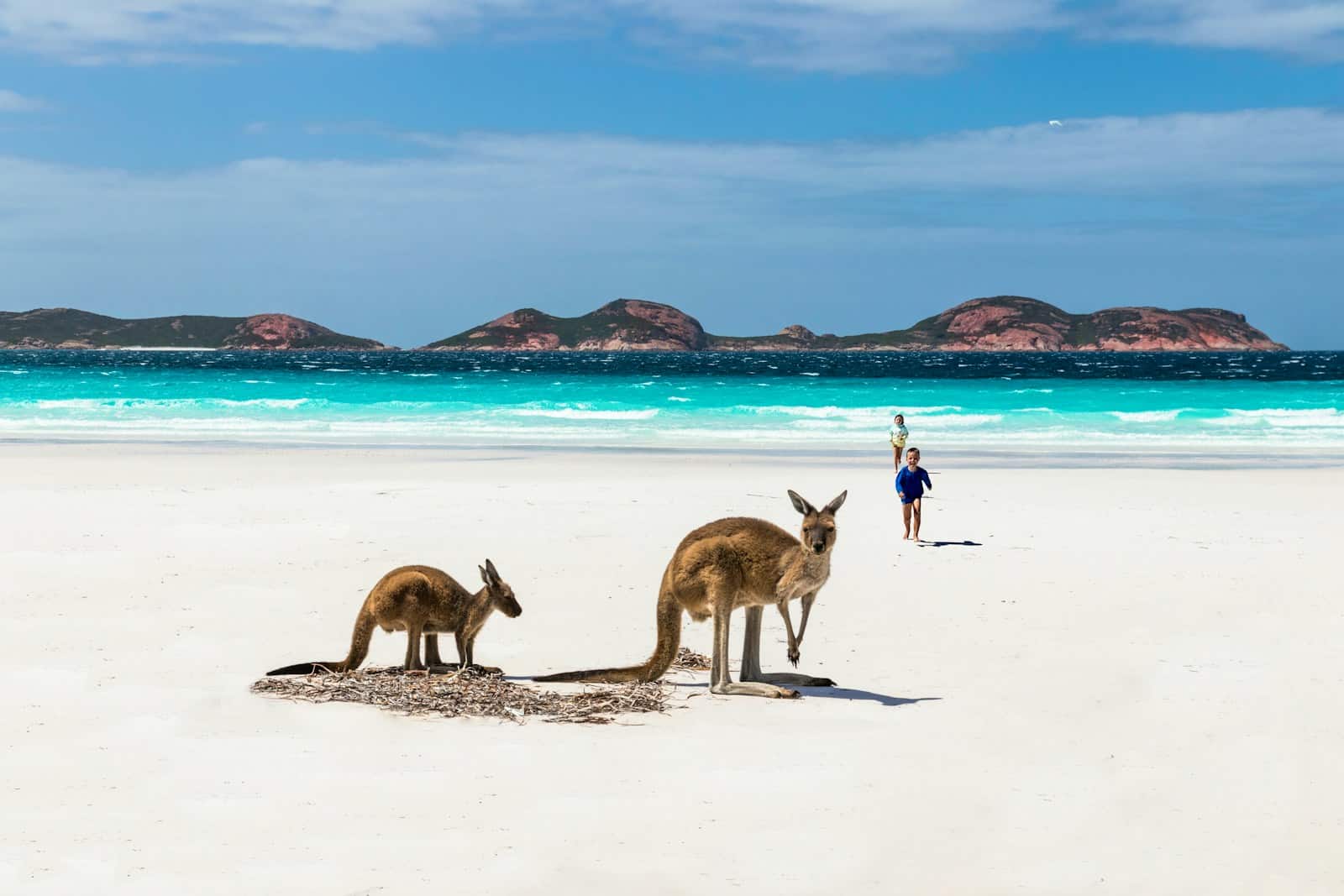
Australia’s coastline stretches for 34,000 kilometers, and scattered along its length lie islands that range from tropical reef cays to temperate wilderness sanctuaries. The country has been slower than the Maldives or French Polynesia to develop its island luxury potential, but that’s changing.

Ask us anything.
