On this page
Sri Lanka’s tea country is a place where production and landscape are inseparable. From hand-plucked leaves to historic bungalows, this guide walks you through how the region looks, works and feels.
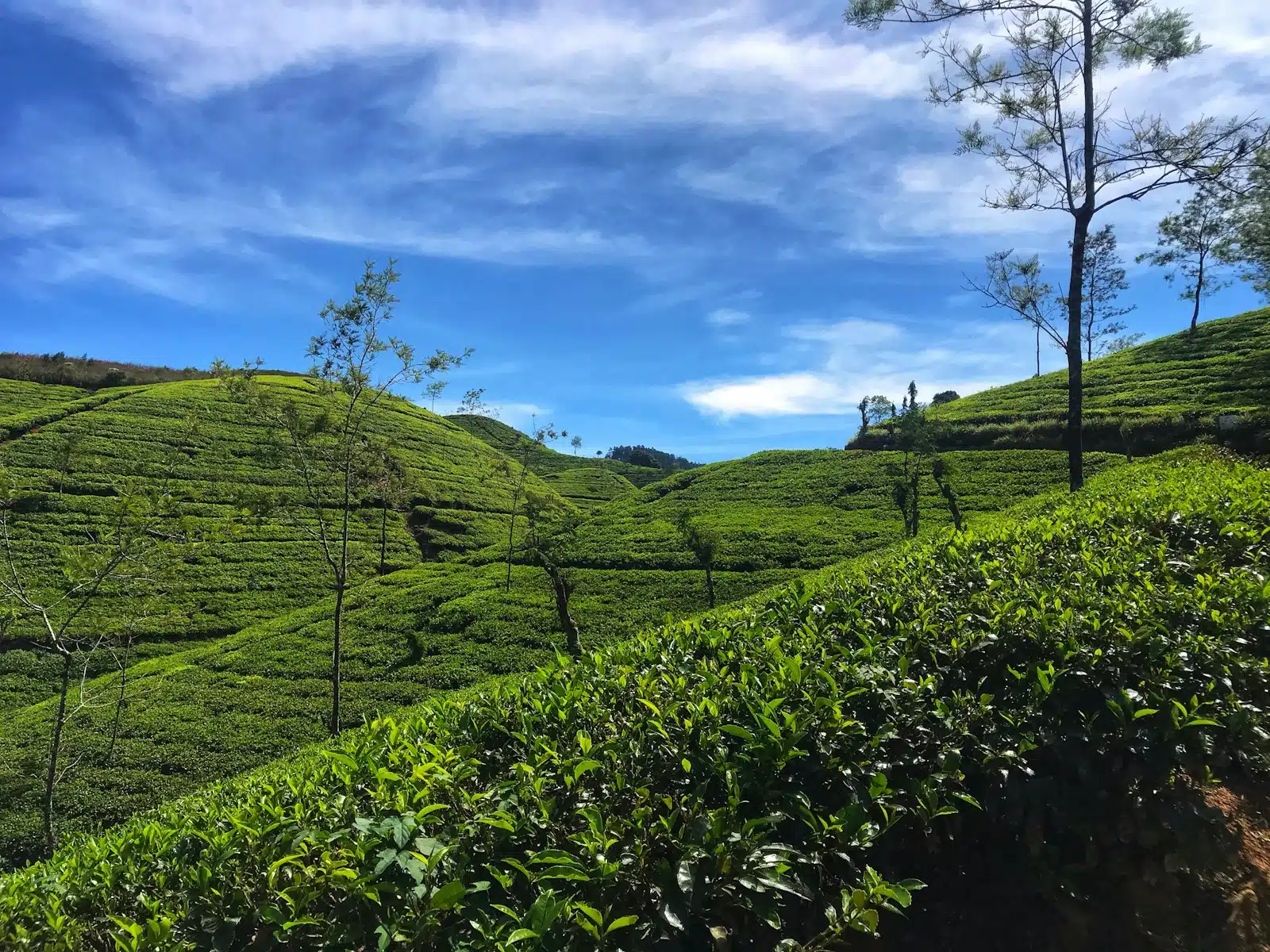
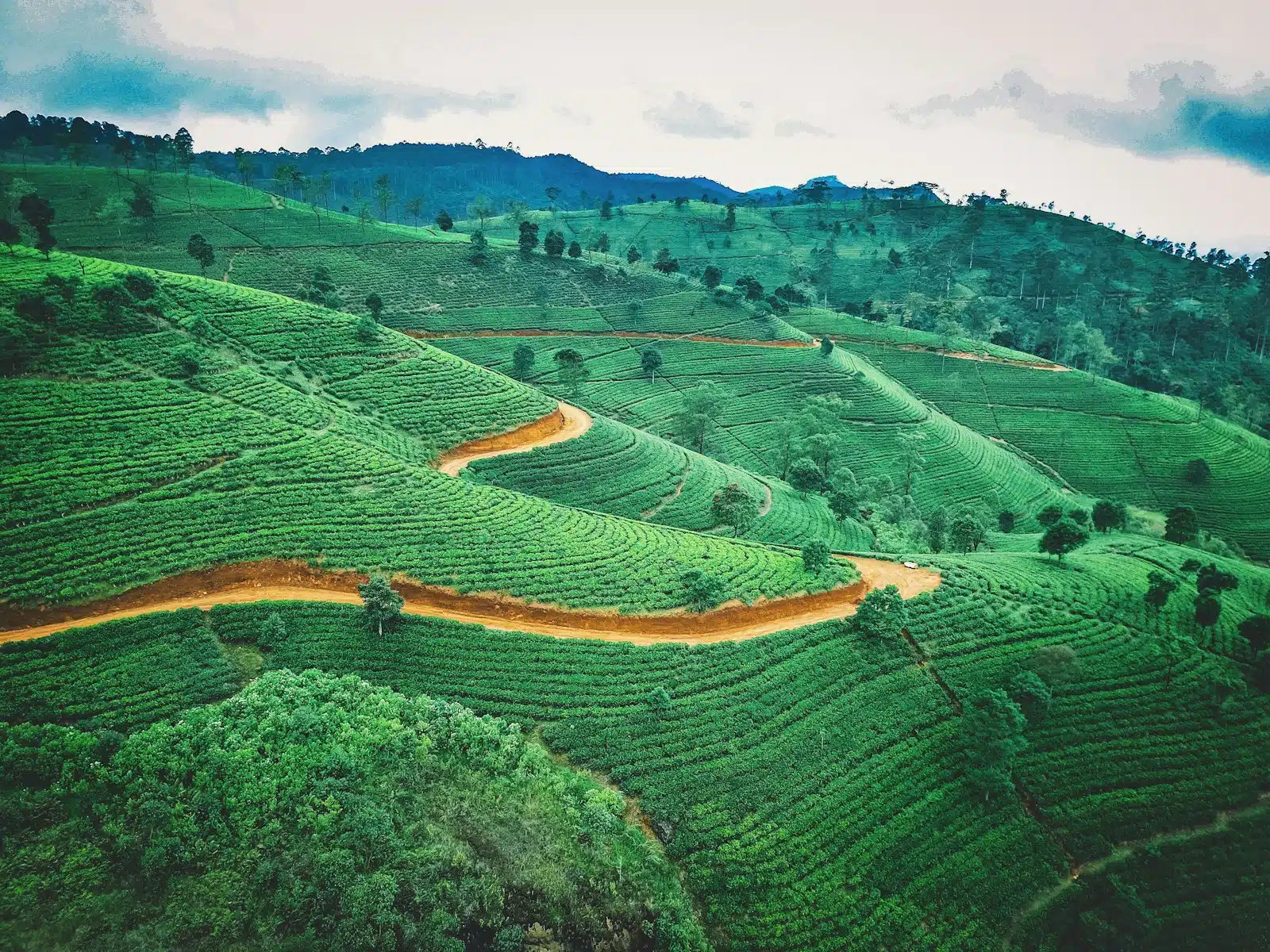
Sri Lanka is the fourth-largest tea exporter in the world, and almost everything about that statement understates what you actually see when you land in the hill country. The central highlands are carpeted entirely in tea bushes. Thousands of acres. The landscape isn’t a backdrop for tourism, it’s a working agricultural economy that happens to be spectacular to look at.
The region exists at altitude. Nuwara Eliya sits at 1,800 meters above sea level and was the British summer escape, which explains why the architecture in the region still reads like someone transplanted a slice of colonial England onto a mountainside. The temperature at elevation is genuinely cool, often dropping below 10°C in mornings and evenings, which is why the British could actually grow decent tea in the tropics. The climate is humid and rainy, particularly from May through June when the southwest monsoon makes the trails muddy and occasionally impassable.
The People Behind the Tea
What’s critical to understand before visiting is that tea plantations are built on a complicated labour history that continues today. Tamil workers whose ancestors came from India in the 19th and early 20th centuries remain among the most disadvantaged segments of the country’s population, despite producing one of the world’s most valuable exports.
The Malaiyaha Tamils (Up-country Tamils) are descendants of migrant workers from South India brought by the British between the 1830s and 1930s as indentured laborers, and despite their integral contribution to the social and economic fabric of the country, they continue to be one of the most underserved communities.
At independence in 1948, Tamil plantation workers were legally designated “temporary immigrants” and denied citizenship, and in the following year they were disqualified from voting in elections. In the 1980s, as a result of strikes and other labour actions, new legislation granted citizenship to Tamil plantation workers and equal pay to men and women. Today, roughly 500,000 workers earn less than 5 euros daily.
When you visit tea plantations, understanding this context matters. The women picking leaves aren’t performing for tourists. They’re working. And you’re witnessing an economic system that has marginalized its labour force for two centuries.
How Tea Actually Gets Made
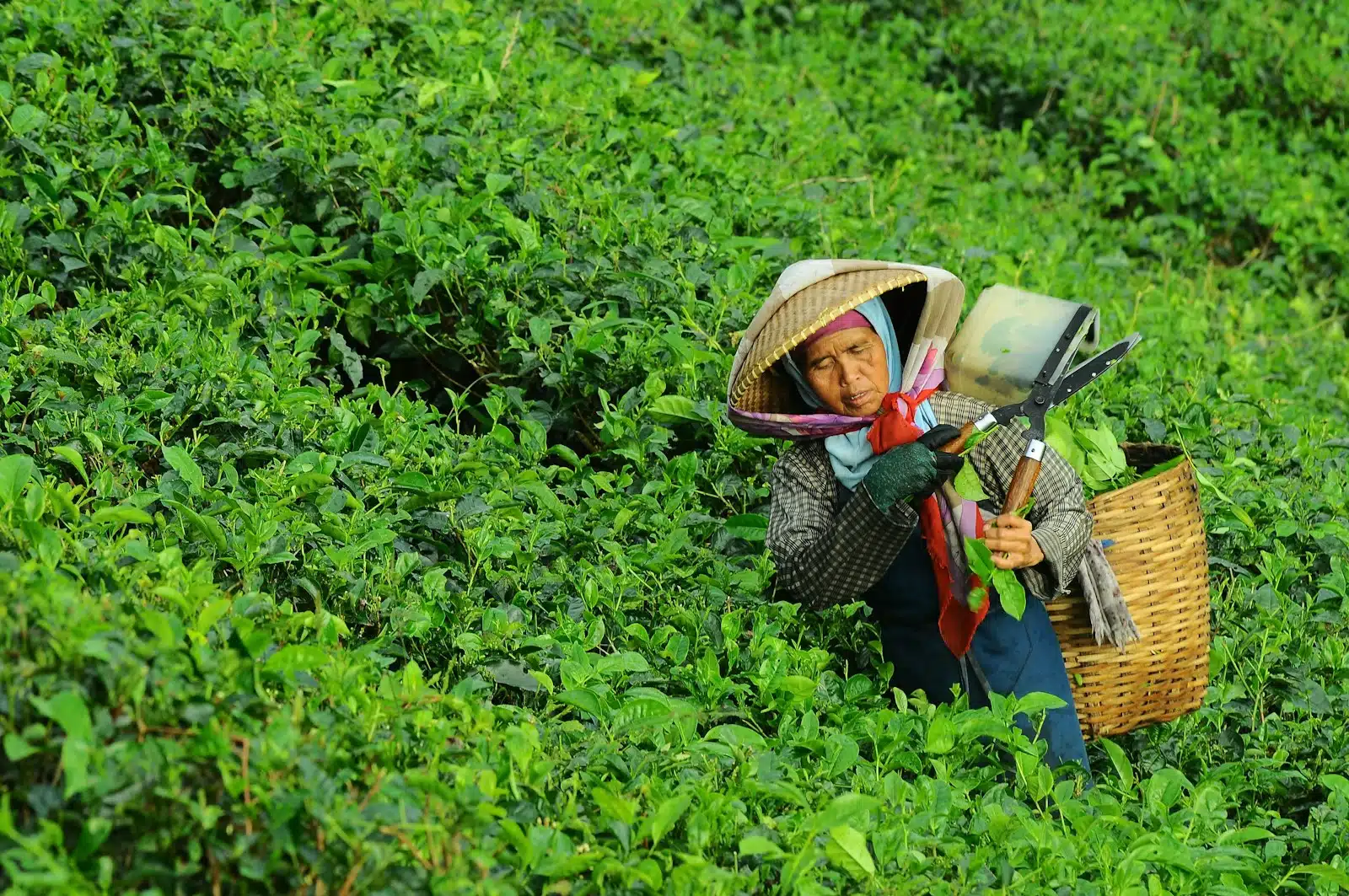
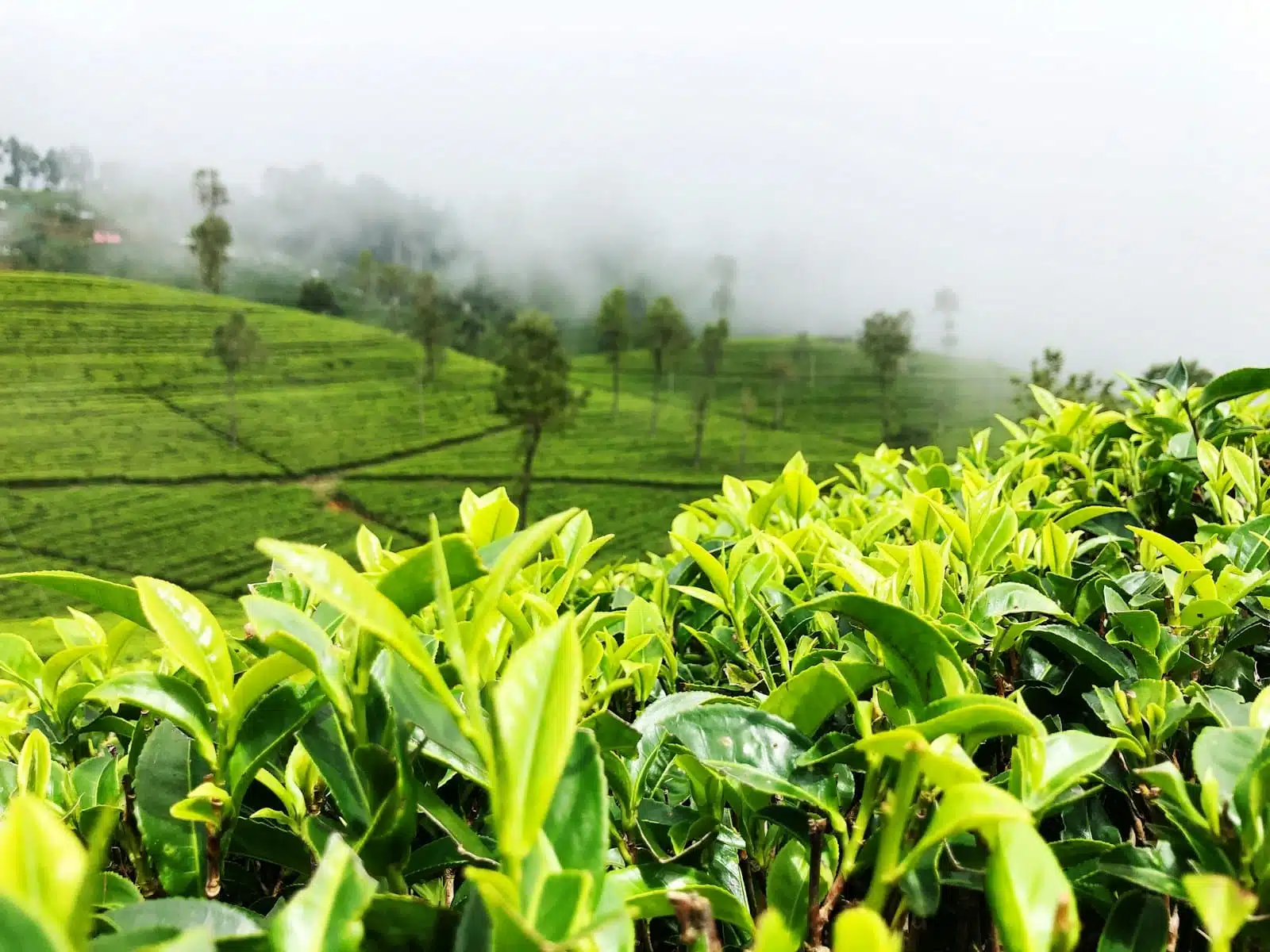
Sri Lanka is one of only a few countries where tea is still plucked by hand, with a highly skilled workforce predominantly made up of Tamil women who strip two leaves and a bud from each plant, often covering over 10 kilometres in a day. The leaves go directly to nearby factories where they’re dried, processed and packed. The entire journey from plant to finished tea takes less than 24 hours.
What a Plantation Visit Involves
A plantation visit consists of three parts. First, a walk through the plantations where you see how tea is plucked and sorted by hand, often by Tamil women working in teams. This is the authentic part. The women work in groups, moving quickly through rows, filling baskets.
The best time to visit is early morning when production is active. Second, a factory tour inside where you watch the key steps: withering, rolling, fermenting, drying and grading. The factories are active operations, not museums. You’ll see the processing actually happening if you time it right. Third, a tea tasting where you understand the distinctions between teas produced at different elevations and different seasons.
Understanding Tea Quality
The geography matters significantly. Sri Lankan teas are ranked according to their point of origin: “high-grown” (the finest teas, grown at altitude in estates around Nuwara Eliya), “mid-grown,” and lower elevations. Nuwara Eliya plantations produce some of the finest and most delicate teas, often referred to as “the Champagne of Ceylon”. If you’re interested in tea quality rather than just the experience, this distinction matters.
Where to Stay
Ceylon Tea Trails is a Relais & Châteaux property comprising five historic bungalows scattered across 2,000 acres at 1,250 meters altitude, set amongst tea plantations, with bungalows named after past occupants and separated by 4 to 15 kilometres from one another. The separation is intentional. Each bungalow has its own isolation and character. Each bungalow has five or six rooms and is decorated with photographs, antiques and vintage wares offering glimpses into Ceylon’s 20th-century plantation past. The property is Michelin-recognised and includes round-the-clock butler service and chef-prepared meals tailored to your preferences rather than set menus.
Beyond Ceylon Tea Trails, there are alternatives worth considering. The Heritance Tea Factory Hotel is a unique accommodation set in a former working tea factory with a mix of post-industrial era and British colony style interior design, located at over 2,000 meters altitude with 360-degree views of tea plantations.
Madulkelle Tea and Eco Lodge offers luxury tents fitted with en suite bathrooms and private terraces overlooking tea plantations, with incredible views of the Knuckles Mountain Range and exclusive access to the estate’s thriving tea fields. Goatfell is a restored tea bungalow located on a working tea plantation on the Concordia Estate just 30 minutes from Nuwara Eliya, with limited rooms providing an extremely private and intimate setting. Camellia Hills is a newly built bungalow set amongst the lush green hill country with stunning views across Castlereagh reservoir, housing five en suite bedrooms.
The Train Journey
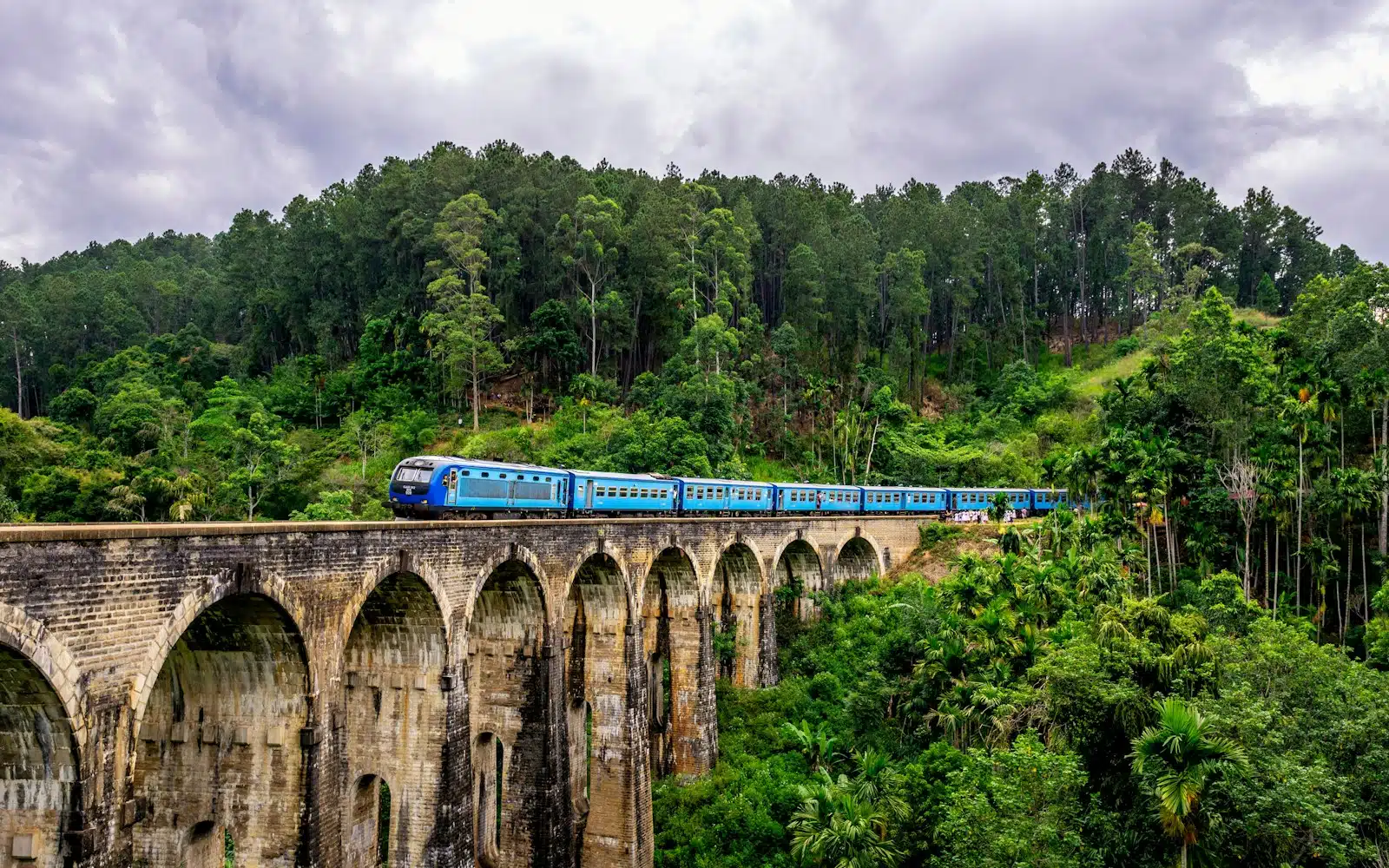
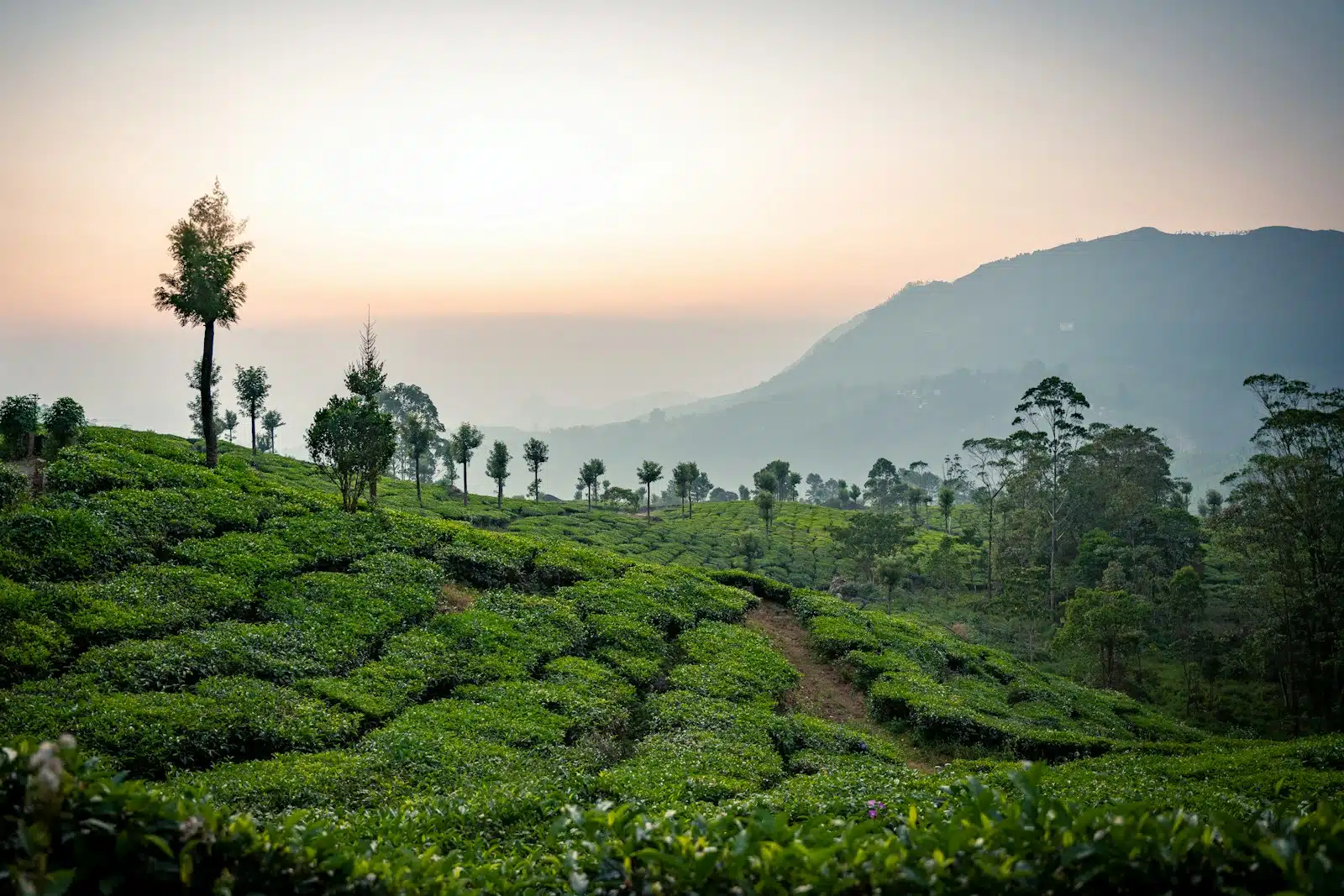
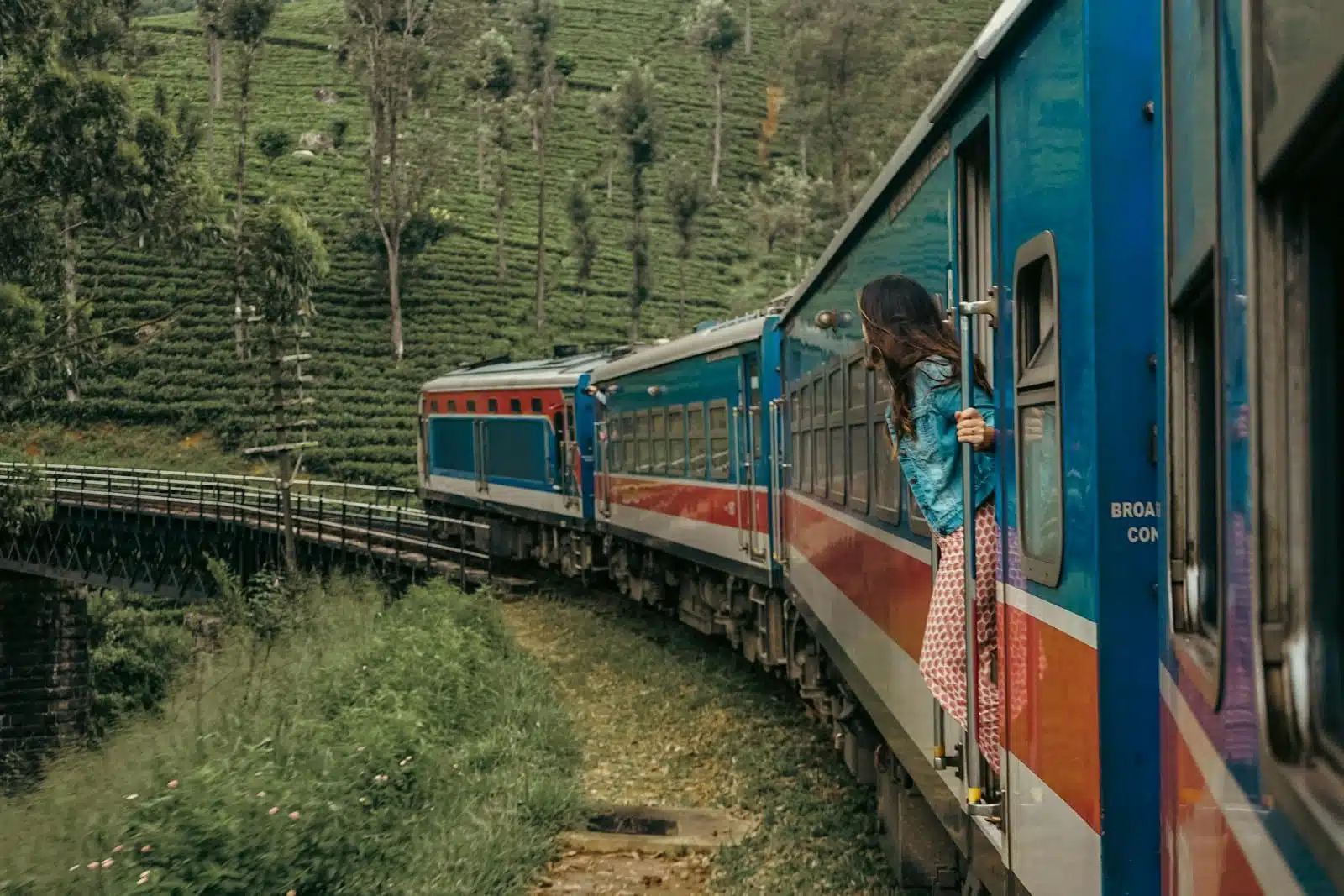
Getting to tea country is part of the experience. The train from Nuwara Eliya to Ella takes about 3 to 4 hours, crossing hills and valleys, tea plantations, waterfalls and villages, and Lonely Planet lists this route as one of the most scenic train journeys in the world.
The train departs from Nanu Oya Railway Station, located approximately 8 kilometres from Nuwara Eliya town, and meanders through verdant tea plantations, misty valleys and picturesque villages. If heading to Ella, aim for a seat on the left side of the train where you’ll catch the best views from rolling tea estates, waterfalls and dreamy valleys. The train passes through scenes of tea estates named after their original Scottish and English planters, past waterfalls like Elgin Falls that emerge from the mountainsides, and small stations at elevation where clouds chase the train.
The actual experience is less Instagram-perfect than it appears. The train is a common mode of transport for locals as well as tourists, with vendors selling spicy snacks boarding and departing at stations, and passengers standing by open doors to feel the breeze and capture photographs. Morning trains, especially the 8:10 AM or 9:20 AM, are ideal for catching the clearest views and soft sunlight, while afternoon trains are usually busier and sometimes affected by mist.
Why It Works
The landscape itself is the real draw. The rolling hills layered in green, the mist that rolls through valleys, the colonial architecture scattered across the region, the waterfalls dropping through the hills. The central highlands offer mist-draped mountains, verdant gorges and fertile slopes that provide contrast to coastal landscapes.
If you’re staying at a property like Ceylon Tea Trails or Heritance Tea Factory, you can spend multiple days walking through plantations, visiting factories, understanding the production process, and then retreating to a colonial bungalow with views across tea fields.
The region works best as a three to four-day break in a larger Sri Lanka itinerary. It’s cool, it’s quiet, and it’s genuinely interesting if you care about understanding how tea actually gets made rather than just consuming it. The altitude and cool air provide relief from coastal heat. The colonial infrastructure and luxury accommodation options mean you don’t sacrifice comfort.
Ready to explore Sri Lanka’s tea country? Speak with Do Not Disturb to curate a journey that understands both the beauty and the realities of the region.